Plant Overview
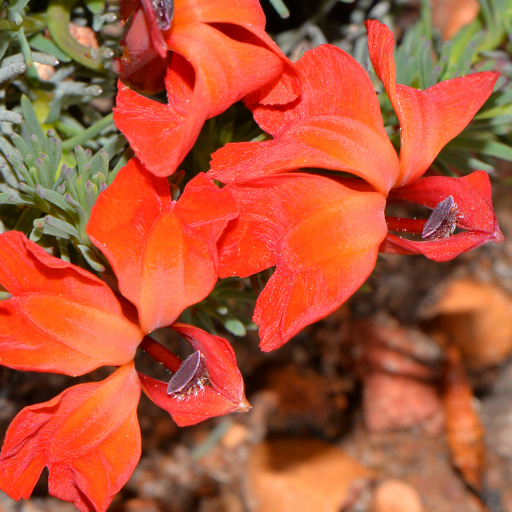
Known as the Red Leschenaultia or "Living Sunset," this Western Australian native is famous for its almost unnaturally vivid blooms. It is a showstopper in rockeries and containers, often looking like a grounded cloud of butterflies. While it is a short-lived perennial, its intense colors make it one of the most sought-after Australian wildflowers for home gardeners.
🔍 How to Identify
- 🌺 The Flowers: Small, fan-shaped blooms with five lobes. While most famous for electric reds, they can also appear in shades of orange, yellow, and even cream.
- 🌿 The Foliage: Tiny, narrow, heath-like leaves that are soft to the touch and usually a grayish-green color.
- 📏 The Growth Habit: A low-growing, spreading shrub that rarely exceeds 30 cm in height but can spread beautifully as a groundcover.
🏡 In Your Garden
- 💧 Drainage is Key: This plant has a very sensitive root system; it "hates wet feet" and will succumb to root rot almost instantly if the soil is heavy or soggy. It is best grown in raised beds or pots with sandy, free-draining mix.
- ☀️ Light & Air: It thrives in full sun and requires excellent air circulation. In humid climates, it can be prone to fungal issues, so give it plenty of "breathing room" away from other dense plants.
- ✂️ Short-Lived Beauty: Be aware that this species is naturally short-lived (often 2–4 years). Gardeners often treat it like a long-blooming annual or take cuttings regularly to keep the lineage going in their garden.
⚠️ Safety & Toxicity
- ✅ Safe Status: Lechenaultia formosa is generally considered non-toxic to humans and common household pets.
- 🧤 Garden Care: While not poisonous, it is a delicate plant. Heavy-handed pruning or accidental trampling by dogs can easily kill it, so it is best placed in a protected spot or a decorative urn.
✨ Fun Fact
The genus was named after Jean-Baptiste Leschenault de la Tour, a French botanist on the Baudin expedition to Australia in 1801. However, due to a spelling error by the naming botanist, the plant genus is spelled Lechenaultia (without the "s"), even though the man’s name was Leschenault!

Detailed Care Instructions

Some plants require more regular watering than others, which should be done every few days. It's critical to maintain the soil moist all of the time. The water requirements of the same plant placed in pots with varying sizes will differ. Because the water in the smaller pot evaporates faster than the water in the larger pot, it will require more watering. Regardless of pot size, the surface should constantly be maintained moist.








