Plant Overview
Often called the Sapucaia or the Monkey Pot Tree, this Amazonian giant is famous for its massive, woody fruits that look like antique jars. In the wild, it creates a breathtaking spectacle when its new leaves emerge in shades of vibrant purple, turning the entire canopy into a violet cloud before shifting to deep green. It is a cousin of the well-known Brazil Nut, but many foragers consider its seeds to be even more delicious.
🔍 How to Identify
- 🌸 The Blossom: Large, showy flowers featuring cream-colored petals with a fleshy, hood-like structure that hides the nectar from all but the strongest bees.
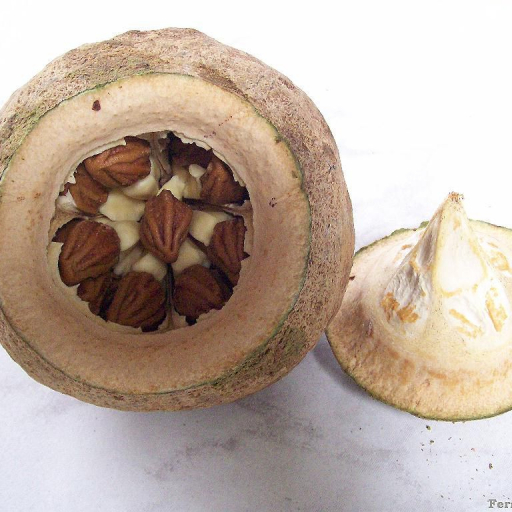
- 🏺 The Fruit: A heavy, woody, urn-shaped capsule (the "pot") that can grow as large as a human head. It features a natural "lid" called an operculum that pops off when the seeds are ripe.
- 🍂 Young Foliage: A striking seasonal change where the entire tree drops its old leaves and replaces them with a flush of bright pink or translucent purple new growth.
🏡 In Your Garden
- 🌳 Space Requirements: This is a true forest giant, reaching heights of over 100 feet in the wild. It is best suited for large estates, botanical gardens, or tropical parks rather than standard residential backyards.
- 💧 Climate Context: As a native of the Brazilian rainforest, it craves high humidity and deep, nutrient-rich soil. It is very sensitive to frost and will not survive in temperate climates without a massive, heated conservatory.
- 🐝 Pollination: The tree has a "lock and key" relationship with large Carpenter bees. Only these powerful insects are strong enough to lift the flower's hood to reach the nectar and move pollen.
⚠️ Safety & Toxicity
- 🥜 Nutritional Status: The seeds (Cream Nuts) are safe to eat and are highly sought after for their rich, buttery flavor.
- ⚠️ Selenium Levels: Like its relative the Brazil Nut, these seeds are heavy bio-accumulators of selenium. While healthy in moderation, consuming them in extreme excess can lead to "Mal de Sete," a condition where high selenium levels cause temporary hair and nail loss.
- 🏗️ Physical Hazard: The primary danger of this tree isn't chemical, but physical. The "pots" are incredibly heavy and woody; standing under a fruiting tree during a windy day can be genuinely hazardous if a pod falls.
✨ Fun Fact
The name "Monkey Pot" comes from a famous bit of jungle lore: Young, greedy monkeys will reach into the fallen pods to grab a huge handful of nuts, but their clenched fist becomes too wide to pull back out through the narrow opening. Older, wiser monkeys know they must let go of some nuts to escape, leading to the local proverb: "An old monkey doesn't put his hand in a jar."

Detailed Care Instructions
To grow Lecythis Pisonis, also known as the Monkey Pot tree, you can follow these steps:
- Choose a location: Select a spot in your garden that receives full sunlight or partial shade. Ensure that the soil is well-draining and fertile.
- Obtain seeds or seedlings: Lecythis Pisonis can be propagated from seeds or purchased as young plants from a nursery. If using seeds, soak them in water overnight for better germination.
- Prepare the soil: Clear the area of any weeds or debris. Loosen the soil using a garden fork or tiller to ensure good drainage.
- Planting seeds or seedlings:
- Seeds: Create holes in the soil about 1 inch (2.5 cm) deep and place one seed in each hole. Cover them lightly with soil.
- Seedlings: Dig a hole slightly larger than the size of the root ball. Place the seedling into the hole, ensuring it sits at the same depth as it was in the container. Fill the hole with soil, gently firming it around the plant.
- Seeds: Create holes in the soil about 1 inch (2.5 cm) deep and place one seed in each hole. Cover them lightly with soil.
- Watering: Immediately after planting, water the soil thoroughly to ensure it settles around the roots. Water regularly, keeping the soil moist but not waterlogged. Reduce watering during winter months or if excessive rainfall occurs.
- Mulching: Apply a layer of organic mulch around the base of the plant to conserve moisture, suppress weeds, and maintain a consistent soil temperature.
- Pruning: Lecythis Pisonis generally requires minimal pruning. Remove any dead, damaged, or diseased branches as necessary to maintain a healthy appearance.
- Fertilizing: Apply a balanced slow-release fertilizer during the growing season to provide essential nutrients. Follow package instructions for dosage and frequency.
- Protect from extreme conditions: Shield the young plant from harsh winds and cold temperatures during the first year. Lecythis Pisonis is typically hardy, but protecting it during extreme conditions will promote better growth.
- Patience: Growing a Lecythis Pisonis plant may take time, as it can be slow to establish and begin flowering. Be patient, as it can sometimes take a few years before it reaches its full potential.
Remember to research specific care requirements for Lecythis Pisonis, as environmental conditions may vary depending on your location.
Lecythis Pisonis plants require regular watering to thrive. The best approach is to water deeply, allowing the soil to become saturated before letting it dry out slightly before the next watering.
It is essential to keep the soil consistently moist but not waterlogged. Over-watering can cause root rot, while under-watering can lead to wilting and eventual death.
To water this plant, use a watering can or hose with a gentle sprayer to avoid damaging the foliage. Ensure that the water reaches the root zone and that excess water drains away from the pot or container.
During hot and dry weather conditions, increase the frequency of watering to keep the soil consistently moist. Conversely, in cooler and more humid conditions, you may not need to water as frequently.
Overall, the key is to monitor the soil moisture levels and adjust your watering schedule accordingly.
To properly fertilize this plant, you should apply a balanced fertilizer with a 10-10-10 or 20-20-20 ratio during the growing season, which is typically in the spring and summer months. Apply the fertilizer every two weeks, following the instructions provided on the packaging. It is also important to ensure that the plant is well-watered before and after fertilization to prevent nutrient burn.
The ideal soil for the Lecythis Pisonis plant should be well-draining and rich in nutrients. It's recommended to use a soil mix that includes a combination of organic matter and inorganic material such as perlite or sand to promote water retention and prevent soil compaction. The soil pH should be slightly acidic to neutral, around 5.5-7.0. Avoid using heavy clay soil or soil that lacks proper drainage. Additionally, the plant prefers a humid environment, so misting the leaves and placing a humidity tray nearby is also recommended.
To propagate this plant, you will need to collect mature seeds that have fallen from the tree. The seeds should be soaked in a bowl of water for 24 hours to help soften the seed coat. After soaking, plant the seeds in a well-draining soil mix and cover them with a thin layer of soil. Water the seeds regularly, but be careful not to overwater them as this can cause them to rot. The seeds should germinate within 2-3 weeks and develop into small seedlings. Once the seedlings have grown a few inches tall, they can be transplanted into individual pots or directly into the ground, depending on where you want to grow them. Be sure to keep the young plants out of full sun and protect them from extreme temperatures until they are established. With proper care, your new Lecythis Pisonis plants should grow into healthy, robust specimens.








