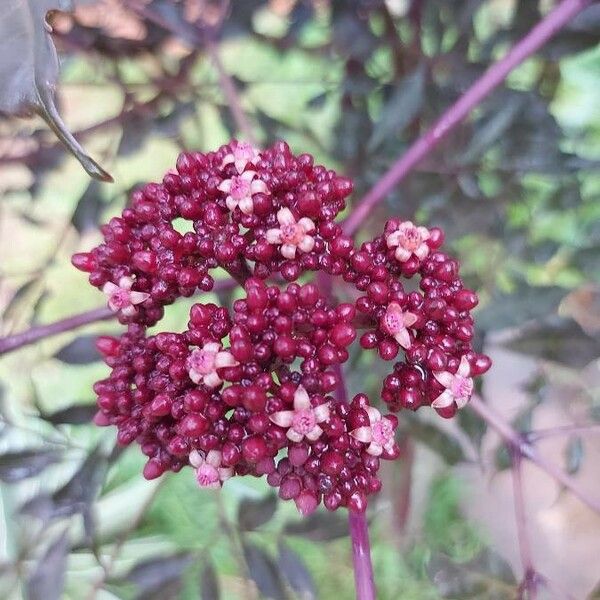
Plant Overview
Often called the Red Tree-Vine or West Bengal Coffee, Leea rubra is a striking tropical shrub that looks like it belongs in a botanical illustration. Native to the humid forests of South and Southeast Asia, it is prized by gardeners for its dramatic, wine-colored foliage and its ability to add a "jungle" feel to shaded corners. Despite the common name, it isn't related to your morning cup of joe, but its lush growth and vibrant berries make it just as stimulating for the eyes.
🔍 How to Identify
- 🌿 Burgundy Foliage: The leaves are large and deeply divided (pinnate), often emerging in a dark, metallic purple or burgundy before maturing into a deep, forest green with red veins.
- 🔴 Jewel-Like Blooms: It produces flat-topped clusters of tiny, brilliant red or pinkish-red flowers that look like small explosions of color against the dark leaves.
- 🎋 Zingy Stems: The stems are not your average brown or green; they often carry the same rich, reddish-purple tint as the leaves, creating a seamless, colorful silhouette.
🏡 In Your Garden
- ☁️ Humidity is Key: Because this plant originated in tropical understories, it craves moisture. In dry indoor environments, it may struggle with "crispy" leaf edges, so regular misting or a pebble tray is its best friend.
- ⛅ Dappled Light Enthusiast: It thrives in "bright-indirect" light. Too much direct sun will scorch the delicate leaves, but too little light will cause the vibrant red colors to fade into a dull green.
- 💧 Thirsty but Picky: It prefers to stay consistently moist but hates "wet feet." Using a well-draining, peaty soil mix ensures the roots stay hydrated without rotting.
⚠️ Safety & Toxicity
- 🐾 Pet Caution: While not listed as highly "deadly," Leea rubra is generally considered better for viewing than chewing. It is best to keep it out of reach of curious cats and dogs.
- 👅 Mild Irritant: Like many tropical ornamentals, the sap or leaves may cause mild stomach upset or mouth irritation if ingested due to the presence of calcium oxalate crystals.
✨ Fun Fact
- 🐜 Ant Bodyguards: Leea rubra is known for having "pearl glands"—tiny, translucent beads on its leaves that look like water droplets. These are actually nutrient-rich snacks designed to attract ants, which in turn act as a private security force to protect the plant from other pests!

Detailed Care Instructions
To grow Leea Rubra, also known as the Red Leea or Indian Holly Fern, you can follow these steps:
- Choose a suitable location: Leea Rubra thrives in partial shade to full sun. Select a location with well-draining soil that is rich in organic matter.
- Prepare the soil: Incorporate compost or well-rotted manure into the soil to improve its fertility and drainage. Leea Rubra prefers slightly acidic to neutral soil with a pH level of about 6-7.
- Propagation: There are three common methods of propagation for Leea Rubra: Seeds, stem cuttings, and division.
- Seeds: Sow the seeds in a pot or seed tray filled with well-draining potting mix. Keep the soil moist and ensure the seeds receive indirect sunlight. Transplant the seedlings into individual pots once they reach a suitable size.
- Stem cuttings: Take stem cuttings measuring around 6 inches in length from a mature, healthy plant. Remove the lower leaves and dip the cut end into a rooting hormone. Plant the cutting in a pot filled with a well-draining potting mix and keep it in a warm, humid environment until roots develop.
- Division: If you have an established Leea Rubra plant, you can divide it by carefully separating the root clump into smaller sections. Ensure each section has sufficient roots attached before replanting them.
- Seeds: Sow the seeds in a pot or seed tray filled with well-draining potting mix. Keep the soil moist and ensure the seeds receive indirect sunlight. Transplant the seedlings into individual pots once they reach a suitable size.
- Planting: Dig a hole in the prepared soil that is slightly larger than the root ball of the seedling or plant division. Place the plant in the hole, making sure the top of the root ball is level with the soil surface. Backfill the hole and gently firm the soil around the plant.
- Watering: Keep the soil consistently moist, especially during the plant's initial establishment period. Water deeply but avoid overwatering, as it can lead to root rot. Regularly check the moisture level of the soil and adjust watering accordingly.
- Mulching and Fertilizing: Apply a layer of organic mulch around the base of the plant to conserve moisture, suppress weeds, and provide nutrients. Use a balanced, slow-release fertilizer during the growing season to promote healthy growth.
- Pruning: Leea Rubra benefits from regular pruning to maintain its shape and encourage bushier growth. Prune in late winter or early spring before new growth begins. Remove any dead or damaged branches, as well as any overly long or leggy growth.
Remember to provide adequate protection from extreme weather conditions and pests. Monitor the plant regularly for signs of diseases or pests and take appropriate action if necessary.

Place in a bright room that is sun drenched almost all day. Or directly in a south-facing window.

To water this plant, it is important to first check the soil moisture level. This can be done by sticking a finger or a moisture meter about one inch into the soil. If the soil feels dry, it is time to water. It is best to water the plant slowly and deeply, allowing the water to saturate the soil and reach the roots. Be careful not to overwater, as this can lead to root rot. It is also important to ensure that the plant has proper drainage, as standing water can cause issues. Watering frequency will depend on various factors such as humidity, temperature, and amount of sunlight the plant receives. It is best to monitor the plant and adjust watering as needed.
To fertilize the plant, use a balanced NPK fertilizer during the growing season. Dilute the fertilizer according to the instructions on the packaging and apply it to the soil around the base of the plant. Water the plant thoroughly after fertilizing. Avoid over-fertilizing, as this can lead to burn and damage the plant.
Leea Rubra plant is a type of plant that requires a well-draining soil mix that is rich in nutrients. The ideal soil mix for this plant should have a pH level of around 5.5 to 6.5, which is slightly acidic. It should also be able to retain moisture without causing waterlogging, as this can result in root rot. A recommended soil mix for this plant should contain a blend of peat moss, perlite, and vermiculite. These materials are known for their moisture retention and aeration properties, making them perfect for maintaining an ideal soil environment for Leea Rubra plant. Additionally, adding organic matter such as compost or aged manure to the soil mix can provide the plant with the necessary nutrients needed for growth and development. Overall, using a well-draining, acidic soil mix that is rich in nutrients and organic matter can help ensure that the Leea Rubra plant thrives and remains healthy.
Leea Rubra is a plant that can be propagated through various methods. Here are some steps to propagate it:
- Gather a healthy and mature Leea Rubra plant.
- Look for a stem that is healthy and has several leaves.
- Take a sharp and sterilized pair of scissors or pruning shears to cut a stem from the main plant.
- Remove the bottom leaves carefully, leaving only a few leaves on the top.
- Dip the bottom of the stem in rooting hormone powder.
- Place the stem in a potting mix of sand and soil or in water.
- If planting in soil, bury the stem about an inch deep. If planting in water, place the stem in a jar with water covering the bottom inch of the stem.
- Keep the soil or water moist and place the plant in a bright but indirect light spot.
- After a few weeks, new roots and leaves will start to grow.
- When the plant has grown to a healthy size, it can be transplanted into a larger pot or in the ground.
Note: It is important to wear gloves when handling Leea Rubra as it can cause skin irritation.








