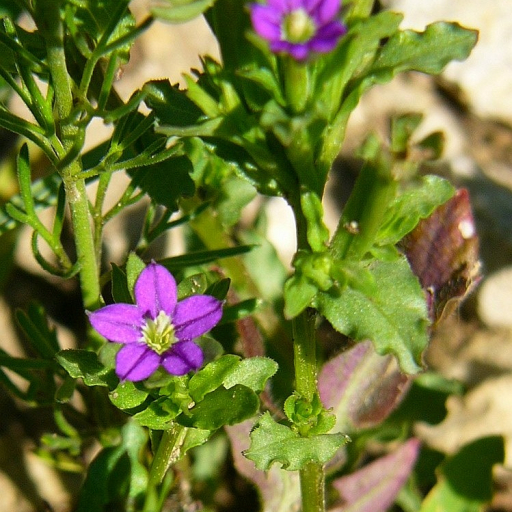
Plant Overview
Often called the Lesser Venus's-looking-glass, this delicate wildflower is a hidden gem of old-world cornfields and sun-drenched meadows. While it might seem like a modest weed to some, its tiny, star-shaped purple blossoms carry a touch of ancient mythology. It is a resilient survivor that once carpeted European landscapes, acting as a colorful companion to traditional grain crops.
🔍 How to Identify
- 🌸 The Bloom: Tiny, five-petaled flowers that are deep violet or lilac. Interestingly, the sepals (the green leaf-like parts behind the flower) are often longer than the petals themselves, giving them a guarded, star-like appearance.
- 🍃 Wavy Foliage: The leaves are oblong and have distinctively "crinkled" or wavy margins. They sit directly on the stem without much of a stalk.
- 📏 Sturdy Frame: The plant is relatively small and upright, usually covered in fine, stiff hairs that give the stem a slightly rough texture.
🏡 In Your Garden
- 🌱 Disturbance Lover: This plant thrives in "arable" conditions, meaning it actually likes soil that is occasionally dug up or disturbed. It is a specialist of chalky, lime-rich soils where other plants might struggle.
- ☀️ Sun Seeker: It is not a fan of the deep woods; it prefers open, sunny spots where it can complete its life cycle quickly before taller grasses overshadow it. Because it is an annual, it relies entirely on its seeds to return the following year.
⚠️ Safety & Toxicity
- ✅ Safe Status: Legousia hybrida is generally considered non-toxic to humans and common household pets.
- 🐾 Garden Context: While it won't harm your dog or cat if they take a curious nibble, it is not a culinary herb and is best left as a visual treat in the garden rather than a snack.
✨ Fun Fact
The name "Venus's Looking-glass" comes from a myth involving the goddess of beauty. It is said that she possessed a magic mirror that showed only beautiful things; when it was lost and shattered on Earth, these flowers sprang up from the shards to honor her image.

Detailed Care Instructions
To grow Legousia hybrida (venus's looking-glass), you can follow these steps:
- Climate and location: Legousia hybrida is a cool-season annual plant that prefers moderate temperatures. It can tolerate partial shade but also does well in full sun. Ensure your location has moist, well-draining soil.
- Soil preparation: Prepare the soil by removing any weeds, rocks, or debris. Add organic matter like compost or well-rotted manure to enhance the soil structure and fertility. Legousia hybrida prefers slightly acidic to neutral soil pH.
- Propagation: You can grow Legousia hybrida from seeds. Sow the seeds directly into the garden bed after the last frost date. Alternatively, you can start the seeds indoors 6-8 weeks before the last frost and then transplant them outside once the seedlings are established.
- Sowing seeds: Broadcast the seeds over the prepared soil surface and lightly press them into the soil. Cover the seeds with a thin layer of finely sifted compost or vermiculite. Water the seeds gently to keep the soil moist but not saturated.
- Watering and care: Water the plants regularly, keeping the soil slightly moist throughout the growing season. Avoid overwatering, as excess moisture can cause root rot. Mulching around the plants can help retain soil moisture and prevent weed growth.
- Fertilization: Legousia hybrida doesn't require heavy fertilization. If the soil is poor, you can apply a balanced, slow-release fertilizer according to the manufacturer's instructions. Too much nitrogen can result in excessive foliage growth, so a balanced fertilizer is recommended.
- Pruning: Legousia hybrida generally doesn't require pruning but can benefit from occasional deadheading. Deadheading involves removing spent flowers to encourage additional blooms and maintain a tidy appearance.
- Pests and diseases: Legousia hybrida is generally resistant to pests and diseases. However, aphids, slugs, and snails may occasionally attack the plants. Monitor the plants regularly and take appropriate measures if necessary, such as using organic pest control methods or removing pests manually.
- Harvesting seeds: If you wish to save seeds for future planting, allow some flowers to mature and dry on the plant. Once the seed pods turn brown, collect them, and store in a cool, dry place until needed.
By following these steps, you can successfully grow Legousia hybrida and enjoy its beautiful flowers.
To water this plant, it is important to first assess the soil moisture level by sticking a finger into the soil. If the soil is dry to the touch, then the plant needs to be watered. The best way to water this plant is to do so slowly and evenly, avoiding getting water on the leaves or flowers. This can be achieved by using a watering can or a drip irrigation system. It is important not to overwater the plant, as this can cause root rot and other problems. It is recommended to water this plant once a week, or more frequently during hot and dry weather conditions.
To fertilize this plant, apply a balanced fertilizer with equal amounts of nitrogen, phosphorus, and potassium. Use a slow-release fertilizer every 4-6 weeks during the growing season. Water the plant thoroughly before and after fertilizing to prevent fertilizer burn. Avoid overfertilizing as it can cause the plant to grow excessively and become weak.
The ideal soil for Legousia Hybrida would be a well-draining soil that is rich in nutrients but not too heavy. It should have a pH level of around 6.0-7.0 and be able to hold moisture without becoming waterlogged. A mix of peat moss, perlite, and vermiculite would be a good option, along with some compost or aged manure to provide nourishment. This plant prefers a slightly acidic soil, so adding some sulfur or pine straw may be beneficial. Avoid using soil that is too heavy or clay-like, as it can lead to root rot. Additionally, it is recommended to fertilize the plant with a balanced, slow-release fertilizer during the growing season.
It is possible to propagate this plant by taking stem cuttings. You should first select a healthy stem with several leaves and trim it just below a node. Remove any lower leaves, leaving only two or three at the top of the cutting. The cutting should then be planted in moist soil and kept in a warm, shady place. Once roots have developed and the cutting has established itself, it can be transplanted into a larger pot or into the ground. Additionally, this plant can also be propagated through seed. You can collect the seeds from the flower heads and sow them directly into the soil. It is important to keep the soil moist until the seedlings emerge.








