Plant Overview
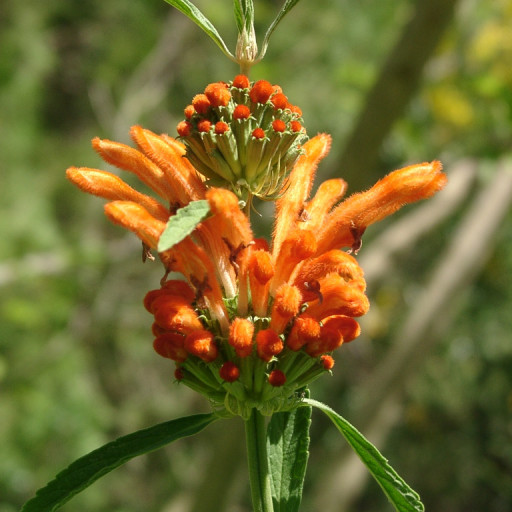
Imagine a majestic lion roaming the South African veld—now picture its tail captured in floral form. Often called "Wild Dagga" or "Lion's Tail," this striking member of the mint family is famous for its tiered architecture and vibrant, velvety orange blooms. It’s a showstopper in any landscape, bringing a sense of wild, architectural drama to the garden.
🔍 How to Identify
- 🦁 Flower Clusters: The most iconic feature is the fuzzy, tubular orange flowers that grow in distinct, spherical "pom-poms" stacked at intervals along the stem.
- 🍃 The Foliage: It features long, narrow, dark green leaves with serrated edges that release a pleasant, spicy aroma when brushed against.
- 🧊 Square Stems: True to its membership in the Lamiaceae (mint) family, the plant has very sturdy, four-sided stems that help it stand tall even in wind.
🏡 In Your Garden
- ✂️ Pruning Strategy: This plant grows fast and can become "leggy" or woody over time. To keep it looking lush and vibrant, give it a hard prune in late winter or early spring to encourage fresh, bushy growth.
- 🦋 Pollinator Magnet: If you love wildlife, this is a must-have. Its deep, nectar-rich tubes are specifically evolved to be accessed by hummingbirds and butterflies, who flock to the "orange towers."
- 🏜️ Drainage is King: While it is incredibly drought-tolerant once established, it hates "wet feet." Ensuring your soil is well-draining is the secret to preventing root rot during rainy seasons.
⚠️ Safety & Toxicity
- 🐾 Pet & Child Safety: Lion's Tail is generally considered non-toxic to humans in small amounts, but it can cause mild stomach upset in pets if chewed.
- ✋ Skin Sensitivity: The tiny, velvety hairs on the flowers and leaves can sometimes cause minor skin irritation for people with very sensitive skin, so wearing gloves while pruning is a good idea.
- 🌿 Traditional Use: It contains leonurine, a compound traditionally used in South African medicine. However, it should never be consumed or used medicinally without expert pharmaceutical guidance.
✨ Fun Fact
The name "Wild Dagga" comes from the local Khoikhoi word for cannabis, as the plant was historically smoked for its mild, relaxing properties—though it is completely legal and much less potent than its namesake!

Detailed Care Instructions
| Color | Bright Orange |
| Soil Ph | Neutral To Slightly Alkaline |
| Lighting | Full Sun |
| Toxicity | Toxic |
| Soil Type | Average, Medium, Well-Drained Soils |
| Bloom Time | Seasonal Bloomer, Varies |
| Plant Type | Broadleaf Shrub |
| Mature Size | 4-6 Ft. Tall |
| Native Area | South Africa |
| Sun Exposure | Full Sun |
| Hardiness Zones | 8-11 |
Here are some steps to help you grow Leonotis Leonurus plants:
- Location: Choose a sunny location for your Leonotis Leonurus plant as it loves full sun. Make sure it receives at least six hours of direct sunlight daily.
- Soil: The plant prefers well-draining soil. Prepare the soil by adding organic matter such as compost or well-rotted manure to improve fertility and drainage.
- Sowing Seeds: You can start growing Leonotis Leonurus plants from seeds. Sow the seeds in individual pots or trays, approximately 1/4 inch deep in the soil. Keep the soil consistently moist until germination. The germination period usually takes around 2-3 weeks.
- Transplanting: Once the seedlings have sprouted and grown to a suitable size, you can transplant them into your garden or larger containers. Space them about 2-3 feet apart to provide enough room for growth.
- Watering: Water your Leonotis Leonurus regularly to keep the soil moist, especially during dry periods. However, make sure not to overwater as the plant can be susceptible to root rot.
- Fertilizer: Feed your Leonotis Leonurus plant once every month during the growing season with a balanced, all-purpose fertilizer. Follow the package instructions for the correct application rate.
- Pruning: Prune the plant regularly to maintain its shape and encourage bushier growth. Pinch off any dead or faded flowers to promote continuous blooming.
- Propagation: If you want to propagate more plants, you can do so by taking stem cuttings in spring or early summer. Dip the cut ends in rooting hormone and plant them in a well-draining potting mix. Keep the soil moist until roots develop.
- Protection: If you live in an area with colder winters, you may need to protect your Leonotis Leonurus from frost. Consider covering the plant with a frost cloth or moving it to a sheltered location during the coldest months.
By following these steps and providing the appropriate care, you should be able to successfully grow Leonotis Leonurus plants.

Place in a window with dappled sun or a spot in the middle of a room. Or directly in a window facing west or east.

To water this plant, first ensure that the soil is dry to the touch before watering. This plant prefers well-draining soil, so make sure the pot has drainage holes and is not sitting in standing water. When watering, pour room temperature water slowly and evenly around the soil until it begins to run out the drainage holes. Avoid getting water on the leaves as it can cause damage or disease. Watering should be done when the soil feels dry and not on a set schedule. During periods of drought or dry weather, this plant may need more frequent watering.
To fertilize this plant, apply a balanced fertilizer, such as a 10-10-10, during the growing season. Apply the fertilizer at a rate of 1 tablespoon per square foot of soil every 4 to 6 weeks. Water the plant thoroughly after fertilizing to help distribute the nutrients evenly throughout the soil. Avoid fertilizing in the winter when the plant is dormant.
The most suitable type of soil to use with this plant is one that is well-draining and rich in nutrients. The pH level of the soil should be slightly acidic to neutral. It is also important to ensure that the soil is not compact and allows for air circulation to the roots. A good soil mix may contain a combination of peat moss, sand, and perlite to ensure drainage, with added organic matter like compost or well-rotted manure to provide nutrients. Regular fertilizing with a balanced fertilizer can also help to encourage healthy growth.
To propagate this plant, first select a healthy, mature plant with several stems. Choose a stem that is at least 6 inches long and has several leaves on it.
Next, using a clean, sharp pair of shears, make a clean cut just below a leaf node on the selected stem. The cutting should be about 3-4 inches in length.
Remove the leaves from the lower half of the cutting, leaving only the top few leaves intact.
Fill a pot with well-draining soil and create a small hole in the center for the cutting.
Dip the cut end of the cutting into a rooting hormone powder, tapping off any excess.
Place the cutting into the hole in the soil and gently pack the soil around it. Water the cutting thoroughly.
Place the pot in a warm, sunny location, but out of direct sunlight. Keep the soil moist but not wet.
Within a few weeks, roots should begin to develop, and new growth will appear on the top of the cutting.
Once the new plant has grown several new leaves and is developing a good root system, it can be transplanted into its permanent location in a larger pot or in the ground.








