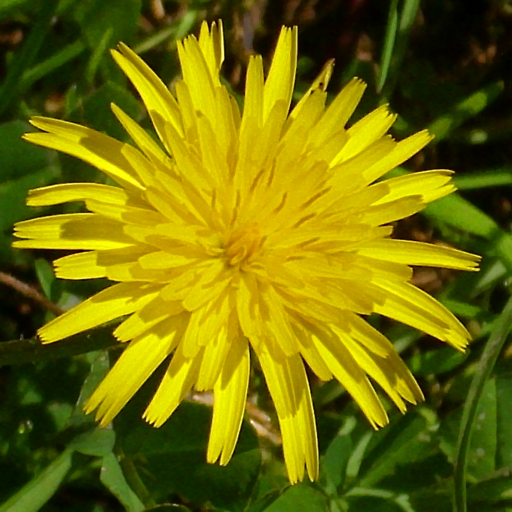
Plant Overview
Often mistaken for a common dandelion at first glance, the Tuberous Hawkbit is a resilient Mediterranean native known for its secret underground treasure. While its sunny yellow face brightens dry meadows and rocky hillsides, its real strength lies in the swollen, potato-like tubers hidden beneath the soil. These "storage tanks" allow the plant to survive harsh droughts by retreating underground when the sun becomes too intense.
🔍 How to Identify
- 🌼 Sunny Florets: It produces bright yellow, composite flower heads that sit atop long, slender, and leafless stems. Unlike dandelions, the outer petals often have a distinct grayish or reddish tint on the underside.
- 🍃 Bristly Rosette: The leaves are arranged in a flat circle at the base (a rosette). They are elongated, wavy-edged, and covered in rough, stiff hairs that feel slightly sandpaper-like to the touch.
- 🥔 Swollen Roots: The most defining feature is underground. If you were to look at the root system, you would find several spindle-shaped, fleshy tubers rather than a single long taproot.
🏡 In Your Garden
- ☀️ Drought Specialist: This plant is an expert at water management. Because of its tuberous roots, it is a fantastic candidate for xeriscaping or rock gardens where other delicate flowers might wilt under the summer heat.
- 🐝 Pollinator Magnet: It serves as a vital "fast food station" for wild bees, hoverflies, and butterflies. Its long blooming season provides a consistent source of nectar when other meadow flowers have faded.
⚠️ Safety & Toxicity
- ✅ General Safety: Leontodon tuberosus is considered non-toxic to humans, dogs, and cats. It is not known to cause contact dermatitis or poisoning.
- 🥗 Foragers Note: While the roots were historically eaten in some Mediterranean regions during times of scarcity, they are very fibrous. Always ensure 100% positive identification before consuming any wild plant, as it can easily be confused with less friendly "yellow composites."
✨ Fun Fact
In the past, the roasted tubers of the Tuberous Hawkbit were occasionally used as a caffeine-free coffee substitute. However, the flavor is described as much more earthy and bitter than a standard latte!

Detailed Care Instructions
To grow a Leontodon tuberosus plant, also known as Tuberous Hawkbit or Coltsfoot, you can follow these steps:
- Obtaining seeds or plant: You can purchase Leontodon tuberosus seeds online, from seed catalogs, or from local nurseries. Alternatively, you may find the plant itself and propagate it through division or stem cuttings.
- Choosing the planting location: Leontodon tuberosus enjoys full sun to partial shade. Select a location that receives at least six hours of direct sunlight each day.
- Preparing the soil: Tuberous Hawkbit prefers well-draining soil with a pH level between 6.0 and 7.5. Amend the soil with organic matter like compost or aged manure to improve its fertility, structure, and drainage.
- Sowing seeds or planting: If starting from seed, sow them in early spring to late summer. Prepare a seedbed by removing weeds and loosening the soil surface. Sprinkle the seeds on the soil and cover them lightly with a thin layer of soil or compost. Water gently.
- Watering: Keep the soil consistently moist but not waterlogged. Water the plant whenever the top inch of the soil feels dry. Avoid overwatering, as it can cause root rot.
- Fertilizing: Leontodon tuberosus does not require heavy fertilization. However, you can provide a balanced, slow-release fertilizer once a year in early spring or side-dress with compost during the growing season.
- Mulching: Apply a layer of organic mulch around the plant to suppress weeds, retain moisture, and regulate soil temperature. Mulching also helps to improve soil fertility as it decomposes.
- Maintenance: Remove weeds regularly to prevent competition for nutrients and space. Deadhead any spent flowers to promote continuous blooming.
- Propagation: If you have an existing Leontodon tuberosus plant, you can propagate it by division in early spring or by stem cuttings in late spring. Make sure to plant the divisions or cuttings in well-prepared soil.
- Pests and diseases: Leontodon tuberosus is relatively resistant to pests and diseases. However, keep an eye out for common garden pests like aphids or slugs. Treat any infestation promptly with organic pest control solutions.
By following these steps, you should be able to successfully grow Leontodon tuberosus and enjoy its bright yellow flowers.

Place in a bright room that is sun drenched almost all day. Or directly in a south-facing window.

To water this particular plant, you should first ensure that the soil is dry to the touch before watering. When you water, take care to avoid getting water on the leaves of the plant, as this can lead to fungal growth or other issues. Instead, aim to water the soil around the plant directly, giving it a slow but steady stream of hydration. It's also important not to overwater this plant, as this can cause root rot or other problems. Instead, water only when necessary and allow the soil to dry out at least partially between waterings. Finally, consider using a high-quality potting mix and ensuring that the plant has adequate drainage to prevent water from pooling around the roots.
To fertilize the Leontodon Tuberosus plant, follow these instructions:
- Choose a balanced, water-soluble fertilizer with a ratio of nitrogen (N), phosphorus (P), and potassium (K) in equal proportions. Look for a ratio like 10-10-10 or 20-20-20.
- Dilute the fertilizer according to the manufacturer's instructions. Typically, a general recommendation is to mix 1 tablespoon of fertilizer per gallon of water, but these proportions may vary depending on the brand.
- Water the Leontodon Tuberosus plant thoroughly before applying the fertilizer. This ensures that the roots are adequately hydrated and prepares them for nutrient absorption.
- Pour the diluted fertilizer solution over the soil around the base of the plant, avoiding direct contact with the foliage. Apply enough solution to moisten the soil but not to the point of excessive runoff.
- Repeat the fertilization process every four to six weeks during the growing season, typically spring through early fall. Adjust the frequency and dosage according to the specific requirements of the Leontodon Tuberosus plant and the fertilizer used.
- Monitor the plant's response to the fertilizer, including foliage color, growth, and overall health. If you observe any signs of over-fertilization, such as burnt or scorched leaves, reduce the amount or frequency of fertilizer application.
- It is essential to follow a regular watering schedule to prevent the buildup of excess salts from the fertilizer. Ensure the Leontodon Tuberosus plant's soil is well-drained and never allow it to sit in standing water.
Remember, every plant's fertilizer needs may vary, so it's crucial to consider the specific requirements of the Leontodon Tuberosus plant and adjust the fertilization accordingly. Monitor the plant's health and make changes as needed to promote optimal growth and flowering.
The ideal soil for Leontodon Tuberosus plant is one that is well-draining, moderately fertile, and rich in organic matter. A sandy loam soil that is slightly acidic with a pH range of 5.5 to 6.5 is suitable for the plant. It is important to ensure that the soil is moisture-retentive but not waterlogged. The plant prefers soil with adequate nutrients, so it is recommended to add organic fertilizers such as compost or well-rotted manure to the soil before planting. The plant roots are shallow, and therefore, it is advised not to cultivate the soil around the plant. It is also recommended to mulch around the plant to conserve moisture and prevent weed growth.
Propagation of Leontodon Tuberosus plants can be achieved through various methods. One common method is through seed propagation. Here are the steps to propagate Leontodon Tuberosus plants using seeds:
- Obtain fresh seeds from a mature Leontodon Tuberosus plant. It's important to collect seeds when they are mature and fully ripe.
- Prepare the planting medium by combining equal parts of well-draining potting soil, sand, and peat moss. This mixture provides an ideal germination environment for the seeds.
- Moisten the planting medium but ensure it is not waterlogged. Excessive moisture can lead to rotting of the seeds.
- Scatter the Leontodon Tuberosus seeds evenly across the planting medium. Gently press them into the soil, ensuring good soil-seed contact.
- Cover the seeds with a thin layer of the planting medium, around 1/8 to 1/4 inch deep.
- Place the pot or tray in a location with bright, indirect sunlight. Leontodon Tuberosus seeds require light for germination, so avoid completely covering them.
- Keep the planting medium consistently moist by misting it regularly or using a spray bottle. Avoid overwatering, as it can lead to fungal diseases.
- Germination typically occurs within 10 to 14 days, though it can take slightly longer.
- Once the seedlings have developed their first set of true leaves, they can be transplanted into individual pots with well-draining soil.
- Continue to provide the young Leontodon Tuberosus plants with adequate sunlight, water, and humidity until they become established.
- After the plants have grown to a suitable size, they can be transplanted into their desired permanent location in the garden.
By following these steps, you can successfully propagate Leontodon Tuberosus plants from seed and enjoy their beauty in your own garden.








