Plant Overview
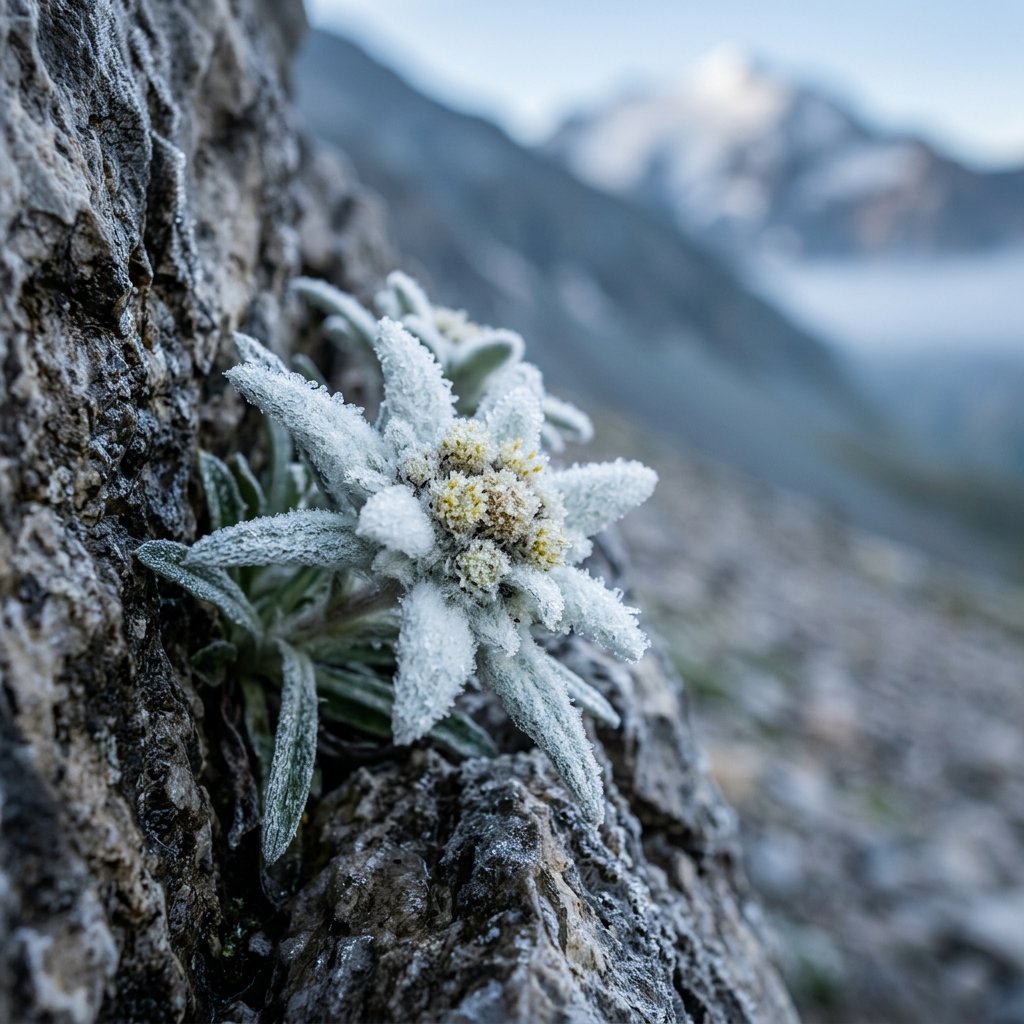
Known as the "Queen of the Mountain," the Edelweiss is perhaps the most iconic alpine flower in the world. Its name literally translates to "noble white" in German, and for centuries, it has been a symbol of rugged bravery, as suitors would risk their lives climbing dangerous crags to bring a bloom to their beloved. This woolly star of the Alps thrives where few other plants can survive, clinging to limestone ledges in the thinning mountain air.
🔍 How to Identify
- ❄️ The "Petals": What look like white, pointed petals are actually modified leaves called bracts. They are arranged in a double-star pattern and covered in dense, white, felt-like hairs.
- 🟡 The Core: The true flowers are the tiny, yellowish-green clusters tucked in the very center of the woolly star.
- ☁️ Woolly Texture: The entire plant is covered in a thick layer of "tomentum" (fine hairs), which gives it a silvery, ghostly appearance and protects it from intense UV radiation and freezing winds.
🏡 In Your Garden
- 🪨 The Great Drain: Edelweiss is an "obligate calcicole," meaning it loves limestone. In a garden setting, it requires exceptional drainage—think rock gardens or scree beds. If its roots sit in soggy soil for even a few days, the plant will likely succumb to rot.
- 🏔️ The Winter Rest: This plant is incredibly cold-hardy, but it hates "wet feet" during the winter. It prefers to be tucked under a blanket of snow or kept relatively dry during its dormant phase. It has a deep taproot, so once you plant it, try not to move it!
⚠️ Safety & Toxicity
- ✅ Status: Non-toxic and safe.
- 🐾 Details: Edelweiss is generally considered safe for humans, dogs, and cats. In fact, it has a long history in traditional mountain medicine for treating digestive issues, though today it is primarily a protected ornamental treasure.
✨ Fun Fact
The thick white "fuzz" on the Edelweiss isn't just for show—it is a sophisticated evolutionary suit of armor. These hairs are structured to absorb ultraviolet light while reflecting the rest of the solar spectrum, acting as a high-altitude sunscreen to prevent the plant from being scorched by the intense mountain sun.

Detailed Care Instructions
Leontopodium Nivale, commonly known as Edelweiss, is a beautiful and delicate alpine plant native to mountainous regions of Europe, particularly the Alps. Growing this plant can be a bit challenging, but with the right conditions and care, it is possible. Here are some steps to help you grow Leontopodium Nivale:
- Climate and Location: Edelweiss thrives in cool, alpine environments. It requires a cold winter period to go dormant and a moderate to cool summer climate. If you live in a region with similar conditions or have the ability to recreate them, you can grow Edelweiss successfully.
- Soil: Edelweiss prefers well-draining soil that is slightly alkaline. It is naturally found in limestone-rich soils. A mix of coarse sand, gravel, and a small amount of lime can provide a suitable growing medium.
- Sunlight: Edelweiss requires plenty of sunlight. Make sure to place it in a spot with at least six hours of direct sun each day.
- Watering: Edelweiss prefers a moderate amount of moisture but is sensitive to overwatering. Water the plant when the top inch of soil feels dry, providing enough water to keep the soil slightly moist but not waterlogged. Avoid standing water or excessive humidity, as this can lead to root rot.
- Temperature: Edelweiss can tolerate cold temperatures during winter but may struggle with extreme heat. Ideally, the temperature should remain between 60°F (15°C) and 70°F (21°C) during the growing season.
- Propagation: Edelweiss can be propagated through seeds or stem cuttings. However, it can be challenging to acquire seeds or cuttings, as the plant is protected in some areas due to its rarity. If you manage to obtain seeds or cuttings, follow the provided instructions carefully.
- Maintenance: Regularly remove dead leaves and flowers to promote healthy growth and prevent disease. Be careful not to damage the plant during pruning.
- Protection: If you live in an area with harsh winters, protect the plant by covering it with a layer of mulch or straw during the colder months. This will insulate the roots and help prevent damage.
Remember that growing Edelweiss can be challenging, and it may take some time and effort to have success. It's crucial to provide the right environmental conditions and care to give this delicate plant the best chance of thriving.

Place in a bright room that is sun drenched almost all day. Or directly in a south-facing window.

Leontopodium Nivale plants require a consistent and regular watering schedule to thrive. It is important to avoid overwatering as it can lead to root rot, which can ultimately kill the plant. One way to determine when watering is necessary is by checking the soil moisture level. Stick your finger about an inch into the soil, and if it feels dry to the touch, it is time to water. Water the plant slowly and evenly, making sure to saturate the soil thoroughly. Allow the soil to dry out partially before the next watering, but avoid letting it completely dry out. It is also important to avoid getting water on the leaves, as this can promote the growth of fungal diseases.
- Choose a nitrogen-rich fertilizer with a balanced ratio of macro and micronutrients.
- Sprinkle the fertilizer evenly over the soil around the base of the plant.
- Water the plant immediately after fertilizing to help the nutrients reach the roots.
- Repeat the fertilization process every 4-6 weeks during the growing season.
- Avoid fertilizing during the winter months when the plant is dormant.
The ideal soil for growing this plant is a well-draining, slightly acidic soil with a pH level between 5.0 and 6.5. The soil should be sandy and loamy with a good mixture of organic matter. It should also be rich in nutrients like nitrogen, phosphorous, and potassium. The plant prefers a moist but not overly wet soil, so proper drainage is key. It can also tolerate some degree of alkalinity in the soil, but highly alkaline soils should be avoided. Overall, the soil should be light, porous, and fertile to allow for proper growth and development of the plant.
Leontopodium Nivale plant can be propagated through a variety of methods such as division, seeds, and cuttings. Division involves separating the plant into smaller sections and replanting them in separate containers or locations. This method is most effective for mature plants.
Seeds can be collected from the plant and sown in a seed tray or potting mix. The seeds should be kept moist and warm until they germinate. Once the seedlings have sprouted, they can be transplanted into their own containers or into the ground.
Cuttings can be taken from the plant and propagated in a rooting hormone and potting mix. The cuttings should be kept moist and warm until they produce roots. Once they develop roots, they can be transplanted into a larger container or into the ground.
Regardless of the propagation method chosen, Leontopodium Nivale plant requires frequent watering, fertilization, and care to ensure that they grow strong and healthy. With proper care and attention, the plant can be successfully propagated and will provide beautiful blooms year after year.








