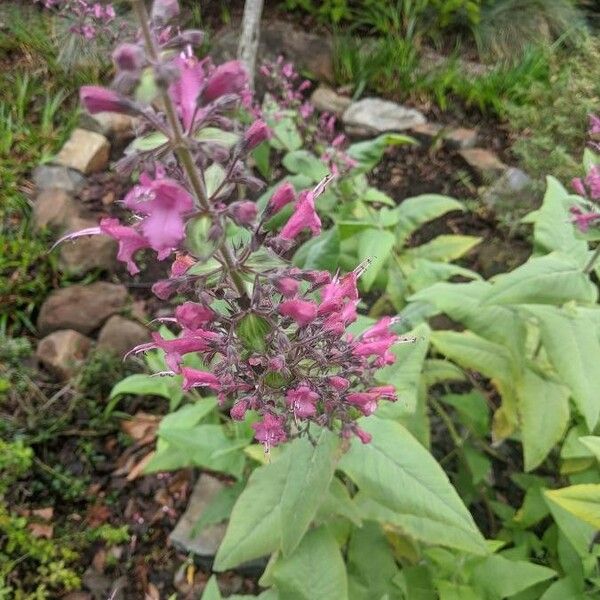
Plant Overview
Often called the Mexican Pitcher Sage or Pakaha, this stunning perennial is a hidden gem for drought-resistant gardens. Its large, spear-shaped leaves release a complex, spicy aroma when brushed—a unique blend of pine, mint, and traditional sage. Native to the high-altitude regions of Mexico and parts of Hawaii, it is prized for its dramatic architectural shape and velvet-like texture.
🔍 How to Identify
- 🍃 Spear-Shaped Foliage: The leaves are "hastate" (shaped like a spearhead) and covered in a soft, silvery fuzz that gives them a dusty, matte appearance.
- 🍷 Deep Maroon Blooms: In late summer and autumn, tall, dark stems emerge, topped with tubular flowers in a rich shade of deep magenta or "wine" red.
- 📏 Shrub-like Stature: It grows into a substantial, upright mound, typically reaching 3 to 5 feet tall, making it a bold focal point.
🏡 In Your Garden
- 🏜️ Drought Champion: This plant is an expert at water conservation. It prefers a "soak and dry" cycle, meaning it thrives when the soil is allowed to dry out completely between waterings.
- 🐝 Hummingbird Favorite: The flowers are shaped perfectly for long-beaked pollinators. If you plant this, expect regular visits from hummingbirds and large bumblebees.
- 🪴 Winter Drainage: While it is quite hardy, its biggest enemy is soggy winter soil. It requires gritty, well-draining earth to prevent its roots from rotting during dormant months.
⚠️ Safety & Toxicity
- ✅ Low Risk: Lepechinia hastata is generally considered non-toxic to humans and common household pets like cats and dogs.
- 🌿 Aromatic Sensitivity: Because the leaves are rich in volatile oils, some sensitive individuals might experience mild skin redness if they handle the crushed foliage excessively during pruning.
✨ Fun Fact
The name hastata comes from the Latin word hasta, meaning "spear." This is the same linguistic root used for "hastilude," a term for medieval spear-games or jousting, referring perfectly to the plant's sharp-looking (but soft-feeling) leaves.

Detailed Care Instructions
To grow Lepechinia hastata, also known as pitcher sage, follow these steps:
- Choose a suitable location: Lepechinia hastata prefers full sun to partial shade. Select a spot in your garden with well-draining soil.
- Soil preparation: Prepare the soil by removing any weeds or rocks. Loosen the soil with a garden fork or tiller to improve drainage.
- Planting: Dig a hole that is slightly larger than the root ball of the Lepechinia hastata plant. Place the plant in the hole, ensuring that it is at the same level as it was in its container. Fill the hole with soil, firming it gently around the plant.
- Watering: Water the Lepechinia hastata immediately after planting to settle the soil. Afterward, water the plant deeply but infrequently, allowing the soil to dry out slightly between waterings. This plant is drought-tolerant once established.
- Mulching: Apply a layer of organic mulch around the base of the plant, leaving a small space around the stem to prevent rot. Mulch helps retain moisture and suppresses weeds.
- Pruning: Lepechinia hastata can benefit from light pruning to maintain its shape and encourage bushiness. Prune back after flowering or when the plant becomes too leggy. Remove any dead or diseased branches as necessary.
- Fertilizing: While Lepechinia hastata does not require heavy fertilization, you can apply a balanced, slow-release fertilizer in early spring to provide nutrients for healthy growth.
- Propagation: This plant can be propagated through seed or stem cuttings in early spring or early fall. Sow seeds at a depth of 1/4 inch in well-draining soil and keep moist until germination.
- Pest and disease control: Overall, Lepechinia hastata is relatively pest and disease-resistant. However, watch out for aphids or spider mites. These can be controlled with insecticidal soap or by spraying them off with a strong stream of water.
Taking these steps will help you successfully grow and care for your Lepechinia hastata plant.
To water this plant, you should aim to keep the soil consistently moist but not overly saturated. Water deeply and thoroughly once a week, or more frequently in hotter or drier weather. Avoid getting the leaves wet when watering to prevent disease. Additionally, make sure the soil has good drainage to prevent waterlogging and root rot.
To fertilize this plant, it is recommended to apply a balanced slow-release fertilizer in early spring. Use a low-nitrogen, high-phosphorus formula. Avoid fertilizing in late fall or winter as the plant is dormant. Follow the instructions on the fertilizer package and avoid over-fertilizing as it can damage the plant. Water the plant deeply after fertilizing to encourage proper nutrient uptake.
Lepechinia hastata is a plant that prefers well-draining soil with good fertility. The soil should be slightly acidic to neutral, with a pH range of 6.0 to 7.0. It requires soil that is rich in organic matter and nutrients, as this will help it establish a strong root system and promote healthy growth.
To achieve the best soil for Lepechinia hastata it is recommended that you use a mixture of sandy loam, peat moss, and compost. It is also suggested that hard rock phosphate be mixed into the soil, as it is a slow-release fertilizer that provides the plant with essential nutrients over a long period of time.
Overall, the soil for Lepechinia hastata should be well-balanced in terms of moisture, drainage, and fertility. It should provide an optimal environment for the plant to grow and develop without any issues.
Lepechinia hastata is a plant species that can be propagated through vegetative means. One effective method is to take stem cuttings from healthy, mature plants during their growing season. Cuttings should be 4-6 inches in length and include several pairs of leaves. Remove the lower leaves and any flowers or buds. Dip the cut end in rooting hormone and place in a well-draining soil mix. Keep the soil moist but not wet and provide indirect light. Rooting should occur within a few weeks. Once roots have formed, transplant the cutting to a larger container or directly into the garden.








