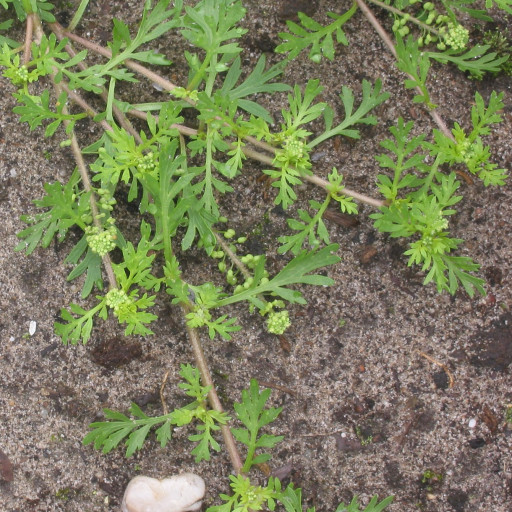
Plant Overview
Often found hugging the ground in lawns and sidewalk cracks, Lepidium didymum, commonly known as Lesser Swine-cress, is a resilient globetrotter. While many dismiss it as a mere weed, this peppery South American native is a master of survival, often mistaken for a miniature fern or a tiny sprig of parsley until its pungent, mustard-like aroma gives it away.
🔍 How to Identify
- 🌿 Feathery Foliage: The leaves are deeply divided and pinnate, giving the plant a delicate, fern-like appearance as it spreads in a flat mat.
- 🌼 Microscopic Blooms: It produces tiny, inconspicuous greenish-white flowers that lack petals or have very minute ones, clustered at the ends of the stems.
- 🍒 Twin Seed Pods: Its most defining feature is the fruit—small, notched, two-lobed pods that look like tiny pairs of kidneys or hearts joined together.
🏡 In Your Garden
- 👟 The Compaction King: This plant thrives where others fail, particularly in heavily compacted soil. If you find it taking over your lawn, it’s often a biological "tell" that your soil needs aeration.
- ✂️ Mower Defying: Because of its prostrate growth habit, it sits below the blade of a lawnmower, allowing it to flower and seed even in a meticulously manicured garden.
- 🌱 Self-Seeding Specialist: It is a prolific seed producer. A single plant can scatter hundreds of seeds, ensuring its return next season if not managed early.
⚠️ Safety & Toxicity
- 🐾 Pet Safety: It is generally considered non-toxic to cats and dogs. However, like many members of the Mustard family (Brassicaceae), it contains glucosinolates which can cause mild digestive upset if grazed upon in large quantities.
- 👅 Human Use: While technically edible and possessing a spicy, cress-like flavor, it is best avoided in urban areas where it may have absorbed pollutants or pesticides from sidewalk runoff.
✨ Fun Fact
The name "Swine-cress" is actually a bit of a historical insult! It was given this name because the plant’s strong, pungent odor was thought to be unpleasant, suggesting it was only fit for pigs—though ironically, most livestock tend to avoid eating it because of that very same sharp taste.

Detailed Care Instructions
| Humidity | Normal |
| Lighting | Part Sun |
| Difficulty | Easy |
| Hibernation | Cold Period |
To grow Lepidium didymum (also known as Lesser Swinecress), you can follow these steps:
- Choose the right location: Find a sunny spot in your garden or a well-lit indoor area by a south-facing window. Lepidium didymum thrives in full sun to partial shade.
- Prepare the soil: Ensure the soil is well-draining. Lepidium didymum can tolerate various soil types but prefers moist, loamy soil. If your soil is heavy or clay-based, consider incorporating organic matter such as compost or well-rotted manure to improve drainage and fertility.
- Sowing seeds: Lepidium didymum is typically grown from seeds. Sow the seeds directly into the ground or containers in early spring after the frost danger has passed. Scatter the seeds evenly and lightly press them into the soil to ensure good seed-to-soil contact. Keep the soil moist during germination.
- Watering: Keep the soil consistently moist but not waterlogged. Avoid overwatering, as it can lead to root rot. Water the plants deeply whenever the top inch of soil feels dry.
- Fertilization: Lepidium didymum generally doesn't require much fertilization. However, if you want to provide additional nutrients, you can apply a balanced, slow-release fertilizer according to the package instructions once or twice during the growing season.
- Weed control: Since Lepidium didymum can be invasive in some regions, it is essential to monitor and control its spread. Regularly inspect your garden for any unwanted seedlings and remove them promptly to prevent them from taking over.
- Harvesting: Lepidium didymum is an edible plant, and you can harvest its leaves and tender stems throughout the growing season. The leaves have a peppery taste and can be added to salads, soups, or used as a garnish. Harvesting regularly promotes new growth and increases the plant's overall productivity.
- Winter care: Lepidium didymum is an annual plant, and it may not survive severe frost or freezing temperatures. In colder regions, consider growing it as a potted plant indoors or collect the seeds to sow for the next growing season.
Remember to check your local regulations and guidelines before planting Lepidium didymum, as it may be considered an invasive species in some areas.

Place in a bright room that is sun drenched almost all day. Or directly in a south-facing window.

To successfully water this plant, you should first ensure that the soil is completely dry before you begin watering. Once you are ready to water, pour water directly onto the soil, being careful not to get the water onto any leaves or flowers. Water the plant slowly and evenly until the soil is moist but not waterlogged. It is important not to over-water this plant, as it is susceptible to root rot. To help prevent over-watering, allow the soil to dry out between waterings and avoid letting the plant sit in standing water.
To fertilize this plant, apply a balanced fertilizer with equal amounts of nitrogen, phosphorus, and potassium. Use a liquid or water-soluble fertilizer according to the manufacturer's instructions for dilution and frequency of application. Fertilize the plant once a month during the growing season, which is typically spring and summer. Be careful not to over-fertilize as it can cause leaf burn and other damage. Water the plant well before and after fertilizing to prevent root burn.
The ideal soil for this plant should be well-draining and moderately fertile. The pH level of the soil should be slightly acidic to neutral, ranging from 5.5 to 7.0. Organic matter such as compost can be mixed into the soil to improve its structure and nutrient content. It is important to ensure that the soil is not too heavy or compacted, as this can cause issues with drainage and root growth. Additionally, it is recommended to avoid using soils that are high in clay or sand, as they can also impact the plant's overall health and growth.
To propagate this plant, first collect seeds from mature plants in late summer or early fall. Sow the seeds into well-draining soil in a seed tray. Cover it with a thin layer of soil, and water it gently. Keep the tray in a sunny location and maintain soil moisture. Seedlings should germinate in 2-3 weeks.
Once the seedlings have grown two sets of true leaves, transplant them into individual small pots filled with lightweight, well-draining soil. Keep them in a sunny location and water them when the soil feels dry to the touch.
When the plants have outgrown their pots and are at least 4-6 inches tall, transplant them to a permanent location outdoors in the spring. Choose a well-draining soil in a sunny location. Space them 6-8 inches apart and water them until they are established.
Alternatively, you can propagate this plant by taking stem cuttings in the spring or summer. Cut a 6-inch stem from a mature plant, remove the lower leaves, and dip the cut end in rooting hormone powder. Plant the cutting in a pot filled with well-draining soil and keep it in a sunny location. Water it regularly and it should develop roots within 3-4 weeks. Transplant it to a permanent location outdoors once it has established itself.








