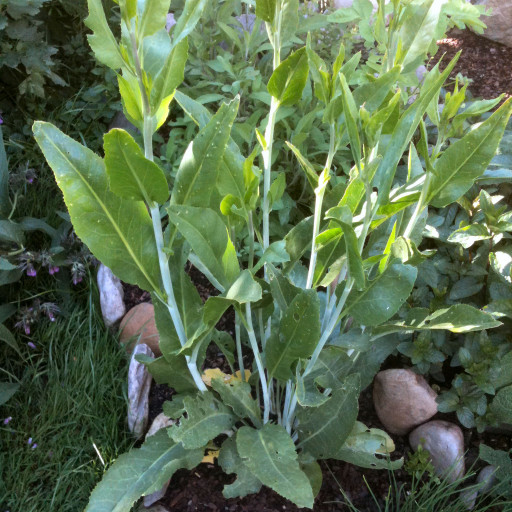
Plant Overview
Known as Perennial Pepperweed or Tall Whitetop, this plant is a master of survival that often masquerades as a giant version of Baby’s Breath. While its clouds of tiny white flowers look delicate, this Eurasian native is a robust traveler that has conquered riverbanks and coastal wetlands across North America. In the past, it was a prized "poor man’s spice," favored for the fiery, horseradish-like kick hidden in its leaves and seeds.
🔍 How to Identify
- ☁️ The Bloom: Clusters of thousands of tiny, four-petaled white flowers form dense, flat-topped "sprays" at the ends of the branches.
- 🍃 The Foliage: Lower leaves are large, waxy, and lance-shaped with slightly serrated edges, while the upper leaves are smaller and sit directly on the stem without a stalk.
- 📏 The Stature: Unlike many of its mustard-family cousins, this plant is an architectural giant, frequently reaching heights of 3 to 6 feet.
🏡 In Your Garden
- 🌱 The Root of the Problem: If you find this in your yard, be wary of "pulling" it. It possesses an incredibly deep, creeping root system that can reach 10 feet underground; a tiny fragment of root left behind can sprout an entirely new plant.
- 💧 Soil Preference: It is a "halophyte," meaning it is exceptionally tolerant of salty soils. You’ll most often find it thriving in marshes, floodplains, or disturbed roadsides where other plants struggle to grow.
⚠️ Safety & Toxicity
- 👅 Status: Generally non-toxic and historically edible, but with caveats.
- 🐎 Details: While humans can eat the peppery leaves in small amounts, it is considered a "noxious weed" because it aggressively crowds out native habitats. In a garden setting, ensure the soil hasn't been treated with herbicides before tasting. It is generally safe around pets, though its high oxalate content means it shouldn't be a primary snack for livestock.
✨ Fun Fact
In medieval times, Lepidium latifolium was used as a substitute for expensive black pepper. Its seeds were ground up to provide heat to dishes long before chili peppers became a global staple!

Detailed Care Instructions
| Humidity | High |
| Lighting | Part Sun |
| Toxicity | Poisonous |
| Difficulty | Medium |
| Hibernation | Cold Period |
| Hardiness Zones | 5 - 9 |
To grow Lepidium latifolium, also known as broadleaf pepperweed or white top, follow these steps:
- Climate and Soil Requirements: Lepidium latifolium prefers full sun and can tolerate a wide range of soil types. However, it grows best in well-drained soils, rich in organic matter. It can tolerate both dry and moist conditions.
- Seed Collection: Harvest mature seeds from existing plants during late summer or early autumn. Collect the seeds in a bag or container.
- Stratification: Lepidium latifolium seeds have hard outer shells that require stratification to break their dormancy. Keep the seeds in a moist, sterile medium (such as peat moss or vermiculite) in a plastic bag for 30-60 days, at temperatures around 40°F (4°C).
- Sowing: After stratification, fill small pots or seed trays with a well-draining growing medium. Sow the seeds at a depth of ¼ inch (0.6 cm) and cover them lightly with soil. Maintain a consistent moisture level.
- Germination: Place the pots or trays in a warm location with indirect sunlight. Lepidium latifolium seeds typically germinate within 2-4 weeks. Keep the soil evenly moist throughout the germination process.
- Transplanting: Once the seedlings have grown to around 2-3 inches (5-7.5 cm) in height, transplant them into larger pots or directly into the ground. Ensure a spacing of around 12-18 inches (30-45 cm) between each plant.
- Maintenance: Water the plants regularly, especially during dry periods. Remove any weeds or competing plants that may arise. Mulching around the plants can help retain moisture and suppress weed growth.
- Harvesting: You can harvest the leaves and stems of Lepidium latifolium throughout the growing season for culinary purposes, as it has a peppery flavor. Harvesting the seed pods before they mature can help prevent self-seeding and potential invasiveness.
Note: Lepidium latifolium is considered invasive in some regions, so before growing, check with your local agricultural extension office or plant society to ensure it is suitable for your area and doesn't pose any risk to local ecosystems.

Place in a bright room that is sun drenched almost all day. Or directly in a south-facing window.

To water this plant, first ensure that the soil is dry to the touch before watering. Use a watering can or hose with a gentle spray nozzle to water the plant evenly, taking care not to flood the soil or the leaves. Water deeply enough to saturate the root zone but avoid leaving standing water around the plant. Watering frequency will depend on factors such as the climate, soil type and humidity levels. It is important to monitor the soil moisture levels regularly to determine when the plant needs watering. Additionally, it is important to provide adequate drainage to prevent waterlogged soil, which can cause root rot and other problems.
To fertilize the Lepidium Latifolium plant, apply a balanced fertilizer with equal amounts of nitrogen, phosphorus, and potassium in early spring when new growth appears. Repeat the application every six to eight weeks during the growing season. Use compost or organic fertilizers to provide additional nutrients and improve soil health. Avoid over-fertilization, as this can encourage vegetative growth and reduce flowering and seed production. Always follow the manufacturer's instructions for the fertilizer used.
Lepidium latifolium plant grows well in loamy, fertile soil that is well-draining and rich in organic matter. The soil should have a neutral to slightly alkaline pH level of around 6.5 to 7.5. The plant prefers moist soil conditions; therefore, it is best to ensure the soil is adequately irrigated or has access to regular watering. Adding compost or organic matter to the soil can help improve its quality and fertility. It is also recommended to amend the soil with balanced fertilizer to provide the plant with the necessary nutrients for healthy growth and development. The depth of the soil required for the Lepidium latifolium plant is moderate, typically within the range of 12-18 inches.
To propagate this plant, one can collect seeds from the flowers as they mature and begin to dry out. The seeds should be planted in well-draining soil and kept moist until germination occurs. Alternatively, sections of the plant's roots can be dug up and replanted in a new location, ensuring that each section contains at least one viable stem or shoot. If using this method, it is important to keep the plant well-watered and give it adequate time to establish itself in its new environment.








