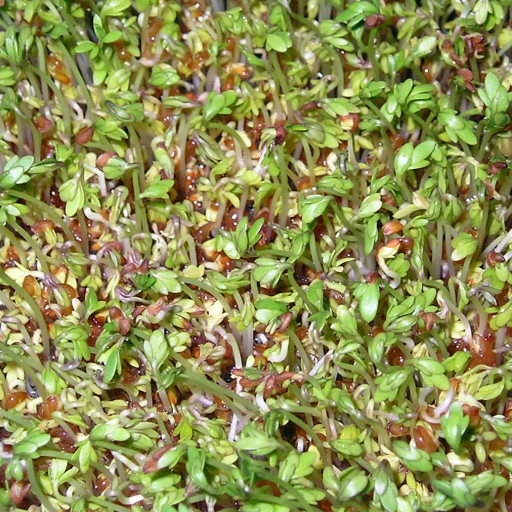
Plant Overview
Often called "Peppergrass" for its spicy, radish-like kick, Lepidium sativum is the ultimate "sprinter" of the herb world. This Mediterranean native has been a staple in kitchen gardens since the time of the Pharaohs, prized for its ability to go from a dry seed to a zesty salad garnish in as little as ten days. It is the perfect entry-level plant for anyone who wants instant gratification on their windowsill.
🔍 How to Identify
- 🌱 Seedlings: Look for tiny, notched leaves that resemble small butterfly wings or hearts when they first emerge from the soil.
- 🌿 Leaf Texture: Mature leaves are deeply lobed and feathery, growing on very thin, delicate stems that are surprisingly crisp and translucent.
- 🌸 Bloom Style: If left to mature, it produces tall, slender stalks topped with clusters of minute white or pale pink flowers, each featuring four tiny petals in a cross shape.
🏡 In Your Garden
- 🥗 The Microgreen Method: Garden Cress is unique because it doesn't actually need soil to thrive. It can be grown on damp paper towels or cotton wool, making it a favorite for indoor "kitchen farming" year-round.
- 🌡️ Temperature Sensitivity: This plant is a "cool-season" specialist. It hates intense heat and will "bolt" (go to seed and become unpleasantly bitter) the moment the summer sun hits it. Keep it in a bright but cool spot for the best flavor.
⚠️ Safety & Toxicity
- 🍽️ Status: Perfectly edible and highly nutritious for humans, boasting high levels of Vitamin C, A, and K.
- 🐾 Pet Caution: While not strictly toxic, the high concentration of mustard oils can cause mild stomach irritation or gas in cats and dogs if they graze on a large patch of it.
✨ Fun Fact
🚀 Space Traveler: Because Garden Cress grows so rapidly and requires almost no substrate, it has been used in experiments on the International Space Station to help scientists understand how plants behave in microgravity!

Detailed Care Instructions
Here are some steps to help you grow Lepidium sativum, commonly known as garden cress:
- Seed selection: Choose good quality garden cress seeds either from a garden center or online. Look for fresh seeds with a high germination rate.
- Soil preparation: Fill a container or pot with good quality potting soil. Garden cress prefers well-draining soil rich in organic matter. You can mix in some compost or well-rotted manure to improve fertility.
- Sowing the seeds: Sprinkle the garden cress seeds evenly over the soil surface. Avoid crowding the seeds as it may hinder their growth. Lightly press the seeds into the soil, ensuring good seed-to-soil contact.
- Watering: Moisten the soil gently immediately after sowing the seeds. Keep the soil consistently moist throughout the growing period. Avoid overwatering, as it can lead to waterlogged conditions that may cause the seeds to rot.
- Light and temperature: Garden cress prefers full sun or partial shade for optimum growth. Place the container in a location that receives 4-6 hours of direct sunlight. The ideal temperature range for garden cress growth is between 60-75°F (15-24°C).
- Thinning: Once the seeds sprout and grow a few inches tall, thin out the seedlings to provide enough space for each plant to grow. You can remove weaker or overcrowded seedlings, leaving a few inches gap between each plant.
- Fertilization: Garden cress is a fast-growing plant that benefits from regular feeding. Apply a balanced liquid fertilizer every two weeks or use a slow-release granular fertilizer as per the package instructions.
- Harvesting: Garden cress is ready for harvest within 2-3 weeks of sowing. Trim the leaves just above the soil level with clean scissors or pinch off individual leaves, allowing the plant to continue growing and producing more leaves.
- Successive plantings: To ensure a continuous supply of garden cress, you can sow new seeds every 2-3 weeks for a constant harvest.
Remember to research any specific requirements for your growing zone and adjust the care accordingly. Enjoy growing your Lepidium sativum plants!

Place in a bright room that is sun drenched almost all day. Or directly in a south-facing window.

To water this particular plant, you should first check the soil to see if it is dry to the touch. If the soil is dry, then water the plant slowly and evenly, making sure that the water is able to penetrate deep into the soil. Be careful not to overwater the plant, as this can lead to root rot. It is important to give the plant consistent and regular waterings, but also allow the soil to dry out slightly between waterings. Additionally, make sure that the plant is not sitting in standing water, as this can also lead to root rot.
- Use a balanced fertilizer with equal amounts of nitrogen, phosphorus, and potassium.
- Begin fertilizing once the plant has developed its second set of true leaves.
- Dilute the fertilizer to half strength and apply it to the soil around the plant.
- Repeat fertilization once every two weeks throughout the plant's growing season.
- Avoid over-fertilizing as this can lead to decreased plant growth and an increased risk of disease.
The soil that is suitable for growing the plant is a well-draining soil with a slightly acidic to neutral pH level of around 6.0-7.0. It should be a nutrient-rich soil with good organic matter content and a moderate level of moisture retention. The soil should not be too heavy or compacted, as this can restrict the growth of the plant's roots. It is recommended to use a soil blend that includes a mixture of peat moss, perlite, and vermiculite to promote proper drainage and aeration. Additionally, adding compost or other organic fertilizers to the soil can help to provide essential nutrients for the plant's growth.
- Obtain seeds of the plant.
- Fill a seed tray or small pots with potting soil and moisten the soil.
- Sprinkle the seeds evenly over the soil surface, leaving some space between each seed.
- Cover the seeds lightly with a thin layer of soil.
- Place the seed tray or pots in a warm, well-lit area, but away from direct sunlight.
- Keep the soil moist by watering regularly. But do not overwater, as this can lead to rotting of the seeds.
- In 7-14 days, the seeds will germinate and small seedlings will emerge.
- Once the seedlings have developed, transplant them to larger pots or to the garden, leaving a distance of about 5-10 cm between each plant.
- Water the newly transplanted plants well and keep them moist until they are established.








