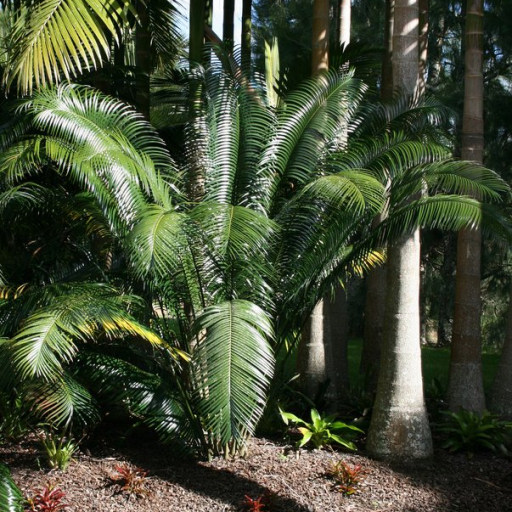
Plant Overview
Often called the Pineapple Cycad, this living fossil looks like it stepped right out of a Jurassic landscape. Found in the subtropical rainforests of eastern Australia, it is one of the tallest and most majestic cycads in the world. Capable of living for hundreds of years, it brings an air of ancient, architectural elegance to any shaded garden or large indoor space.
🔍 How to Identify
- 🌿 The Fronds: Massive, arching leaves that can reach up to 3 meters in length. They are deep, glossy green and have a smooth, plastic-like texture.
- 🍍 The Cones: It earns its nickname from its massive seed cones, which resemble giant pineapples. These cones can grow up to 80cm long and weigh as much as a small dog!
- 🪵 The Trunk: As it ages, it develops a thick, dark trunk covered in "scales"—the persistent bases of old leaves that have fallen away over the decades.
🏡 In Your Garden
- ☁️ Light & Shelter: Unlike many other cycads, the Pineapple Cycad thrives in dappled shade or filtered light. In its natural habitat, it grows under a rainforest canopy, so harsh, direct afternoon sun can scorch its beautiful glossy leaves.
- 💧 Soil & Stability: It requires rich, well-draining soil and plenty of mulch to keep its roots cool. Be very careful when choosing its "forever home"—it has a sensitive root system and deeply resents being transplanted once established.
⚠️ Safety & Toxicity
- 🚫 Status: Highly Toxic.
- 🐾 Details: All parts of the plant, especially the large, brightly colored seeds inside the cones, contain cycasin. If ingested, it can cause severe liver failure in dogs, cats, and humans. It is best kept in areas where curious pets and toddlers cannot reach the seeds.
✨ Fun Fact
The Pineapple Cycad is a "living fossil" that has remained relatively unchanged for over 200 million years. Interestingly, it doesn't rely on the wind for pollination; it has a prehistoric partnership with specific tiny beetles (weevils) that live inside the cones!

Detailed Care Instructions
To grow Lepidozamia Peroffskyana (also known as "Peroffsky's cycad"), you can follow these steps:
- Select a suitable location: Choose a spot that receives partial shade to full sun, as this plant can tolerate various light levels. Ensure that the soil is well-draining and has good fertility.
- Prepare the soil: The soil should be rich in organic matter and have good drainage. You can enhance the soil quality by adding compost or well-rotted manure.
- Planting: Dig a hole that is slightly wider and deeper than the plant's root ball. Place the Lepidozamia Peroffskyana in the hole and fill it with soil, firming it gently around the roots.
- Watering: Cycads prefer consistent moisture, so water the plant regularly, especially during dry periods. Avoid over-watering, as it can lead to root rot. Allow the soil to dry out slightly between waterings.
- Mulching: Apply a layer of mulch, such as wood chips or leaf litter, around the plant to help conserve moisture, suppress weed growth, and protect the roots from extreme temperatures.
- Fertilizing: Feed the Lepidozamia Peroffskyana with a balanced slow-release fertilizer during the growing season. Follow the manufacturer's instructions for application rates.
- Pruning: Regularly remove any dead or damaged leaves, but avoid excessive pruning. Cycads are slow-growing, and over-pruning can stress the plant.
- Protect from frost: In colder regions, protect the plant from freezing temperatures by covering it with a frost cloth or moving it indoors during winter.
- Propagation: Lepidozamia Peroffskyana can be propagated through seeds or offsets (pups). Seeds can be sown in a well-draining potting mix, kept warm and moist until germination occurs. Pups can be separated from the parent plant once they have developed their own root system.
Remember that cycads are long-lived plants, so be patient while waiting for them to grow. They require minimal care once established but may take several years or more to reach full maturity.

Place in a bright room that is sun drenched almost all day. Or directly in a south-facing window.

1. Know the watering needs: Understanding the watering needs of Lepidozamia Peroffskyana is vital to watering it effectively. This plant requires regular watering to keep it healthy.
2. Observe the soil moisture: Before watering the plant, observe the soil moisture level. Do not water the plant if the soil is already moist.
3. Watering frequency: The frequency of watering Lepidozamia Peroffskyana depends on several factors. In general, the plant requires watering once or twice a week.
4. Watering quantity: It is essential to water this plant sufficiently but not excessively. Ensure that the soil is sufficiently watered, but avoid waterlogging, which can lead to root rot.
5. Watering technique: The best way to water the plant is to use a watering can or hose. Water the soil around the base of the plant and avoid watering the leaves.
6. Temperature considerations: During hot weather, increase watering frequency to prevent the soil from drying out. In cooler conditions, reduce watering frequency to prevent over-watering.
7. Drainage: Ensure the plant pot has adequate drainage to prevent waterlogging, which can cause root rot. If the plant pot lacks proper drainage, repot it in a container with drainage holes.
8. Avoid misting: Do not mist the plant, as Lepidozamia Peroffskyana dislikes moist environments and high humidity.
9. Use quality water: Use quality water for watering the plant. Avoid hard water, which can cause mineral buildup and damage the plant over time.
10. Check for signs of over or under-watering: Monitor the plant regularly for signs of over or under-watering, such as yellowing leaves, drooping, or wilting. Adjust the watering schedule accordingly to prevent plant damage.
To fertilize this plant, begin by selecting a balanced fertilizer that is high in nitrogen. Apply the fertilizer once every two to three months during the growing season from spring to fall. Be careful not to over-fertilize, as this can harm the plant. Water the plant before and after fertilizing, and do not fertilize if the soil is dry. Spread the fertilizer evenly around the base of the plant, being careful not to get it on the leaves or stem. Finally, water the plant thoroughly after fertilizing to help the nutrients reach the roots.
The soil type that is recommended for the Lepidozamia Peroffskyana plant is a well-draining, nutrient-rich, and slightly acidic soil. It is important to avoid using heavy clay or compacted soils as they will impede the growth of the plant. A good soil mix for this plant can be made by combining equal parts of soil, peat moss, and perlite or vermiculite. The addition of organic matter such as compost or leaf mold is also beneficial. The soil should be kept evenly moist but not waterlogged, and it is important to avoid allowing the soil to dry out completely.
To propagate this plant, you can locate a mature specimen with healthy fronds. Look for an area of the trunk that has recently grown roots. This can be identified by the presence of emerging roots, visible bumps or irregularities in the cell texture. Using a sharp, sterile cutting tool, cut a section of the trunk that includes this root area. Plant the cutting in well-draining soil mixed with organic matter, with the root section buried at a similar depth as it was in its original location. Keep the soil moist but not waterlogged, and provide filtered sunlight and shelter from strong winds until new growth appears.








