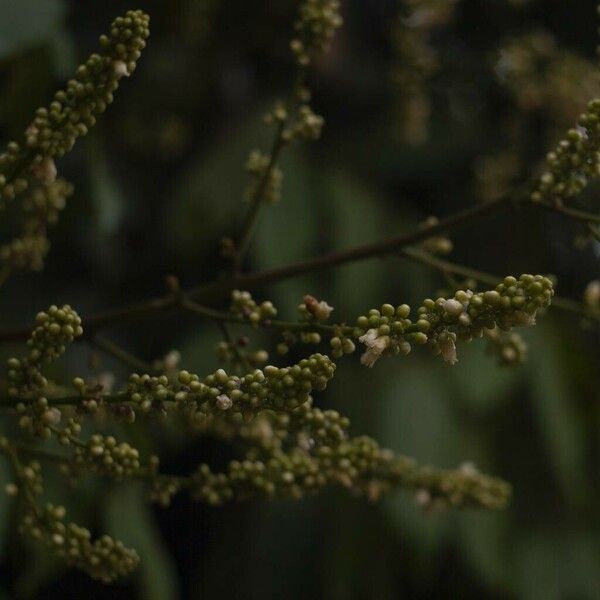
Plant Overview
Known commonly as the Rusty Sapindus or Mertajam, this resilient beauty is a staple of Southeast Asian coastal forests and traditional landscapes. It earned its "rusty" nickname from the distinctive, velvety bronze fuzz that coats its young branches and leaves, appearing as if the plant has been dusted with fine cinnamon. Whether standing as a sturdy shade tree or a wild shrub, it is a favorite for those looking to invite vibrant birdlife into their garden.
🔍 How to Identify
- 🍂 The "Rusty" Coat: Look closely at the new growth and the undersides of the leaves; they are covered in dense, soft, reddish-brown hairs that give the plant its signature look.
- 🌿 Compound Leaves: The foliage consists of large, pinnate leaves with 2 to 8 pairs of leaflets. Each leaflet is glossy on top and has a slightly asymmetrical base.
- 🍒 Color-Changing Berries: The fruit grows in drooping clusters, transitioning through a beautiful gradient of colors—starting green, turning a bright, waxy red, and finally ripening into a deep, purple-black.
🏡 In Your Garden
- 🌱 A Coastal Warrior: This plant is incredibly hardy and salt-tolerant. It thrives in sandy soils and windy conditions where other plants might wither, making it an excellent choice for seaside "green belts" or low-maintenance hedges.
- 🐦 Pollinator Paradise: If you plant a Mertajam, prepare for guests! The small, fragrant white flowers attract honeybees and butterflies, while the ripe berries act as a natural birdfeeder for bulbuls and other fruit-eating birds.
⚠️ Safety & Toxicity
- 🟢 Generally Safe: The ripe, black fruit is edible for humans and has a mildly sweet, astringent taste, though the layer of pulp is quite thin.
- 🐾 Mild Saponins: Like many members of its family (Sapindaceae), the seeds and bark contain saponins. While often used in traditional medicine, they should not be consumed in large quantities as they can cause mild digestive upset in curious pets or small children.
✨ Fun Fact
In various Southeast Asian cultures, the roots and leaves of the Rusty Sapindus were traditionally boiled to create herbal baths or decoctions believed to soothe fevers and skin irritations!

Detailed Care Instructions
To grow a Lepisanthes rubiginosa plant, also known as the Matoa tree, you will need to follow a few specific steps:
- Choose the right location: Select a sunny spot in your garden or balcony that receives at least six hours of sunlight per day. The plant prefers warm and tropical climates.
- Gather seeds or seedlings: Obtain seeds or seedlings from a reputable nursery or online store. It can be challenging to find Lepisanthes rubiginosa plants, so starting from seeds may be the best option.
- Prepare the soil: The plant prefers well-draining soil with a pH between 5.0 and 6.5. Add organic matter, such as compost, to improve soil fertility and drainage.
- Germinate the seeds: Soak the seeds in water for 24 hours before planting. Then, plant the seeds in pots or seed trays filled with potting mix. Cover them lightly with soil and keep them moist. It may take several weeks to see germination.
- Transfer seedlings: Once the seedlings have grown to about 6 inches in height, transplant them to larger pots or directly into the ground. Ensure that the new location has adequate space for the tree to grow, as Lepisanthes rubiginosa can reach up to 30 feet in height.
- Watering and fertilizing: Water the plant regularly, especially during dry periods, to keep the soil evenly moist but not waterlogged. Fertilize the plant every two to three months with a balanced, slow-release fertilizer.
- Pruning and maintenance: Prune the plant to maintain its shape and promote branching. Remove any dead or damaged branches. Additionally, watch out for pests and diseases, such as aphids or powdery mildew, and take appropriate measures to control them if necessary.
- Harvesting: Lepisanthes rubiginosa produces edible fruits that resemble small apples. The fruits ripen about 3-4 months after flowering. Harvest them when they turn from green to a reddish color. The fruits can be eaten raw or used in various culinary applications.
Remember that Lepisanthes rubiginosa is a slow-growing tree, so be patient with its growth. With the right care and attention, you can successfully grow and enjoy this unique plant.

Place in a window with dappled sun or a spot in the middle of a room. Or directly in a window facing west or east.

Lepisanthes Rubiginosa is a tropical plant that requires regular watering to thrive. Here are the details on how to provide adequate water for this plant:
1. Frequency: Watering frequency depends on various factors such as climate, soil condition, and plant size. However, as a general rule, Lepisanthes Rubiginosa plants need to be watered regularly to keep the soil consistently moist but not overly saturated. During the warmer months, watering may be required every 2-3 days, while during cooler months, you can reduce the frequency to every 4-5 days.
2. Amount: When watering, it is important to provide enough water to thoroughly moisten the root zone. Aim to water until water starts to seep out of the drainage holes in the bottom of the pot or saturates the soil in the ground around the plant. This ensures that the water reaches the deeper roots of the plant.
3. Watering method: To water Lepisanthes Rubiginosa plants effectively, use a gentle watering method to prevent soil erosion or damage to the plant. A watering can with a fine nozzle or a hose with a gentle spray attachment can be used to distribute the water evenly and avoid disturbing the plant's delicate roots.
4. Soil condition: The plant prefers well-draining soil that retains moisture but does not become waterlogged. If you are growing Lepisanthes Rubiginosa in a pot, make sure it has good drainage holes at the bottom to prevent waterlogging. If the soil is heavy or compacted, it can hinder proper water drainage and lead to root rot. Adding organic matter, such as compost or peat moss, to the soil can improve both water retention and drainage.
5. Rainwater vs. tap water: Lepisanthes Rubiginosa plants generally appreciate rainwater over tap water due to its natural purity and absence of chlorine and other chemicals. If possible, collect rainwater and use it for watering. If rainwater is unavailable, allow tap water to sit overnight in an open container before using it to allow chlorine and other chemicals to dissipate. This helps make tap water more suitable for the plant.
Remember to observe the plant closely and adjust your watering routine based on its specific needs and environmental conditions. Additionally, be cautious not to overwater, as this can lead to root rot and other issues.
To fertilize the Lepisanthes Rubiginosa plant, you will need to follow these instructions:
- Choose a balanced, slow-release fertilizer with an equal NPK ratio (nitrogen, phosphorus, and potassium) to provide the necessary nutrients for the plant's growth.
- Apply the fertilizer during the active growing season, which is typically in spring and summer. Avoid fertilizing during the dormant period or in winter.
- Dilute the fertilizer by following the manufacturer's instructions. Generally, mix 1 to 2 tablespoons of fertilizer per gallon of water.
- Water the plant thoroughly before applying fertilizer to ensure the soil is adequately moist.
- Apply the diluted fertilizer around the base of the plant, avoiding direct contact with the foliage or stem. This prevents the risk of burning the plant.
- Use a watering can or a low-pressure sprayer to apply the fertilizer evenly around the plant.
- Avoid over-fertilizing, as it can lead to excessive growth, weak stems, and reduced flowering or fruit production. Follow the recommended dosage and frequency provided by the fertilizer manufacturer.
- After fertilizing, water the plant again to help the nutrients penetrate the soil and reach the plant's roots.
- Monitor the plant for signs of nutrient deficiencies or excesses. Symptoms of deficiencies may include yellowing leaves, stunted growth, or reduced vigor. If necessary, adjust the fertilizer application accordingly or consult a gardening expert for guidance.
Remember, each plant's specific fertilizer requirements may vary, so it is essential to consider the needs of your particular Lepisanthes Rubiginosa plant and adjust the fertilization schedule and dosage accordingly.
When choosing soil for Lepisanthes Rubiginosa plants, it is essential to consider their natural habitat, growth habits, and nutrient requirements. These plants thrive in various soil types, but there are a few key factors to keep in mind when selecting the ideal soil composition.
Firstly, Lepisanthes Rubiginosa prefers well-draining soil to prevent waterlogging and ensure proper root aeration. This helps prevent root rot and other water-related issues. To achieve this, the soil should have good drainage properties, allowing excess water to escape easily.
Additionally, Lepisanthes Rubiginosa plants appreciate slightly acidic to neutral soil pH levels. A pH range of 5.5 to 7.0 is generally recommended. Maintaining the optimal pH helps ensure that the plant can absorb essential nutrients efficiently from the soil.
The soil should also be rich in organic matter to provide adequate nutrition to the plant. Organic matter not only improves the soil structure but also enhances moisture retention capacity and nutrient availability. Adding compost, well-rotted manure, or aged leaf mold can help enrich the soil with organic material.
It is worth noting that Lepisanthes Rubiginosa plants are adaptable to different soil textures, including sandy, loamy, and clay soils. However, a loamy soil texture is generally considered ideal. Loamy soil combines the benefits of good drainage and water retention, while also providing a suitable medium for root development.
Regularly monitoring the moisture level of the soil is crucial for Lepisanthes Rubiginosa plants. They prefer slightly moist soil, so it is important to ensure that the soil does not dry out completely between waterings. However, overwatering should be avoided, as it can lead to root rot and other fungal infections.
Lastly, providing a layer of organic mulch around the base of the plant helps retain moisture, suppress weed growth, and regulate soil temperature. This can be accomplished by using materials like wood chips, straw, or shredded leaves.
By maintaining these soil considerations, you can create a favorable growing environment for Lepisanthes Rubiginosa plants, helping them thrive and reach their full potential.
Lepisanthes rubiginosa is a tropical plant that can be propagated through various methods. Here is a detailed description of how to propagate this plant:
- Seed Propagation:
- Collect mature fruits from the plant when they turn dark red or black.
- Separate the seeds from the pulp and wash them thoroughly to remove any remaining fruit residue.
- Fill a seed tray or a small pot with a well-draining potting mix.
- Sow the seeds on the surface of the soil and lightly cover them with a thin layer of the potting mix.
- Water the seeds gently to settle them in place.
- Place the tray or pot in a warm and humid environment, ideally around 25-30°C (77-86°F).
- Keep the soil consistently moist, but avoid overwatering to prevent rot.
- Germination usually takes around 2-4 weeks. Once the seedlings have developed a few pairs of true leaves, they can be individually potted into larger containers.
- Collect mature fruits from the plant when they turn dark red or black.
- Stem Cutting Propagation:
- Select a healthy and mature Lepisanthes rubiginosa plant.
- Using clean and sharp pruning shears or a knife, take a stem cutting that is about 6-8 inches long.
- Remove any leaves from the lower half of the cutting to expose the nodes.
- Dip the cut end of the stem into a rooting hormone powder to encourage root formation, although this step is optional.
- Prepare a well-draining potting mix in a small pot or seed tray.
- Make a hole in the soil using a pencil or your fingertip and insert the cutting into the hole.
- Gently firm the soil around the base of the cutting to ensure it stands upright.
- Mist the cutting with water to increase humidity and cover it with a clear plastic bag or a propagator dome to create a greenhouse-like environment.
- Place the pot or tray in a warm location with bright, indirect light.
- Keep the soil slightly moist, misting the cutting with water as needed, but avoid overwatering.
- After a few weeks, you should notice roots forming. Once the cutting has developed a strong root system, it can be potted into a larger container or directly planted in the desired location.
Both seed propagation and stem cutting propagation can be successful methods to propagate Lepisanthes rubiginosa. However, it's important to note that successful propagation may require patience and careful attention to the plant's specific needs.
- Select a healthy and mature Lepisanthes rubiginosa plant.








