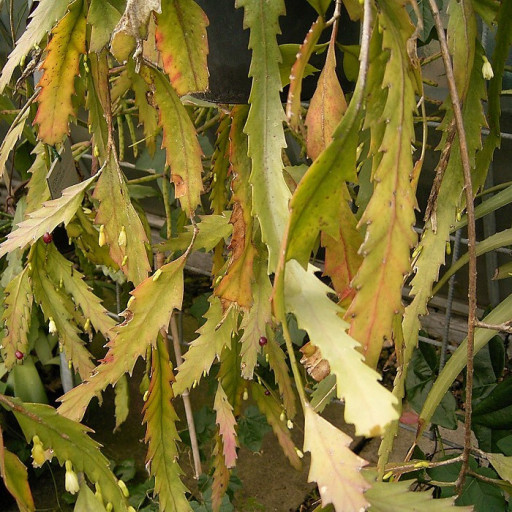
Plant Overview
Often called the Snowdrop Cactus, Lepismium houlletianum is a sophisticated jungle dweller that trades harsh desert sands for the lush, humid canopies of South American forests. Unlike its prickly cousins, this plant cascades downward like a green waterfall, eventually adorning itself with delicate, creamy blooms that resemble tiny dangling lanterns. It is the perfect choice for those who love the "look" of a cactus but live in homes with lower light.
🔍 How to Identify
- 🌿 The Stems: Long, flattened, and leaf-like with deeply serrated or "toothed" edges that give the plant a rhythmic, architectural silhouette.
- 🔔 The Flowers: Small, bell-shaped blossoms in shades of creamy white or pale yellow that hang gracefully from the notches along the leaf margins.
- 🍒 The Fruit: Following a successful bloom, the plant produces small, decorative round berries that transition from green to a vibrant reddish-purple.
🏡 In Your Garden
- ☁️ Humidity Lovers: As a rainforest native, this plant craves more ambient moisture than a typical desert cactus. It thrives in "steamy" environments like bathrooms or near a humidifier to keep its stems plump.
- 🌳 The Epiphytic Lifestyle: In the wild, it grows on tree branches rather than in the ground. At home, it hates "wet feet," so it requires a very airy, breathable potting medium like an orchid bark or peat-perlite mix.
- 🌤️ Dappled Light: It prefers filtered sunlight, mimicking the light that filters through a forest canopy. Direct afternoon sun can easily scorch its thin stems, turning them a stressed yellow or red.
⚠️ Safety & Toxicity
- 🐾 Safe for Pets: Lepismium houlletianum is generally considered non-toxic to cats and dogs, making it a worry-free addition to a pet-friendly home.
- 🧤 Gental Handling: While it lacks the fierce, stabbing spines of a desert cactus, the serrated edges of mature stems can be slightly stiff. Handle with care during repotting to avoid irritating your skin or snapping the long, elegant trailers.
✨ Fun Fact
In its natural habitat, this plant is an "epiphyte," meaning it lives on trees but isn't a parasite. It doesn't steal nutrients from the tree; it simply uses the high branches as a "high-rise apartment" to catch better airflow and more light than the dark forest floor!

Detailed Care Instructions
To grow Lepismium houlletianum, follow these steps:
- Choose the right location: Lepismium houlletianum prefers bright, indirect light. Place the plant near a window with filtered sunlight or in a room with sufficient artificial lighting.
- Get the right pot and soil: Select a well-draining pot that has drainage holes. Fill it with a well-draining potting mix suitable for cacti and succulents. You can also prepare your own mix by combining equal parts of perlite, sand, and regular potting soil.
- Planting: Take care while handling the plant as it has delicate stems. Gently remove the plant from its nursery container and place it in the prepared pot. Add the potting mix around the roots, ensuring the plant is stable and centered.
- Watering: Lepismium houlletianum prefers slightly moist soil. Water the plant thoroughly but allow the top inch of soil to dry out before the next watering. Avoid overwatering, as it can lead to root rot. During winter, reduce the frequency of watering.
- Humidity and temperature: Lepismium houlletianum thrives in moderately humid environments. Consider placing a tray filled with water near the plant to increase the humidity. The ideal temperature range for this plant is between 60-80°F (15-27°C).
- Fertilizing: Feed the plant with a balanced liquid fertilizer diluted to half strength every 2-4 weeks during the growing season (spring to summer). Reduce or stop fertilization during the dormant winter period.
- Pruning: Prune the plant to maintain its shape and remove any dead or damaged stems. This plant can also have a trailing growth habit, so pruning helps control its size.
- Propagation: Lepismium houlletianum can be propagated through stem cuttings. Simply snip a healthy stem 4-6 inches long and allow the cut end to callus over for a day or two. Then plant the cutting in moist, well-draining soil and keep it slightly humid. Roots should develop within a few weeks.
By following these care instructions, you should be able to successfully grow Lepismium houlletianum indoors or outdoors, depending on your climate.

Place in a window with dappled sun or a spot in the middle of a room. Or directly in a window facing west or east.

To water this particular plant, it is important to first check the soil moisture level. If the soil is completely dry, it is time to water. However, it is important not to overwater as this can lead to root rot. It is recommended to water once a week and allow excess water to drain out of the pot. The plant should be watered with room temperature water and the leaves should not be sprayed. Additionally, during the winter months, the plant can go longer periods without water as it enters a semi-dormant state.
- Choose a balanced fertilizer with equal amounts of nitrogen, phosphorus, and potassium.
- Dilute the fertilizer to half strength.
- Apply the fertilizer to the soil around the base of the plant, avoiding contact with the leaves.
- Water the plant immediately after fertilizing to help the nutrients reach the roots.
- Fertilize the plant once a month during the growing season (spring and summer).
- Reduce fertilization during fall and winter, as the plant enters a dormant phase.
Lepismium houlletianum plant prefers well-draining soil that is slightly acidic with a pH range of 5.5 to 6.5. The recommended soil mix would include a blend of peat moss, perlite or vermiculite, and sand or coarse gravel to improve drainage. Organic matter such as compost or leaf mold can also be added to the mix for additional nutrients. It is important to avoid using heavy or compact soil that retains water as this can lead to root rot. Additionally, using a pot with drainage holes will help prevent soil saturation. The soil should be kept slightly moist, but not waterlogged, and fertilization should be done sparingly using a balanced liquid or slow-release fertilizer.
To propagate this plant, first cut a stem that is at least 4 inches long from the parent plant using a sharp, clean knife. Then, remove any leaves or sections of stem that are toward the bottom of the stem cutting. Allow the stem cutting to dry for a day or two, so that the cut end calluses over. This will help prevent the cutting from rotting once it is planted.
Next, prepare a small pot with well-draining soil, made up of sand and peat moss mixed together. Place the stem cutting into the soil, carefully pushing it in so that it stands up straight. Water the cutting lightly, being careful not to over-water it. Keep the soil moist but not saturated, and protect the cutting from direct light.
Within a few weeks, new growth should start to appear from the top of the stem cutting. This means the plant has rooted and is establishing itself. Once the plant has rooted and is growing well, it can be transplanted into a larger pot or placed in a suitable location in your garden.
Common pests of the snowdrop cactus include Scale insect, mealybugs, thrips. Make a habit of checking your snowdrop cactus frequently for pests so that any infestations can be caught and managed early.








