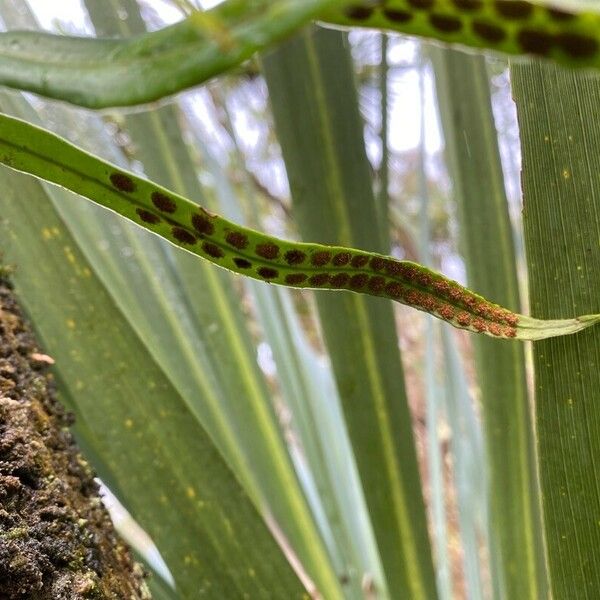
Plant Overview
Often called the Weeping Fern or the East Asian Sword Fern, this elegant evergreen is a true mountain dweller of the Far East. In its native habitats of Japan and Korea, it drapes itself over ancient rocks and mossy tree trunks like a living cascade of green ribbons. It is a favorite among minimalist gardeners and kokedama enthusiasts who appreciate its resilient, "wild" aesthetic.
🔍 How to Identify
- 🌿 The Fronds: Long, narrow, and strap-shaped fronds that can reach up to 10 inches. They have a leathery, thickened texture and a smooth, glossy dark green finish.
- 🟠 The Sori (Spores): On the underside of mature leaves, you will find large, circular orange-brown spots (sori) arranged in two neat rows. These look almost like decorative embroidery.
- 🧶 The Rhizome: A slender, creeping "root-like" stem covered in dark scales that allows the plant to "climb" trees or cling firmly to stone surfaces.
🏡 In Your Garden
- 🧗 Epiphytic Nature: Unlike most garden plants, this fern doesn't need deep soil. It thrives best when mounted on cork bark or grown in a very airy, orchid-like bark mix. It hates "wet feet" and prefers its roots to breathe.
- 🌬️ Humidity Lover: While it is surprisingly hardy against cool temperatures, it craves high humidity. If you are growing it indoors, a regular misting or a spot in a bright bathroom will help prevent the tips of those elegant "swords" from browning.
⚠️ Safety & Toxicity
- ✅ Status: Non-toxic and safe.
- 🐾 Details: This fern is generally considered safe for cats, dogs, and children. It lacks the harsh alkaloids found in some other fern species, making it a "worry-free" addition to a pet-friendly home.
✨ Fun Fact
This plant is named after Carl Peter Thunberg, a Swedish naturalist known as the "Linnaeus of Japan." It is also a "resurrection" specialist; during extreme dry spells, the fronds will curl inward to conserve moisture, only to unfurl and "come back to life" within hours of the first rainfall.

Detailed Care Instructions

Place in a bright room that is sun drenched almost all day. Or directly in a south-facing window.

Some plants require more regular watering than others, which should be done every few days. It's critical to maintain the soil moist all of the time. The water requirements of the same plant placed in pots with varying sizes will differ. Because the water in the smaller pot evaporates faster than the water in the larger pot, it will require more watering. Regardless of pot size, the surface should constantly be maintained moist.








