Plant Overview
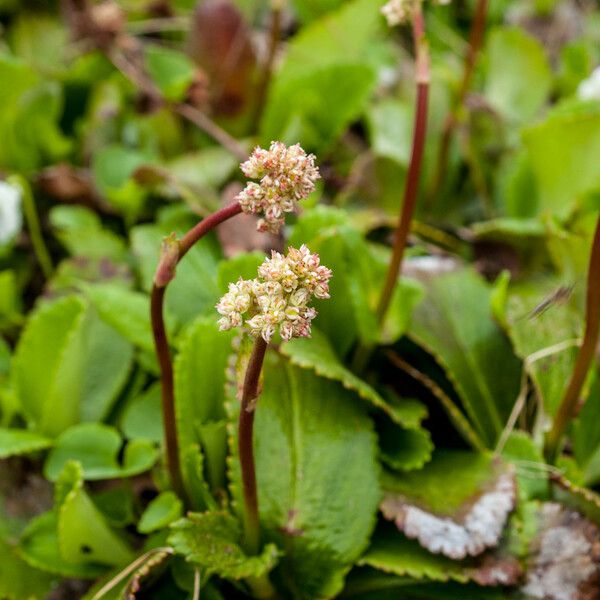
Often called the Leatherleaf Saxifrage or "Fire-leaf," this subalpine beauty is a master of the damp, misty mountains of Western North America. It earns its name from its tough, glossy leaves that closely mimic those of the Wintergreen family (Pyrola), a clever adaptation that allows it to survive harsh alpine winters while remaining evergreen under the snow.
🔍 How to Identify
- 🍃 The Foliage: Look for thick, leathery, dark green leaves that are shiny on top and pale underneath. They have distinct, rounded teeth along the edges and grow in a basal rosette.
- ❄️ Starry Blooms: In early summer, it sends up a stiff, hairy stalk topped with a dense cluster of tiny, five-petaled white flowers that look like miniature stars.
- 🍎 Crimson Transformation: Perhaps its most striking feature is the seed pods. As the flowers fade, the follicles turn a brilliant, fiery red or deep maroon, making the plant stand out against the grey stones of a creek bed.
🏡 In Your Garden
- 💧 The Bog Specialist: This is not a plant for a dry rockery. It naturally thrives in "wet feet" conditions—think stream banks, marshes, or mossy seeps. If you have a pond edge or a perpetually soggy corner, it will be perfectly at home.
- 🏔️ Alpine Needs: Because it originates in high-altitude meadows, it craves cool roots and high humidity. It struggles in sweltering heat and requires acidic, peaty soil to mimic its native mountain habitat.
⚠️ Safety & Toxicity
- 🌿 Safe Status: Leptarrhena pyrolifolia is generally considered non-toxic to humans, cats, and dogs.
- 🧤 Low Irritant: While it doesn't carry the "poisonous" label, it contains high levels of tannins, which can cause a bitter taste or mild stomach upset if ingested in large quantities. It is best treated as an ornamental rather than a forageable plant.
✨ Fun Fact
🧪 The Lone Ranger: Leptarrhena pyrolifolia is a "monotypic" genus. This means it is the only species in its entire genus—it has no brothers or sisters in the botanical world, making it a unique evolutionary standout in the Saxifrage family!

Detailed Care Instructions
To successfully grow a Leptarrhena Pyrolifolia plant, also known as the Pink Mountainheath, you can follow these steps:
- Climate: Check if your climate is suitable for this plant. Leptarrhena Pyrolifolia thrives in cool temperate regions, primarily found in high elevations. It prefers moist, acidic soils.
- Propagation: The Pink Mountainheath plant can be propagated either from seeds or by dividing mature clumps.
- From seeds: Collect seeds from the plant during the fall season. Sow the seeds in a well-draining potting mix. Keep the soil consistently moist but avoid overwatering. Place the pot in a cool and shaded area, preferably in a greenhouse or cold frame. Germination can take several weeks to a few months.
- By division: Dig up a mature clump during early spring. Gently separate the plant into smaller clumps, making sure each division has roots and foliage. Replant the divisions in pots or directly in the garden, ensuring that the soil is well-draining.
- From seeds: Collect seeds from the plant during the fall season. Sow the seeds in a well-draining potting mix. Keep the soil consistently moist but avoid overwatering. Place the pot in a cool and shaded area, preferably in a greenhouse or cold frame. Germination can take several weeks to a few months.
- Planting: Choose a suitable location where the plant can receive partial shade or dappled sunlight, especially during the hottest part of the day. Prepare the soil by adding organic matter like compost or peat moss to improve drainage and create the desired acidic condition.
- Watering: Keep the soil evenly moist but not saturated. Leptarrhena Pyrolifolia prefers consistently moist soil, so check the moisture level regularly and adjust watering accordingly.
- Mulching: Apply a layer of organic mulch around the base of the plant. Mulching helps retain moisture, keeps the root zone cool, and suppresses weed growth.
- Fertilizing: Use a slow-release, balanced acidic fertilizer or a specialized rhododendron/azalea fertilizer. Follow the manufacturer's instructions for application rates and timing. Avoid overfertilization, as it can harm the plant.
- Pruning: After flowering, you can prune the faded flowers to encourage a more compact growth habit and promote better blooming the following year. However, avoid severe pruning, as Pink Mountainheath flowers on the previous year's growth.
- Pests and Diseases: Leptarrhena Pyrolifolia is generally disease and pest-resistant. However, occasionally it may face problems like powdery mildew or aphids. If you notice any issues, use appropriate organic remedies or consult a local horticulturist for guidance.
Remember to regularly monitor the plant's health, provide proper care, and adjust watering and fertilization based on its needs. With patience and proper attention, your Leptarrhena Pyrolifolia plant should grow and thrive in your garden.

Place in a window with dappled sun or a spot in the middle of a room. Or directly in a window facing west or east.

Leptarrhena Pyrolifolia is a plant that belongs to a particular family of plants. These plants are generally not very demanding when it comes to their watering needs. However, their requirements can vary according to various factors, such as the light conditions, soil type, and humidity levels.
When it comes to watering Leptarrhena Pyrolifolia, it's important to keep the soil consistently moist. However, you must be careful not to overwater the plant as it can lead to root rot and other problems. The best way to ensure that you're providing the right amount of water to the plant is by testing the soil moisture levels using your finger.
If the soil feels dry at about an inch or two below the surface, it's time to water the plant. When watering, pour water slowly and evenly over the soil until it runs out of the drainage holes at the bottom of the pot. Allow the excess water to drain out thoroughly before putting the plant back in its original location.
It's also essential to remember that these plants thrive in humid conditions. If your home is dry, you may want to consider using a humidifier, placing a shallow dish of water near the plant, or using a spray bottle to mist the leaves regularly. By providing adequate moisture to your Leptarrhena Pyrolifolia plant, you can help it grow and thrive to its fullest potential.
Apply a balanced, slow-release fertilizer in the early spring before new growth appears. Use a fertilizer with an N-P-K ratio of 10-10-10 or similar. Apply following the instructions on the package, making sure not to over-fertilize as this can lead to damage to the plant. Water the plant well after fertilizing. Repeat fertilizing once or twice during the growing season if necessary.
Leptarrhena Pyrolifolia is a rare plant species, and its cultivation requires a specific type of soil. This plant species prefers acidic, well-draining soil that is rich in organic matter. The soil should be moist, but not waterlogged, and should be kept consistently moist but not wet. The plant prefers a cool, shady location with high humidity, and the soil should have good drainage to prevent root rot. It is recommended to use a soil mix that contains peat moss, perlite, and sand in equal amounts, or a high-quality commercial potting mix designed specifically for acid-loving plants. Additionally, it is important to amend the soil with organic matter such as compost or leaf mold to maintain optimal soil structure and fertility. Proper soil preparation and management are crucial for the successful growth and health of Leptarrhena Pyrolifolia.
There are several methods to propagate this plant. One way is through division. To do this, carefully remove the plant from the soil and gently separate the roots and stems into smaller sections. Each section should have at least one healthy root system and a few stems. Then, plant these sections in fresh soil and water regularly.
Another method is through stem cuttings. Take a healthy stem from the plant and cut it into several pieces, about 2-3 inches each. Remove the bottom set of leaves and dip the cuttings in rooting hormone powder. Then, plant the cuttings in a soilless mix and keep them moist and in bright, indirect light.
A third method is by seed. Collect the seeds from the plant and plant them in a soil mix directly. Keep the soil moist and in a warm, sunny location. Once the seedlings have sprouted and grown for a few weeks, transplant them to individual pots or outside in the garden.








