Plant Overview
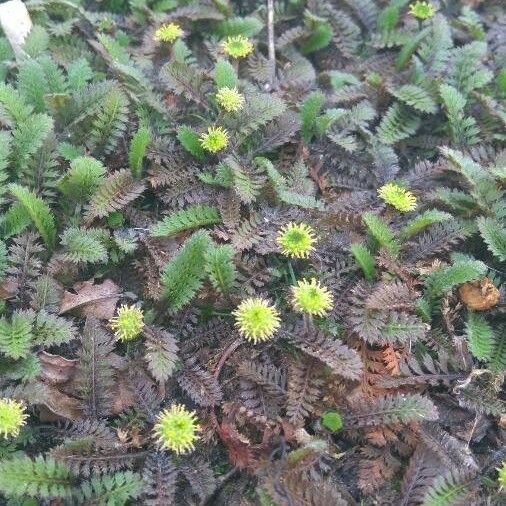
Often called "Bronze Brass Buttons," this low-creeping New Zealand native looks like a miniature prehistoric forest floor come to life. It is a favorite for "fairy gardens" and zen spaces because of its intricate, feathery texture and deep, smoky-green hues. While it looks incredibly delicate, it is surprisingly resilient, spreading out like a soft, living carpet that hugs the earth.
🔍 How to Identify
- 🌿 Fern-like Foliage: The leaves are deeply lobed and delicate, resembling tiny, dark ferns or miniature yarrow leaves.
- 🎨 Bronzed Coloration: Unlike many bright green groundcovers, this species features a unique blend of olive green, gray, and deep bronze, which often intensifies in cooler weather.
- 🟡 Button Blooms: In late spring and summer, it produces tiny, stalkless, yellow-green flowers that lack petals, looking exactly like miniature buttons sewn into the foliage.
🏡 In Your Garden
- 👣 Foot Traffic Hero: This plant is one of the elite "steppable" groundcovers. It thrives in the gaps between flagstones and stepping stones, as occasional treading actually helps keep its growth dense and compact.
- 💧 Moisture Balance: It prefers a "Goldilocks" soil environment—it needs to stay consistently moist to keep its feathery leaves from crisping, but requires gritty drainage to prevent the creeping stems from rotting during winter.
⚠️ Safety & Toxicity
- ✅ Non-Toxic Status: Leptinella potentillina is generally considered safe and non-toxic for both humans and household pets.
- 🧤 Sensory Friendly: Because it lacks thorns and doesn't typically cause skin irritation, it is an excellent choice for sensory gardens where children are encouraged to touch the plants.
✨ Fun Fact
The genus name Leptinella comes from the Greek word leptos, meaning "thin" or "slender," which perfectly describes its delicate, thread-like stems that can create a seamless mat of foliage.

Detailed Care Instructions
| Humidity | Normal |
| Lighting | Part Sun |
| Difficulty | Easy |
| Hibernation | Cold Period |
| Hardiness Zones | Max 5 |
To grow Leptinella Potentillina, also known as Brass Buttons or Miniature Brass Buttons, you can follow these steps:
- Choose the right location: Leptinella Potentillina prefers a sunny or partially shady location. Ensure the spot has well-draining soil.
- Prepare the soil: Before planting, improve the soil quality by incorporating compost or organic matter. This will enhance drainage and provide nutrients.
- Planting: Depending on the space available and aesthetic preferences, you can plant individual Leptinella Potentillina plants or plant them in groups. Dig holes that are slightly wider and deeper than the root ball. Place the plants in the holes and backfill with soil. Gently tamp the soil around the plant to remove air pockets.
- Watering: After planting, water the Leptinella Potentillina plants thoroughly. Keep the soil consistently moist until they establish their root systems. Once established, they are relatively drought-tolerant and require less frequent watering.
- Mulching: Apply a layer of organic mulch around the plants to help retain moisture and suppress weed growth. Avoid placing the mulch directly against the stem to prevent rotting.
- Maintenance: Leptinella Potentillina requires minimal maintenance. Regularly remove any weeds that may compete for nutrients and water. Prune back the plant's foliage if it becomes leggy or straggly, preferably in early spring.
- Division: Over time, the Leptinella Potentillina plants may become crowded. You can divide them by carefully lifting the clumps and separating them into smaller sections. Replant the divisions in suitable locations and watering them thoroughly.
- Propagation: Leptinella Potentillina can also be propagated from seeds. Collect the seeds when they mature and sow them in a seed tray or directly into the garden bed. Keep the soil moist until the seeds germinate, which typically takes a few weeks.
By following these steps, you can successfully grow Leptinella Potentillina plants and enjoy their unique, textured foliage.

Place in a dark room with little light, like a dark bedroom or a spot far away from a window or directly in a north-facing window.

To water this specific plant, it is important to first consider the soil type and drainage. The plant prefers well-draining soil, so it is best to wait until the soil is dry to the touch and then give it a thorough watering. It is recommended to water the soil around the plant rather than spraying the plant itself. Additionally, it is important not to overwater the plant as this can lead to root rot. A good rule of thumb is to water deeply and then allow the soil to dry out slightly before watering again.
When fertilizing this plant, it's important to choose a well-balanced fertilizer with equal amounts of nitrogen, phosphorus, and potassium. Apply the fertilizer in early spring, just as new growth appears, and again in early summer after the first flush of blooms has faded. Be careful not to over-fertilize, as this can lead to excessive growth and weakened plants. Water thoroughly after fertilizing to help the plant absorb the nutrients.
Leptinella Potentillina is a type of plant that requires a specific type of soil to thrive. The soil should be well-draining and have a loamy texture. It should be enriched with organic matter and have a pH level between 6.0 and 7.0. The soil should also be moist but not waterlogged. Adding sand or perlite to the soil can improve drainage and prevent waterlogging. It is recommended to avoid using heavy clay soils, as they can impede air circulation and hinder growth. Overall, the soil should provide a balance of moisture, nutrients, and oxygen to support healthy growth of the plant.
Leptinella Potentillina can be propagated using a few different methods, including seed propagation and division.
Seed propagation involves collecting ripe seeds from the plant and sowing them in a suitable growing medium such as potting soil or a seed raising mix. The seeds should be planted at a depth of around 5mm and kept moist until they germinate. Once the seedlings have grown a few leaves, they can be transplanted into larger pots or directly into the garden.
Division is another option for propagating Leptinella Potentillina. This involves separating a mature plant into smaller sections, each containing a portion of the plant's roots and stems. To do this, carefully dig up the plant and gently tease apart the roots and stems. Each section should have several healthy shoots and a good root system. Plant these divisions in pots or directly in the garden and water them well.
Both of these propagation methods can be successful with Leptinella Potentillina, though it is important to remember that different plants will respond better to different propagation techniques.








