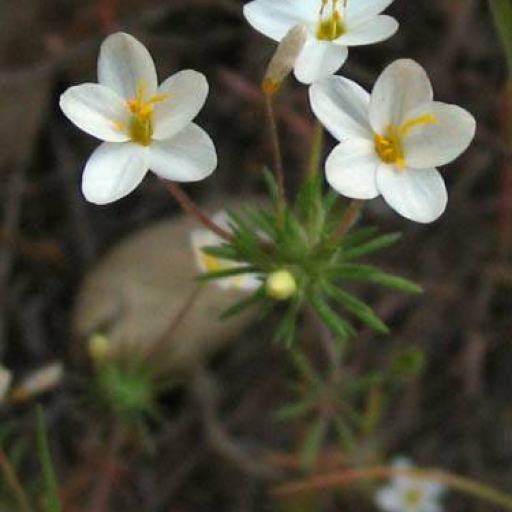
Plant Overview
Often called Coast Babystars, this delicate wildflower is a hidden gem of the California coastline and grassy foothills. It looks like someone scattered miniature, pastel-colored stars across the scrubland during the spring. Despite its fragile appearance, it is a hardy survivor that thrives in the rugged, rocky soils where other plants might struggle to take root.
🔍 How to Identify
- 🌸 Starry Blooms: The tiny flowers have five petals that form a perfect star shape, appearing in shades of white, pink, or soft yellow, often with a bright "eye" at the center.
- 📏 Trumpet Tubes: If you look at the side of the flower, you’ll notice an incredibly long, needle-thin tube leading down to the stem—a unique feature that makes it look like a fairy’s trumpet.
- 🌿 Needle Foliage: The leaves are "whorled," meaning they fan out in a circle around the stem. They are very thin and divided, resembling tiny, green palm fronds or needles.
🏡 In Your Garden
- 🏖️ Drainage is King: These plants naturally love sandy, gravelly, or well-draining soil. In a garden setting, they are perfect for rock gardens or containers where water won't sit around their roots, as they are prone to rot in heavy clay.
- ⏳ A Fleeting Beauty: As an annual plant, it completes its entire life cycle in just a few months. It puts on a spectacular show in the spring and then dies back once the summer heat hits, dropping seeds to ensure a comeback the following year.
- 🚫 Hands Off the Roots: Coast Babystars have sensitive root systems and generally dislike being moved. It is much more successful to sow the seeds directly into the soil rather than trying to transplant them from a pot.
⚠️ Safety & Toxicity
- ✅ Non-Toxic: Leptosiphon parviflorus is not known to be toxic to humans, cats, or dogs.
- 🐾 Physical Fragility: While safe to have around pets, the plant is extremely delicate. Its thin stems are easily snapped or crushed by curious paws, so it’s best kept in areas with low "pet traffic."
✨ Fun Fact
✨ Specialized Dining: The exceptionally long floral tube of the Coast Babystar isn't just for decoration; it is a specialized evolution. It is perfectly shaped for the long, straw-like mouthparts of Bee Flies, which are its primary pollinators!

Detailed Care Instructions

Place in a bright room that is sun drenched almost all day. Or directly in a south-facing window.

Water-loving plants flourish in wet or sloppy soil and near ponds. The extensive root system enables these plants to absorb plenty of water. The surface of the soil should be kept moist at all times. Place your pot in a container filled with water to guarantee that plants get enough water. If the ground becomes dry, it is recommended that you water it well. Plants in smaller pots will need to be watered more frequently. Water the soil in which the plant is standing thoroughly using a watering can.








