Plant Overview
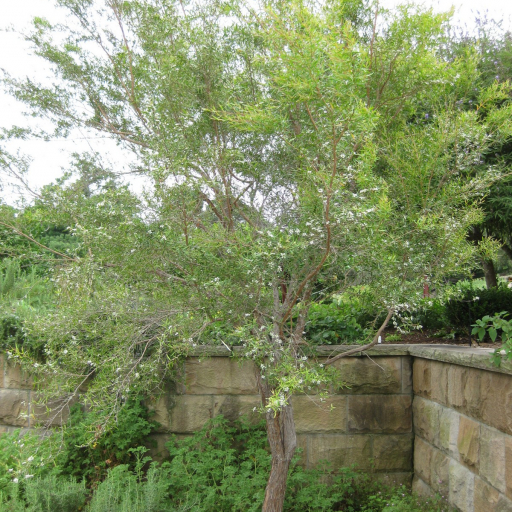
Often called the Lemon-scented Tea Tree, this Australian native is a sensory powerhouse. Known for the incredible citrus explosion its leaves release when crushed, it is a favorite for those wanting a "scratch-and-sniff" garden experience. It grows into a graceful, weeping shrub or small tree that provides both a refreshing fragrance and a dense screen for privacy.
🔍 How to Identify
- 🍃 Foliage: The leaves are narrow, lance-shaped, and elegant. They start as a vibrant lime green and mature into a deeper olive, always maintaining a soft, pendulous look.
- 🌸 Blossoms: In early summer, the branches are dusted with small, five-petaled white flowers that look like tiny stars nestled among the green.
- 🪵 Bark & Structure: It features a fibrous, slightly flaky bark and a multi-stemmed growth habit that can be trained into a single-trunk tree or kept as a bushy hedge.
🏡 In Your Garden
- ✂️ Shape Shifter: This plant is prized for its versatility. It can be left to grow into a 5-meter-tall weeping tree or pruned heavily into a tight, aromatic hedge. Because it grows quickly, it’s an excellent choice for a "fast-growing" screen.
- 💧 Establishment: While it is remarkably drought-tolerant once mature, it has a shallow root system. It prefers well-drained soil and appreciates consistent moisture during its first two years to prevent the lower branches from thinning out.
⚠️ Safety & Toxicity
- ✅ Low Risk: Leptospermum petersonii is generally considered non-toxic to humans. The leaves are sometimes used in artisanal teas for their lemon flavor.
- 🐾 Pet Note: While the plant itself is not listed as highly toxic to pets, the essential oils within the leaves (citral and citronellal) can cause stomach upset if ingested in large quantities by curious dogs or cats.
✨ Fun Fact
🦟 Natural Shield: The leaves contain such high concentrations of citronellal and citral—the same compounds found in citronella candles—that rubbing a few crushed leaves on your skin is a traditional bush remedy for warding off mosquitoes!

Detailed Care Instructions
To grow Leptospermum Petersonii (also known as lemon-scented tea tree) plant, follow these steps:
- Climate and location: Ensure that your region has a suitable climate for the plant. It thrives in temperate to subtropical climates but can tolerate light frost. Choose a well-draining location with full sun to partial shade.
- Soil preparation: Prepare the soil by removing any weeds or grass. Leptospermum Petersonii prefers slightly acidic to neutral soil. If your soil is clayey or compacted, add organic matter like compost to improve drainage.
- Planting: Plant the Leptospermum Petersonii in early spring or fall. Dig a hole that is slightly wider and deeper than the root ball. Place the plant in the hole, making sure the top of the root ball is level with or slightly above the ground. Backfill the hole with soil, gently firming it around the plant.
- Watering: After planting, water thoroughly to ensure good establishment. Once established, Leptospermum Petersonii is drought tolerant but will benefit from regular watering during dry spells.
- Mulching: Apply a layer of organic mulch around the base of the plant to help retain moisture, suppress weeds, and improve the soil's health. Avoid mulching too close to the stem to prevent rot.
- Pruning: Leptospermum Petersonii can be lightly pruned to shape and remove any dead or damaged branches. Spring or early summer is the best time for pruning.
- Fertilizing: Apply a slow-release, balanced fertilizer in spring to promote healthy growth. Follow the instructions on the fertilizer package for the recommended dosage.
- Pest and disease control: Leptospermum Petersonii is generally resilient to pests and diseases, but keep an eye out for any signs of trouble such as aphids or fungal diseases. Treat them with appropriate organic or chemical solutions if necessary.
- Propagation: If you want to propagate additional Leptospermum Petersonii plants, you can do so through seed sowing or by taking semi-hardwood cuttings in late spring or summer.
- Monitoring and care: Regularly monitor the plant for any signs of stress, pest infestations, or nutrient deficiencies. Provide care accordingly, ensuring it has adequate water, sunlight, and nutrients.
By following these steps, you can successfully grow Leptospermum Petersonii and enjoy its aromatic lemon fragrance.

Place in a bright room that is sun drenched almost all day. Or directly in a south-facing window.

To properly water the Leptospermum Petersonii plant, it is essential to consider its specific moisture requirements and adapt the watering routine accordingly.
1. Understand the plant's water needs: Leptospermum Petersonii plants prefer moist but well-drained soil. They thrive in areas with regular rainfall or consistent humidity. It is vital to mimic their natural habitat to promote healthy growth.
2. Observe the soil: Before watering the plant, examine the soil to determine its moisture levels. Insert your finger or a soil moisture meter about an inch deep into the soil. If it feels dry, it is an indication that the plant requires watering.
3. Watering frequency: Leptospermum Petersonii plants generally need to be watered regularly, especially during the warm months or periods of limited rainfall. However, they do not tolerate excessive moisture or waterlogged conditions. The frequency may vary depending on factors such as climate, temperature, and humidity levels.
4. Watering method: To avoid waterlogging, it is important to use a watering method that provides even moisture distribution without oversaturating the plant's root system. Ideally, water the plant at the base, near the roots, rather than overhead. This helps prevent excess moisture on the leaves and flowers, reducing the risk of fungal diseases.
5. Deep watering: When watering, ensure deep penetration of water into the soil. This encourages the plant's roots to grow deeper and promotes a robust root system. Thoroughly water the plant until the soil feels sufficiently moist, but not waterlogged or soggy.
6. Mulching: Apply a layer of organic mulch, such as wood chips or bark, around the base of the plant. Mulching helps conserve soil moisture, prevents weed growth, and maintains an even temperature around the roots.
7. Seasonal adjustments: During the dormant or cooler months, the Leptospermum Petersonii plant requires less frequent watering. Adjust the watering routine according to the plant's growth cycle, considering factors such as temperature and rainfall patterns.
8. Monitor plant response: Regularly observe the plant's overall health and response to watering. Note any signs of overwatering, such as yellowing leaves, wilting, or root rot. Adjust the watering schedule accordingly to prevent damage caused by inadequate or excessive moisture.
By understanding the Leptospermum Petersonii plant's specific watering needs and providing appropriate care, you can promote its growth and ensure a healthy, thriving plant.
To properly fertilize Leptospermum Petersonii, follow these instructions:
- Choose a balanced fertilizer: Use a slow-release fertilizer with an NPK ratio of 10-10-10 or similar, ensuring it contains equal amounts of nitrogen (N), phosphorus (P), and potassium (K).
- Timing: Apply the fertilizer in early spring, just before the growing season begins. Avoid fertilizing during winter or when the plant is dormant.
- Dilution: Follow the packaging instructions to determine the correct dilution rate. Generally, mix the fertilizer with water according to the recommended dosage.
- Application: Carefully pour the diluted fertilizer around the base of the plant, avoiding direct contact with the foliage or stems. Ensure the fertilizer is evenly distributed over the soil surface.
- Watering: After applying the fertilizer, thoroughly water the plant to help it absorb the nutrients and prevent any potential root burn.
- Avoid over-fertilizing: Leptospermum Petersonii does not require excessive amounts of fertilizer. Over-fertilizing may lead to nutrient imbalances or damage the plant. Follow the recommended dosage and frequency provided on the fertilizer packaging.
- Regularity: Repeat the fertilization process once a year, usually in early spring before new growth appears. Avoid fertilizing late in the growing season to prevent stimulating vulnerable new growth before winter.
Remember to always read and follow the instructions on the fertilizer package for specific guidelines and recommendations.
The ideal soil type for Leptospermum Petersonii is one that is well-draining, slightly acidic, and nutrient-rich. It prefers a soil pH level between 5.5 and 7.0. The soil should have good water retention capacity while allowing excess water to drain away quickly to avoid waterlogging.
A mixture of organic matter, such as compost or well-rotted manure, and a well-balanced potting mix is often recommended for planting this species. This combination helps improve soil fertility, drainage, and moisture retention. The addition of perlite or coarse sand can further enhance the soil's drainage ability.
It is also important to ensure that the soil has good aeration, as the Leptospermum Petersonii plant thrives in well-ventilated soil conditions. This can be achieved by ensuring the soil is not overly compacted and by incorporating organic matter to improve soil structure.
Overall, providing a well-draining, slightly acidic, and nutrient-rich soil will create optimal growing conditions for the Leptospermum Petersonii plant, promoting its healthy growth and development.
To propagate the Leptospermum Petersonii plant, you can follow these steps:
- Select a healthy and mature plant from which you wish to take cuttings. Look for a plant that has strong stems and vibrant foliage.
- Prepare a clean surface, such as a workbench or table, and gather the necessary tools and materials. You will need a sharp and sterile pair of pruning shears, clean gardening gloves, a clean container or pot, a well-draining potting mix, and a rooting hormone (optional).
- Choose a suitable stem for cutting. Look for a stem that is at least 4-6 inches long and has a few sets of leaves. Ideally, select a stem that is not flowering or producing buds.
- Use the pruning shears to make a clean cut just below a node, which is a swollen area on the stem where the leaves grow. Remove any leaves from the lower 2/3 of the stem to reduce moisture loss.
- If desired, dip the cut end of the stem into a rooting hormone powder or gel to promote root development. This step is optional but can increase the success rate.
- Fill the clean container or pot with a well-draining potting mix. Make a small hole in the potting mix using a pencil or your finger and gently place the cutting into the hole, ensuring that at least one set of leaves is above the soil surface.
- Firmly press the potting mix around the base of the cutting to hold it in place and provide stability.
- Water the cutting thoroughly but avoid soaking the soil. Ensure the pot has drainage holes to prevent excess water accumulation.
- Place the container or pot with the cutting in a warm and bright location, ideally away from direct sunlight. A windowsill or greenhouse with indirect sunlight is usually suitable.
- Monitor the cutting regularly and maintain a consistently moist but not waterlogged soil. Mist the leaves lightly with water to enhance humidity around the cutting.
- After several weeks, check for root development by gently tugging on the cutting. If you feel resistance, it indicates that roots have formed.
- Once the cutting has developed a healthy root system, it can be transplanted into a larger pot or directly into the garden, depending on your preference.
By following these steps, you can successfully propagate the Leptospermum Petersonii plant and enjoy its unique characteristics in your garden or indoor space.








