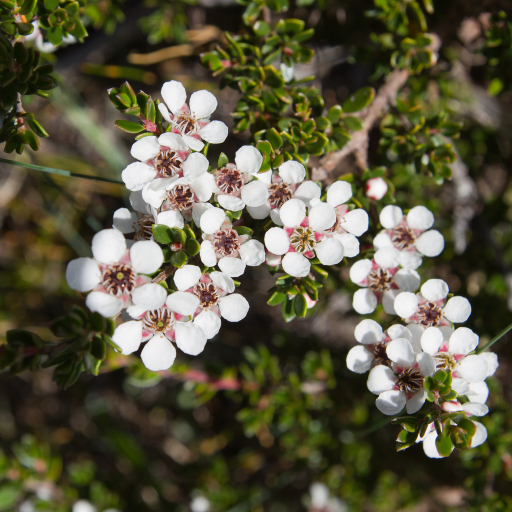
Plant Overview
Often called the Prostrate Tea Tree or Mountain Tea Tree, this rugged Tasmanian native is the ultimate survivor of the plant world. Originating from the wind-whipped, rocky alpine regions of Australia, it has evolved to "hug" the ground to escape freezing gusts. Its gnarled, woody stems and petite, glossy foliage give it a natural bonsai-like appearance that adds instant character to any landscape.
🔍 How to Identify
- 🌿 The Foliage: Tiny, thick, and teardrop-shaped leaves that are a deep, glossy green. They often take on bronze or reddish tints during cold winters.
- 🌸 The Bloom: In early summer, the plant is smothered in starry white (or occasionally pale pink) flowers with five petals and a distinct green or red "eye" at the center.
- 🪵 The Growth Habit: It typically grows as a dense, low-matted shrub (prostrate form) or a rounded bush, featuring beautiful peeling bark on older, woody stems.
🏡 In Your Garden
- ⛰️ The Rock Specialist: Because it naturally grows in sub-alpine scree, this plant hates "wet feet." It thrives in sharply drained, sandy, or rocky soil and is a perfect candidate for rock gardens or cascading over retaining walls.
- ❄️ Alpine Toughness: Unlike many Australian natives, Leptospermum rupestre is incredibly frost-hardy. It can handle heavy snow and freezing temperatures that would wither its tropical cousins, making it a "must-have" for gardeners in cooler climates.
⚠️ Safety & Toxicity
- 🟢 General Safety: This plant is considered non-toxic to humans and is generally safe to handle without gloves.
- 🐾 Pets & Kids: While not listed as a high-risk poisonous plant, the essential oils in Tea Tree species can sometimes cause stomach upset if large quantities are ingested by curious dogs or cats. It is best used as an ornamental rather than a culinary herb.
✨ Fun Fact
In its native Tasmanian habitat, this plant acts as a living "blanket" for the mountain. By growing in dense, ground-hugging mats, it traps heat against the soil, creating a micro-environment that helps other tiny alpine organisms survive the freezing nights!

Detailed Care Instructions
To grow Leptospermum rupestre, also known as the Australian tea tree or coastal tea tree, follow these steps:
- Choose the right location: Leptospermum rupestre prefers full sun but can tolerate partial shade. It is native to coastal areas, so it thrives in well-draining soil with good air circulation. Avoid planting it in heavy clay or waterlogged soil.
- Prepare the soil: Before planting, ensure the soil is well-draining by adding organic matter like compost or peat moss. This helps improve soil structure and drainage.
- Planting: Dig a hole that is slightly wider and deeper than the plant's root ball. Gently remove the plant from its container and place it in the hole. Ensure that the top of the root ball is level with or slightly above the soil surface. Backfill the hole with soil, firming it gently around the plant.
- Watering: Leptospermum rupestre prefers a moderate amount of water. Water the plant deeply after planting and then allow the soil to dry slightly between watering. Once established, it is drought-tolerant but still benefits from occasional watering during prolonged dry periods.
- Mulching: Apply a layer of organic mulch, like shredded bark or wood chips, around the base of the plant. Mulching helps retain moisture, suppresses weed growth, and provides insulation to the roots.
- Pruning: Trim any dead or damaged branches as necessary. Leptospermum rupestre can tolerate pruning to maintain its shape and promote fuller growth. Prune after flowering, typically in early spring.
- Fertilization: Leptospermum rupestre generally does not require heavy fertilization. However, if the plant shows signs of nutrient deficiency, you can apply a balanced slow-release fertilizer during the growing season.
- Pest and disease control: While relatively pest and disease-resistant, monitor the plant for any signs of aphids, scale, or fungal diseases. Treat any infestations promptly using organic or chemical controls.
- Propagation: Leptospermum rupestre can be propagated from stem cuttings or by seed. Take semi-hardwood cuttings in late spring or early summer and root them in a well-draining rooting medium. Sow seeds in a well-draining seed-starting mix and keep them moist until germination.
With proper care, Leptospermum rupestre should grow well and provide attractive foliage and flowers.

Place in a bright room that is sun drenched almost all day. Or directly in a south-facing window.

To water this particular plant, it is important to ensure that the soil around the base of the plant is moist, but not waterlogged. Overwatering can lead to root rot and other issues. It is recommended to water the plant deeply, allowing the water to penetrate the soil down to the root zone. This can be done either by hand-watering with a watering can or hose, or with a drip irrigation system. It is also important to water the plant during the early morning or late evening, when temperatures are cooler and the sun is not as intense. This will help to reduce water loss through evaporation and also reduce the risk of leaf burning. It is important to monitor the plant regularly and adjust watering frequency and amount as needed depending on weather conditions and soil moisture levels.
To fertilize this plant, use a balanced, slow-release fertilizer during the growing season. Follow the package instructions for application rates. Avoid fertilizing during the plant's dormant period, and always water the plant thoroughly before and after fertilization.
The ideal soil for the Leptospermum rupestre plant is one that is well-draining and slightly acidic. It should contain a mix of organic matter, such as peat moss or compost, and coarse sand or perlite to improve drainage. The plant prefers a soil that is also rich in nutrients, so it is recommended to add a slow-release fertilizer to the soil prior to planting. The soil should not be too compacted or clay-like, as this can impede root growth and cause waterlogging. In summary, the Leptospermum rupestre plant should be planted in loose, well-draining soil that is slightly acidic and rich in nutrients.
- Take a cutting from a healthy, mature plant. Select a stem that is free from disease or damage and is at least 10cm long.
- Remove the bottom few leaves from the stem, leaving a few at the top.
- Dip the cut end into a rooting hormone powder, shaking off any excess.
- Prepare a pot with a well-draining soil mix. Use a finger or a pencil to create a hole in the soil. The hole should be deep enough to accommodate the cutting.
- Place the cutting into the hole and cover it with soil, tamping it down gently.
- Water the cutting thoroughly, making sure the soil is evenly moist.
- Cover the pot with a plastic bag or a clear plastic lid to create a mini greenhouse. This will help to maintain high humidity and prevent the cutting from drying out.
- Place the pot in a bright, warm spot out of direct sunlight. Keep the soil moist, but not waterlogged.
- After a few weeks, check for roots by giving the stem a gentle tug. If it resists, roots have formed.
- Once the cutting has rooted, remove the plastic covering and gradually acclimate it to more light.
- Transplant the young plant into a larger pot or into the ground when it has outgrown its current pot.








