Plant Overview
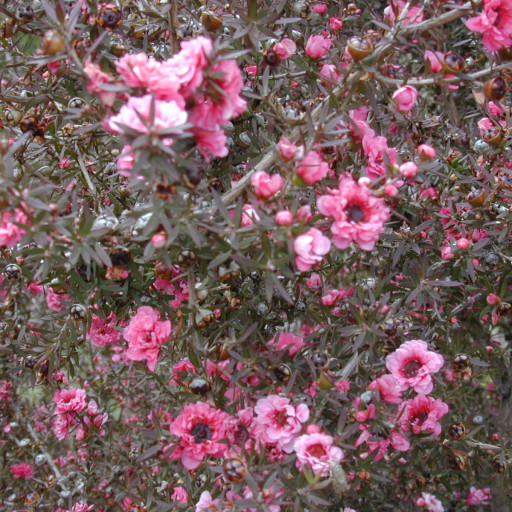
Known as the Manuka or New Zealand Tea Tree, this rugged evergreen is a superstar of the Southern Hemisphere. While it often begins its life as a scrubby, hardy bush, it transforms into a breathtaking cloud of color during its blooming season. Deeply tied to the history of New Zealand, it is most famous for its nectar, which honeybees turn into the world-renowned, medicinal Manuka honey.
🔍 How to Identify
- 🍃 Prickly Foliage: The leaves are tiny, stiff, and needle-like, ending in a sharp point that can feel "prickly" if you brush against them.
- 🌸 Rose-like Blooms: It produces small, five-petaled flowers that look like miniature wild roses, featuring a dark, button-like center and petals in shades of snowy white, soft pink, or vibrant crimson.
- 🪵 Shaggy Bark: The stems are woody and covered in a greyish-brown bark that tends to peel away in thin, papery flakes as the plant matures.
🏡 In Your Garden
- ☀️ Sun and Air: This plant is a sun-worshipper. It requires full sun to maintain its dense shape and produce a heavy flush of flowers; in shade, it becomes leggy and prone to mildew.
- 🚫 Handle with Care: The Manuka has a notoriously sensitive root system. It hates being moved once planted, so choose its "forever home" carefully to avoid the shock of transplanting.
- 🪴 Well-Draining Soil: While it is incredibly hardy and can tolerate poor, rocky soils, it cannot stand "wet feet." Ensure your soil drains quickly to prevent root rot.
⚠️ Safety & Toxicity
- ✅ Safe for Pets: Leptospermum scoparium is generally considered non-toxic to dogs, cats, and horses, making it a safe choice for a busy backyard.
- 🌿 Oil Potency: While the plant itself is safe, be cautious with concentrated "Manuka Oil." Like all essential oils, it is very powerful and should never be ingested or applied undiluted to the skin of humans or pets.
✨ Fun Fact
☕ The Captain’s Brew: This plant earned the nickname "Tea Tree" because Captain James Cook used its spicy, aromatic leaves to brew a tea for his crew. He believed the infusion helped ward off scurvy during his long voyages across the Pacific!

Detailed Care Instructions
This plant makes a good flowing specimen shrub or small tree and is frequently used as a container-grown specimen on a sunny deck or patio.
How long does a New Zealand tea tree live?
Lifespans of 60 years are recorded, but named cultivars often live 20 or 30 years because the tree's growth habit becomes ungainly with age.
To grow Leptospermum scoparium, commonly known as Manuka or Tea Tree, you can follow these steps:
- Climate and soil requirements: Manuka plants generally thrive in a temperate climate with mild winters and hot, dry summers. They prefer well-drained acidic soil with a pH level of 4.5 to 6.0.
- Site selection: Choose a sunny location for planting the Manuka plant. Ensure that the area receives at least 6 hours of direct sunlight daily.
- Propagation: Manuka plants can be propagated from seeds or cuttings. If using seeds, soak them in warm water overnight to enhance germination. Cuttings should be taken from semi-hardwood stems in late summer or autumn and treated with a rooting hormone before planting.
- Planting: Dig a hole that is slightly larger than the rootball of the Manuka plant. Place the seedling or cutting in the hole, ensuring the top of the rootball is level with the soil surface. Backfill the hole with soil, gently firming it around the plant.
- Watering: Provide regular watering to establish the plant, ensuring the soil remains moist but not waterlogged. Once the plant is established, reduce watering frequency, as Manuka plants are somewhat drought-tolerant.
- Mulching: Apply a layer of organic mulch, such as wood chips or bark, around the base of the plant. This helps in retaining moisture, suppressing weeds, and regulating soil temperature.
- Pruning: Prune your Manuka plant annually to maintain its shape and vigor. This is best done after flowering but before new growth begins in spring. Remove any dead or diseased branches and shape the plant as desired.
- Fertilization: Manuka plants generally do not require frequent fertilization. However, you can apply a balanced slow-release fertilizer during spring to promote healthy growth.
- Pest and disease control: Manuka plants are generally resistant to pests and diseases. However, occasional pest issues, such as scale insects or aphids, can occur. In such cases, treat the affected areas with organic insecticidal soap or horticultural oil.
- Harvesting and use: Manuka plants produce beautiful flowers that attract bees and other pollinators. You can harvest the flowers for tea or medicinal purposes. Additionally, Manuka honey is renowned for its unique properties and is derived from the nectar of Manuka flowers.
By following these steps, you can successfully grow and enjoy the beauty and benefits of the Leptospermum scoparium plant.

Place in a window with dappled sun or a spot in the middle of a room. Or directly in a window facing west or east.

When watering this plant, it is important to avoid overwatering as it can lead to root rot. Water the plant deeply, allowing the water to soak through the soil and out of the drainage holes. However, the soil should never be left soggy. It is important to check the soil moisture level before watering, as the plant prefers slightly drier soil. A good rule of thumb is to water when the top inch of soil feels dry to the touch. To prevent water from sitting on the leaves, it is recommended to water the soil directly and avoid getting water on the foliage.
To fertilize this plant, use a balanced fertilizer with an NPK ratio of 10-10-10 or 20-20-20. Apply the fertilizer once a month during the growing season, from spring to fall, at half strength. Water the plant before and after fertilizing to prevent burning the roots. Avoid fertilizing during the winter months when the plant is dormant.
Leptospermum Scoparium prefers a well-draining soil that is slightly acidic with a pH range of 5.5 to 6.5. It thrives in soils that are rich in organic matter and have good water-holding capacity. A mixture of peat moss, compost, and coarse sand or perlite will provide the ideal growing conditions for this plant. It is important to avoid using soil that is heavy and compacted, as this can lead to root rot and other problems. Additionally, it is beneficial to incorporate a slow-release fertilizer into the soil mixture, as this will provide the plant with essential nutrients over an extended period of time. Avoid adding too much fertilizer, as this can lead to excessive growth and reduced flower production.
Leptospermum Scoparium is a plant that can be propagated through both seeds and cuttings. For seed propagation, the seeds should be soaked in warm water for several hours before planting in well-draining soil. The container should be kept in a warm and moist area until the seeds germinate, and then moved to a brighter location.
For cutting propagation, select a healthy stem and cut a piece that is approximately 6-8 cm long. Remove all the leaves except for the top few and dip the cut end in rooting hormone. Plant the cutting in a well-draining soil mixture and keep it in a warm and moist environment until roots develop. Once the roots have developed, the plant can be moved to a brighter location and gradually acclimatized to normal conditions.
Common pests of the manuka include Scale insect, mealybugs, spider mites, aphids. Make a habit of checking your manuka frequently for pests so that any infestations can be caught and managed early.








