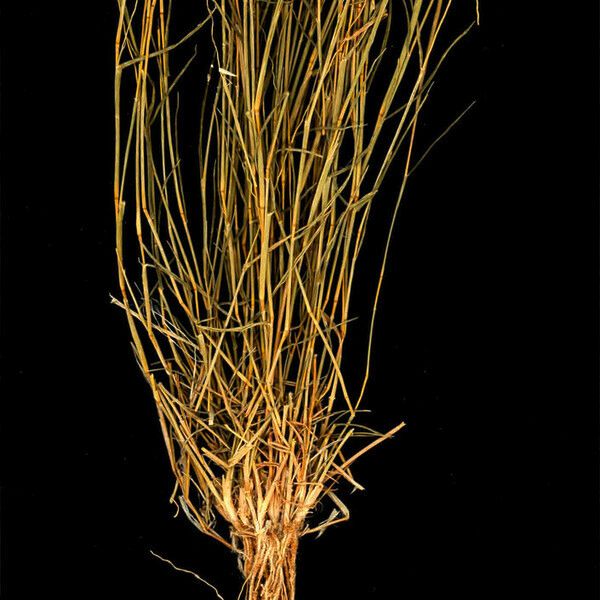
Plant Overview
Known as the Senegal Grass or Hooked-bristle Grass, this resilient species is a true survivor of the African Sahel and dry tropical regions. It is often celebrated by pastoralists for its ability to provide green forage in harsh, sandy environments where other plants wither away. Its name pays homage to its origins in Senegal, though it now paints the dry savannas of the tropics with its wiry, golden-green texture.
🔍 How to Identify
- 🌿 The Leaves: Short, stiff, and often grayish-green, the blades are relatively small and frequently roll inward to conserve moisture during the heat of the day.
- 🌾 The Stem: Wiry and semi-prostrate, the stems often spread across the ground before curving upwards, creating a low, carpet-like growth habit rather than a tall stalks.
- 🪝 The Seeds: The most distinctive feature is the seed head, which features tiny "hooked" bristles. These hooks are a clever evolutionary trick designed to hitch a ride on passing animals to spread the plant to new territories.
🏡 In Your Garden
- 🏜️ Tough as Nails: This plant thrives in poor, sandy soils and can handle extreme heat. If used for soil stabilization or naturalized landscaping, it prefers well-draining areas where other plants might struggle with low nutrients.
- ☀️ Sun Worshiper: It requires full, unfiltered sunlight to maintain its structural integrity. In shaded spots, it tends to become leggy and loses its characteristic compact, wiry form.
- 💧 Drought Logic: It has evolved to survive long periods without rain by entering a semi-dormant state. Avoid overwatering, as its roots are highly susceptible to rot if kept in soggy, heavy clay.
⚠️ Safety & Toxicity
- ✅ Non-Toxic: There are no known toxic compounds in Senegal Grass, making it a safe choice around livestock and wildlife.
- 🧤 Mechanical Irritation: While not chemically toxic, the "hooked" nature of the seeds can cause minor mechanical irritation to sensitive skin or get caught in the fur of long-haired pets, similar to natural Velcro.
✨ Fun Fact
- 🐐 The Survivor's Choice: Because it can withstand heavy trampling and intense grazing, it is often one of the last grasses remaining in overgrazed drylands, earning it a reputation as a "buffer" plant that prevents total desertification in fragile ecosystems.

Detailed Care Instructions








