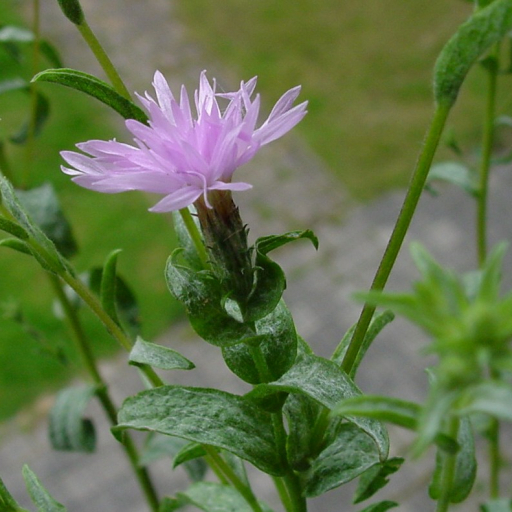
Plant Overview
Often called the Sierra Lessingia, this delicate California native is a master of timing. While most wildflowers fade under the late summer sun, this "late bloomer" emerges to paint dry, rocky slopes with soft lavender hues. It is a resilient mountain dweller that brings a sense of airy elegance to rugged granite outcrops and open woodlands.
🔍 How to Identify
- 🌿 Slender Stems: True to its name (leptoclada means "slender branch"), the plant features exceptionally thin, wiry stems that give it a light, see-through appearance in the landscape.
- 🌸 Daisy-like Blooms: It produces small, aster-like flowers with pale purple to deep lavender outer petals and a bright yellow center, appearing mostly from July through October.
- ☁️ Woolly Base: The lower stems and young leaves are often covered in fine, white, cobweb-like hairs, a clever adaptation that reflects heat and conserves precious moisture.
🏡 In Your Garden
- ⛰️ The Mountain Specialist: This plant is perfectly adapted to "lean" environments. It thrives in well-draining, rocky, or sandy soils and actually prefers a bit of neglect—too much fertilizer or heavy clay soil can cause it to become floppy.
- 🦋 Pollinator Pit-Stop: Because it flowers when many other nectar sources have dried up, it acts as a critical late-season cafeteria for native bees, butterflies, and other beneficial insects preparing for the winter.
⚠️ Safety & Toxicity
- ✅ Non-Toxic: Lessingia leptoclada is not known to be toxic to humans, dogs, or cats. It is a safe choice for wildlife-friendly gardens.
- 🧤 Mild Irritation: While not poisonous, the tiny hairs on the stems can occasionally cause very mild mechanical skin irritation for gardeners with highly sensitive skin if handled frequently.
✨ Fun Fact
The Sierra Lessingia is a "wind-traveler"; its seeds are equipped with a tiny tuft of bristles called a pappus, which acts like a parachute, allowing the mountain breezes to carry the next generation to distant rocky crevices.

Detailed Care Instructions

Place in a bright room that is sun drenched almost all day. Or directly in a south-facing window.

Some plants require more regular watering than others, which should be done every few days. It's critical to maintain the soil moist all of the time. The water requirements of the same plant placed in pots with varying sizes will differ. Because the water in the smaller pot evaporates faster than the water in the larger pot, it will require more watering. Regardless of pot size, the surface should constantly be maintained moist.








