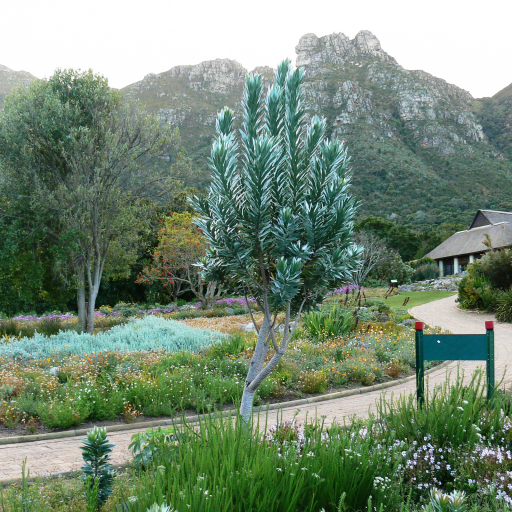
Plant Overview
Often called the "Silver Tree," the Leucadendron argenteum is a botanical masterpiece hailing exclusively from the granite-rich slopes of Table Mountain in South Africa. Its foliage doesn't just look metallic; it literally glimmers and shifts in the breeze like liquid mercury. Because it is highly specialized and rare in the wild, owning one is often considered the ultimate achievement for Mediterranean-climate gardeners and rare plant collectors.
🔍 How to Identify
- ✨ The Foliage: Long, lance-shaped leaves that are completely covered in millions of tiny, silken silver hairs. These hairs lay flat to create a shimmering, chrome-like finish.
- 🌬️ Movement: Unlike static plants, the Silver Tree is dynamic; the leaves change hue from dull grey to brilliant white depending on the angle of the sun and the direction of the wind.
- 🌲 The Cones: As a member of the Protea family, it produces large, woody, rose-like cones. The female trees produce the heavy cones, while the male trees produce softer, fluffier flowers.
🏡 In Your Garden
- 🧪 Specialized Roots: This tree uses "proteoid" roots, which are fine clusters designed to scavenge nutrients in poor soil. Because of this, it is highly sensitive to phosphorus—using standard garden fertilizer can actually "overdose" and kill the plant.
- 💨 Airflow is Life: The Silver Tree hates "wet feet" and stagnant air. It thrives on breezy hillsides where the wind can whisk away moisture from its leaves, preventing the fungal rot that often plagues it in humid environments.
- 🚿 Watering Nuance: While it is drought-tolerant once established, it prefers consistent, deep watering in very well-draining, acidic soil to mimic its mountain home.
⚠️ Safety & Toxicity
- 🛡️ Status: Non-toxic and generally safe.
- 🐾 Details: There are no known toxic effects for cats, dogs, or horses. However, the plant is physically delicate; the oils from human skin can sometimes damage the microscopic silver hairs if the leaves are touched excessively, so it is best enjoyed with the eyes rather than the hands.
✨ Fun Fact
The silver hairs on the leaves aren't just for show—they are a brilliant survival mechanism. They trap a layer of still air against the leaf surface to reduce evaporation and reflect intense UV rays, acting as a natural, built-in "sunscreen" for the tree.

Detailed Care Instructions
To grow Leucadendron argenteum, also known as the silver tree or silver leaf tree, follow these steps:
- Climate: Leucadendron argenteum is native to South Africa and thrives in a Mediterranean climate. It requires a minimum temperature of 20°F (-6°C) and is best suited for USDA hardiness zones 9 to 10.
- Sunlight: It needs full sun exposure for optimal growth. Choose a location that receives at least 6 to 8 hours of direct sunlight per day.
- Soil: Leucadendron argenteum prefers well-draining soil with a slightly acidic to neutral pH. It is essential to avoid waterlogged soil, as the plant cannot tolerate excessive moisture.
- Planting: Select a healthy young plant from a reputable nursery. Dig a hole slightly larger than the root ball, and place the plant in the hole. Backfill with soil, ensuring the crown is level with the ground. Gently firm the soil around the plant and water thoroughly.
- Watering: Initially, water the plant deeply to promote root establishment. Once established, water the silver tree sparingly, as it has moderate drought tolerance. Do not overwater, as it can lead to root rot.
- Mulching: Apply a layer of mulch around the base of the plant to conserve moisture, suppress weed growth, and protect the roots from extreme temperatures.
- Pruning: Prune Leucadendron argenteum lightly to maintain its desired shape and size. Remove any dead, damaged, or diseased branches, and perform shaping cuts during the dormant season (late winter or early spring).
- Fertilization: Apply a slow-release, balanced fertilizer specifically formulated for shrubs in late winter or early spring. Follow the manufacturer's instructions for dosage.
- Pest and Disease Control: Silver trees are generally resistant to pests and diseases. However, keep an eye out for common issues like aphids, scale insects, or fungal diseases. Address any problems promptly using organic or chemical treatments as necessary.
- Propagation: Leucadendron argenteum can be propagated from seeds or cuttings. Collect seeds from mature cones and sow them in well-draining soil in late winter or early spring. Cuttings can be taken during late spring or early summer. Use a rooting hormone and provide the cuttings with bottom heat until they root.
Remember that growing Leucadendron argenteum may be challenging outside its native range due to its specific climate requirements.

Place in a bright room that is sun drenched almost all day. Or directly in a south-facing window.

To properly water this plant, it is important to first understand the soil and environmental conditions it needs. The soil should be well-draining and not retain too much moisture, as excess water can lead to root rot. The plant also prefers full sun and a moderate to dry climate.
When watering, it is best to wait until the top inch of soil is dry to the touch before watering again. This may vary depending on the specific climate and soil conditions, so it is important to monitor the plant regularly. When watering, it is important to slowly and deeply saturate the root ball, allowing the water to soak in fully.
It is important not to overwater the plant, as this can lead to yellowing of the leaves and other signs of stress. However, it is also important not to let the plant become too dry, as this can affect its growth and overall health. A good approach is to gradually increase water frequency during periods of growth and decrease during periods of dormancy.
To fertilize this plant, use a balanced fertilizer with an N-P-K ratio of 8-8-8. Apply the fertilizer in early spring, just before new growth appears. Use a slow-release fertilizer or apply a liquid fertilizer diluted to half strength. Avoid over-fertilizing, as this plant is sensitive to excess nutrients. Water the plant well after fertilization to distribute the nutrients evenly throughout the soil.
The ideal soil for this plant should be well-draining and slightly acidic, with a pH range of 5.5 to 6.5. It should also be rich in organic matter, with a mixture of compost, sand, and loam. The soil should be able to retain moisture without becoming waterlogged, as this can lead to root rot. It is important to avoid using soil that is heavy and compacted, as this can limit the plant's ability to grow and thrive. Additionally, the plant prefers a slightly sandy soil mix, as this allows for better drainage and oxygenation of the roots. It is recommended to top-dress the soil with a layer of mulch to help retain moisture and regulate temperature. Fertilization should be done sparingly and only during the growing season, as excessive nutrients can harm the plant.
Leucadendron Argenteum can be propagated through several methods including seed propagation, cuttings, and layering. Seed propagation involves collecting mature seeds from the plant and sowing them in a well-draining soil mix. Cuttings can be taken from the stem and leaves of the plant and rooted in a well-draining soil mix with rooting hormone. Layering involves selecting a low-growing branch, bending it down to the ground, and covering it with soil, allowing it to root before cutting it from the mother plant. These methods can be used to propagate multiple plants from a single Leucadendron Argenteum specimen. It is important to use sterile tools and a clean potting mix and to provide adequate moisture and light for successful propagation.








