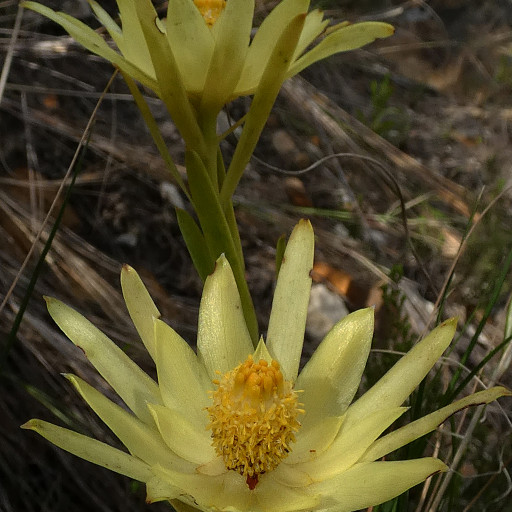
Plant Overview
Known as the Sickle-leaf Conebush, the Leucadendron xanthoconus is a golden jewel from the South African Fynbos. It is famous for its shimmering, sun-drenched appearance that seems to glow even on cloudy days. While it looks like it belongs in a professional florist's bouquet, this hardy shrub is a resilient survivor designed to thrive in coastal winds and rocky soils.
🔍 How to Identify
- 🌿 The Leaves: Long, narrow, and distinctly curved like a sickle or a crescent moon. They are often covered in fine, silky hairs that give the plant a silvery, metallic sheen.
- ☀️ The Bracts: The "flowers" are actually modified leaves called bracts. In late winter and spring, the tips of the branches turn a brilliant lemon-yellow, surrounding the central cone.
- 🌲 The Cones: As a "dioecious" species, plants are either male or female. Female plants produce large, woody, rose-shaped cones that hold the seeds, while male plants produce smaller, pollen-bearing flowers.
🏡 In Your Garden
- 💧 Soil Sensitivity: Like most members of the Protea family, this plant is highly sensitive to phosphorus. Avoid standard fertilizers; instead, use specialized "Protea mix" or organic mulch to keep the soil acidic and lean.
- 🌬️ Wind & Air: It loves a breezy spot. Good air circulation is vital to prevent fungal issues, making it a perfect choice for coastal gardens where other plants might struggle with the salt spray and wind.
- ✂️ Pruning for Shape: To prevent the plant from becoming "leggy" or sparse at the bottom, prune the stems back after the flowering season. This encourages a bushier, more compact habit.
⚠️ Safety & Toxicity
- ✅ Safe Status: Leucadendron xanthoconus is generally considered non-toxic to humans, cats, and dogs.
- 🧤 Skin Protection: While not poisonous, the woody stems and stiff leaves can be scratchy. Wearing gardening gloves is recommended when pruning to avoid minor skin abrasions.
✨ Fun Fact
The Sickle-leaf Conebush is a "serotinous" plant, meaning it stores its seeds in fireproof woody cones for years. The seeds are only released after a bushfire sweeps through, using the ash-enriched soil to start a new generation of golden bushes!

Detailed Care Instructions

Place in a bright room that is sun drenched almost all day. Or directly in a south-facing window.

To properly water this plant, it is important to first check the moisture level in the soil. This can be done by sticking your finger about an inch deep into the soil and feeling for moisture. If the soil feels dry, it is time to water the plant.
When watering, it is important to give the plant a deep soaking to ensure the roots are getting enough water. This can be done by using a watering can or hose and watering until the soil feels saturated.
It is also important to avoid getting water on the leaves or flowers of the plant as this can lead to fungal diseases. Water should be directed towards the base of the plant and the surrounding soil.
In general, this plant should be watered once a week or when the soil feels dry to the touch. However, watering frequency may vary depending on factors such as temperature and humidity levels.
These plant needs regular fertilizing during growing seasons. Fertilizing your plants in dormant state during the winter, might result in scorching or browning of the leaf tips. If mature plants display signs of nutrient insufficiency, fertilizer administration is necessary to restore the plant to its previous state.
You may use All Purpose Plant Food or Flower Fertilizer or All Purpose Fertilizer for your Sickle-Leaf Conebush
The most suitable soil for the Leucadendron Xanthoconus plant is a well-draining soil that is rich in nutrients. It should have a pH level between 5.5 and 6.5 and be slightly acidic. The soil should also be low in nutrients as it can lead to root rot. The preferred soil mix will have a mixture of sand, perlite, and a small amount of peat moss or compost to improve the soil’s water-holding capacity. The plant does not tolerate heavy, clay soil, so it is important to ensure that the soil is aerated and free-draining. Adding a layer of mulch around the plant is also recommended as it helps to maintain moisture levels and suppress weeds. Once planted, it is essential to water the Leucadendron Xanthoconus plant regularly, as it requires consistent moisture to grow and thrive.
Common pests of the sickle-leaf conebush include Scale insect, mealybugs, spider mites. Make a habit of checking your sickle-leaf conebush frequently for pests so that any infestations can be caught and managed early.








