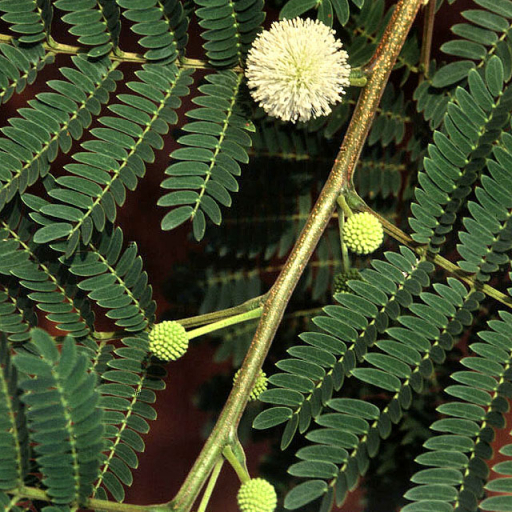
Plant Overview
Known by nicknames like the "Leadtree," "White Popinac," or "River Tamarind," Leucaena leucocephala is a botanical double-edged sword. While it has been hailed as a "Miracle Tree" for its ability to grow rapidly in poor soil and provide high-protein fodder, it is also listed as one of the world's most invasive species. Its delicate, feathery foliage belies a resilient and aggressive nature that can transform a landscape in just a few seasons.
🔍 How to Identify
- 🌿 Feathery Foliage: The leaves are bipinnate (mimosa-like), featuring dozens of tiny, oblong leaflets that give the tree a soft, airy, fern-like appearance.
- ⚪ White Pom-poms: The flowers are distinctive, small, creamy-white globes that look like fuzzy spheres, usually appearing in clusters at the ends of the branches.
- 🫛 Flat Seed Pods: After flowering, the tree produces long, flat, paper-like pods that turn from translucent green to a dark, brittle brown, often hanging in heavy bunches.
🏡 In Your Garden
- 🏗️ The Pioneer Spirit: This plant is a "pioneer species," meaning it is one of the first to grow in disturbed or poor soil. It has a deep taproot that helps it survive extreme droughts, but this also means it hates being transplanted once established.
- 🌱 Nitrogen Powerhouse: In a garden context, it is often used for "chop-and-drop" mulching. As a legume, it fixes nitrogen into the earth, acting as a living fertilizer for the plants around it. However, you must prune it aggressively to prevent it from shading out your other flowers.
⚠️ Safety & Toxicity
- 🐎 Mimosine Content: The plant contains a non-protein amino acid called mimosine. While some livestock can eat it, it can cause hair loss, goiter, and growth issues in horses, pigs, and poultry if they eat too much.
- 🐶 Pet & Human Safety: The seeds and leaves are generally not considered highly toxic to humans in small accidental amounts, but they can cause digestive distress. It is best to keep pets from grazing on the fallen seed pods.
✨ Fun Fact
The name of the Mexican state Oaxaca actually stems from the Nahuatl word Huaxyacac, which translates to "the place of the Leucaena trees." It has been a vital part of the regional diet and culture for thousands of years!

Detailed Care Instructions
| Humidity | Normal |
| Lighting | Full Sun |
| Toxicity | Poisonous |
| Difficulty | Medium |
| Temperature | 24°C - 34°C |
| Hardiness Zones | 9 - 12 |
To grow Leucaena Leucocephala plants, also known as the white leadtree or jumbay, follow these steps:
- Obtain seeds or young plants: You can obtain Leucaena Leucocephala seeds or young plants from nurseries, seed banks, or online suppliers. Ensure they are from a reputable source.
- Choose a suitable location: Leucaena Leucocephala thrives in warm and tropical climates. Select a location with full sunlight exposure as the plant requires at least 6-8 hours of direct sunlight each day.
- Prepare the soil: Leucaena Leucocephala grows well in a range of soil types, but it prefers well-draining soils. Amend the soil with organic matter like compost or aged manure to improve its fertility and moisture-retention abilities.
- Sow the seeds or plant the young plants: If planting seeds, scarify them by carefully scratching the seed coat slightly with sandpaper to encourage germination. Soak the seeds in water overnight before sowing. Plant the seeds or young plants according to the recommended spacing, usually around 3-4 feet apart.
- Water the plant: Regularly water the young plant to establish its root system. Provide enough water to keep the soil slightly moist but not waterlogged. Once established, Leucaena Leucocephala is drought-tolerant and only requires occasional watering during extended dry periods.
- Provide support (optional): If you live in a windy area or want to encourage a straighter growth, consider staking or providing support for the young plant to prevent it from being damaged or leaning.
- Prune the plant: Periodically prune your Leucaena Leucocephala plant to promote bushier growth and maintain its desired shape. Pruning also helps to remove any dead or diseased branches.
- Fertilize the plant: Apply a balanced slow-release fertilizer in spring to provide essential nutrients. Follow the manufacturer's instructions for dosage and application methods.
- Watch for pests and diseases: Keep an eye out for common pests like aphids, scales, or spider mites. Treat infestations promptly with organic insecticidal soap or neem oil. Leucaena Leucocephala is generally resistant to most diseases but may occasionally suffer from root rot in poorly drained soils.
- Harvest (optional): Leucaena Leucocephala is often grown as a fodder or forage crop. You can harvest the leaves and tender shoots for livestock feed. However, if growing as an ornamental plant, allow the plant to flower and enjoy its attractive white flower spikes.
Remember to check your local regulations regarding the cultivation of Leucaena Leucocephala, as it is considered an invasive species in some regions due to its rapid growth and ability to spread.

Place in a bright room that is sun drenched almost all day. Or directly in a south-facing window.

To water this particular plant, it is important to keep the soil moist, but not soaked. Watering should be done regularly during the growing season, but less frequently during periods of drought or low growth. When watering, it is helpful to water the plant deeply, penetrating the soil around the base of the plant, rather than just spraying the foliage. Over-watering can lead to root rot, so it is important to ensure proper drainage. In addition, it is important to monitor soil moisture levels and adjust watering accordingly, as this type of plant can be sensitive to changes in moisture levels.
To provide proper nutrition to this plant, apply a balanced fertilizer with equal parts nitrogen, phosphorus, and potassium. Fertilize every two months during the growth season, reducing the frequency to once every three months during the dormant season. Spread the fertilizer evenly around the root zone of the plant, taking care not to let it touch the trunk or foliage. Water deeply after fertilizing to help the nutrients reach the roots. Avoid over-fertilizing, as this can harm the plant and lead to excessive growth.
The ideal soil for this plant is one that has good drainage, yet retains moisture well. It should also be rich in nutrients, especially nitrogen. The pH level should be between 6.0 and 7.5, which is slightly acidic to neutral. The soil should also be free of any contaminants, such as heavy metals or chemical pollutants. When planting, it is recommended to mix in some organic matter, such as compost or well-rotted manure, to improve soil fertility and water retention. Additionally, regular fertilization may be necessary to ensure optimal growth and health of the plant.
There are several ways to propagate this plant. One method involves taking stem cuttings from the parent plant using a sharp, clean pair of pruning shears. Cuttings should be taken from healthy, disease-free branches and should be about 6-8 inches in length. Remove any leaves from the bottom half of the cutting, and dip the cut end in hormone powder to encourage rooting. Plant each cutting in a pot filled with well-draining soil, keeping it moist but not waterlogged. Place the pot in a warm, bright location with indirect sunlight. Over time, the cutting should root and grow into a new Leucaena Leucocephala plant. Another method involves layering, where a low-growing branch is pinned down to the soil and left in place until it forms roots, after which it can be severed from the parent plant and transplanted. A third method involves collecting seeds from the plant and sowing them in soil, keeping them moist and warm until they germinate into seedlings. The seedlings can then be planted in individual pots until they are large enough to be transplanted into the ground.








