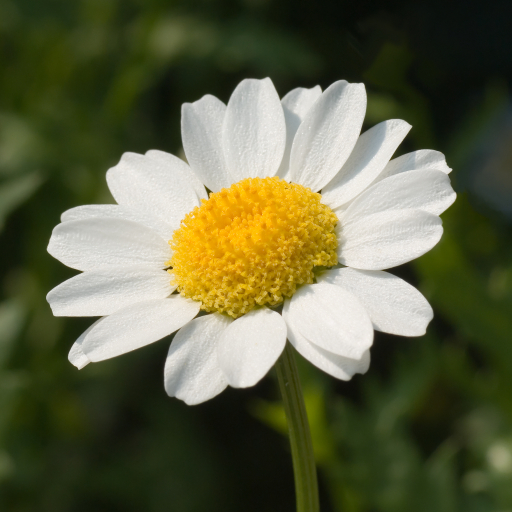
Plant Overview
Often called the Mini Daisy or Creeping Daisy, Leucanthemum paludosum is like a handful of summer stars scattered across your garden. This Mediterranean native is cherished for its "happy" appearance, featuring classic white petals and sunny yellow centers. It is a go-to choice for gardeners who want a carpet of blooms that looks delicate but performs with surprising toughness.
🔍 How to Identify
- 🌼 The Bloom: Miniature daisy flowers (about 1–1.5 inches wide) with crisp white ray petals circling a dense, bright yellow central disc.
- 🍃 The Foliage: Distinctive dark green leaves that are "toothed" or deeply lobed, creating a lush, fern-like backdrop for the flowers.
- 🌱 Growth Habit: A low-growing, mounding plant that rarely exceeds 10 inches in height, making it look like a dense, floral cushion.
🏡 In Your Garden
- ☀️ Sun Chaser: This plant is a true sun-worshipper. While it can tolerate light shade, a lack of direct light will make the stems "leggy" as they stretch to find the sun, resulting in fewer flowers.
- 💧 Drainage is Key: While its name paludosum suggests a love for marshes, in a garden setting, it actually demands well-draining soil. It hates "wet feet," which can quickly lead to root rot.
- 🔄 Self-Sowing Magic: It is a short-lived perennial or annual, but it is a prolific self-seeder. If you leave the faded flowers alone at the end of the season, you’ll likely find "volunteer" babies popping up in the same spot next spring.
⚠️ Safety & Toxicity
- 🟢 General Status: Non-toxic to humans and generally considered safe for gardens with children.
- 🐾 Pet Watch: While not listed as highly poisonous, like many members of the Asteraceae family, it contains sesquiterpene lactones. If ingested in large quantities, cats or dogs might experience mild digestive upset or drooling.
- 🖐️ Skin Sensitivity: Some gardeners with sensitive skin may experience a mild itchy rash (contact dermatitis) after handling the foliage, so gloves are recommended during heavy pruning.
✨ Fun Fact
Despite its botanical name paludosum (which translates from Latin to "boggy" or "marshy"), this plant is actually quite drought-tolerant once its root system is established! It earned its name because it is often found near seasonal water sources in its native North African habitat.

Detailed Care Instructions
To grow Leucanthemum Paludosum plants, also known as the "Montauk daisy" or "oxtail daisy," you can follow these steps:
- Choose a suitable location: Leucanthemum Paludosum plants prefer full sun, but they can tolerate some light shade. Make sure to select a spot that receives at least 6-8 hours of direct sunlight each day.
- Prepare the soil: These plants thrive in well-draining soil. Add organic matter, such as compost or aged manure, to improve soil fertility and drainage.
- Plant the seeds or seedlings: You can start Leucanthemum Paludosum from seeds indoors about 6-8 weeks before the last frost date, or you can purchase young plants from nurseries. Plant the seeds or seedlings in the prepared soil, spacing them about 12-18 inches apart.
- Water the plants: Keep the soil consistently moist but not waterlogged, especially during hot and dry periods. Avoid overhead watering, as it can lead to disease problems. Instead, water at the base of the plants.
- Mulch around the plants: Apply a layer of organic mulch, such as straw or wood chips, around the base of the plants. This helps retain soil moisture, suppresses weed growth, and regulates soil temperature.
- Fertilize as needed: Leucanthemum Paludosum plants generally do not require much fertilization, as they can thrive in average garden soil. However, you can apply a slow-release balanced fertilizer once or twice during the growing season if desired.
- Prune and deadhead: Regularly remove spent flowers (deadhead) to encourage continuous blooming. Additionally, you can pinch back the plants in early summer by about one-third of their height to promote compact growth.
- Monitor for pests and diseases: Keep an eye out for common pests like aphids, slugs, or snails. Treat any infestations promptly using organic methods or insecticidal soap. Leucanthemum Paludosum is generally not prone to serious diseases, but ensure good air circulation and avoid overwatering to prevent any issues.
- Winter care: In areas with cold winters, Montauk daisy may not be fully hardy. Mulch around the base of the plants with a layer of straw or leaves to protect the roots during winter. Alternatively, consider growing them in containers that can be moved indoors during freezing temperatures.
By following these steps, you can successfully grow Leucanthemum Paludosum plants and enjoy their beautiful white daisy-like flowers.

Place in a bright room that is sun drenched almost all day. Or directly in a south-facing window.

Leucanthemum Paludosum is a flowering plant that requires regular watering to thrive. When watering this plant, it is important to avoid overwatering, as this can lead to root rot and other problems. To water Leucanthemum Paludosum, you should follow these steps:
1. Check the soil: Before watering the plant, check the moisture level in the soil. Stick your finger about an inch into the soil. If it feels dry, it's time to water. If it feels moist, wait a day or two before checking again.
2. Water deeply: When you do water the plant, make sure to water deeply. This means watering until the soil is saturated to a depth of at least six inches. This will encourage deeper root growth and help the plant withstand drought conditions.
3. Use a watering can or hose: When watering, use a watering can or a hose with a gentle spray attachment. Avoid using a high-pressure jet of water, as this could damage the plant.
4. Water in the early morning or evening: The best time to water Leucanthemum Paludosum is in the early morning or evening, when the temperatures are cooler and the sun is not as intense. This will help prevent the water from evaporating too quickly and enable the plant to absorb the water more effectively.
5. Mulch around the plant: Finally, consider adding a layer of organic mulch around the base of the plant. This will help retain moisture in the soil and reduce the need for frequent watering. A layer of mulch will also help suppress weeds and keep the soil temperature more consistent.
To fertilize this plant, begin by selecting a well-balanced fertilizer that is appropriate for flowering plants. Next, dilute the fertilizer to half strength according to the package instructions, ensuring that you do not over-fertilize the plant. Apply the fertilizer to the soil surrounding the plant, being careful not to get any on the leaves or flowers. Water the plant thoroughly after fertilizing to help the nutrients penetrate the soil and reach the roots. Finally, repeat this fertilization process once every two to three months, especially during the growing season, to keep the plant healthy and thriving.
The ideal type of soil to use for the Leucanthemum paludosum plant is a well-draining, nutrient-rich soil that is slightly acidic to neutral in pH. This plant prefers a soil that is moist but not waterlogged, and does well when planted in a location that receives full sun for most of the day.
When planting the Leucanthemum paludosum, it is important to ensure that the soil is well-prepared with organic matter such as compost or well-rotted manure to provide the plant with the necessary nutrients and improve soil structure. The addition of perlite or coarse sand can also aid in improving drainage and preventing waterlogging of the soil.
The soil should be kept consistently moist, but not wet, throughout the growing season. The addition of mulch around the plant can help to retain moisture in the soil and also suppress weed growth.
Overall, the Leucanthemum paludosum prefers a soil that is well-draining, nutrient-rich, and moist but not waterlogged, in a location that receives full sun for most of the day.
Leucanthemum Paludosum is a perennial plant that can be propagated by using either seeds or stem cuttings. Here are the steps on how to propagate this plant without using its common names:
Propagation using Seeds:
- Collect seeds from matured flowers of Leucanthemum Paludosum plant during the blooming phase.
- Sow the seeds in a seed tray filled with fertile soil.
- Cover the seeds with a thin layer of soil, and water them gently.
- Place the seed tray in a well-lit area that receives partial sunlight.
- Keep the soil moist but not waterlogged, and ensure good drainage by adding perlite or sand to the soil mixture.
- Germination of the seeds usually takes 10 to 15 days.
- Once the seedlings have reached a height of 3-4 inches, they can be transplanted into a larger pot or the garden bed.
Propagation using Stem Cuttings:
- Select a healthy plant stem from a matured Leucanthemum Paludosum plant.
- Cut a 4-6 inch section of stem using a sharp and sterilized knife.
- Remove all the lower leaves from the stem cutting, leaving only the top 2-3 leaves.
- Dip the cut end of the stem in rooting hormone powder and tap off the excess.
- Plant the stem cutting in a pot or the garden bed filled with well-draining soil.
- Water the soil gently, and place the pot or the garden bed in a partially shaded area.
- Keep the soil moist but not waterlogged and provide ample humidity by covering the cutting with a transparent plastic bag.
- After 4-6 weeks, the stem cutting will start to grow roots.
- Once the plant has developed a root system, transplant it to a permanent location in a larger pot or the garden bed.
Note: Always wear gloves while handling Leucanthemum Paludosum, as it can irritate the skin.
Common pests of the annual marguerite include Spider mites, aphids, thrips, larvae. Make a habit of checking your annual marguerite frequently for pests so that any infestations can be caught and managed early.








