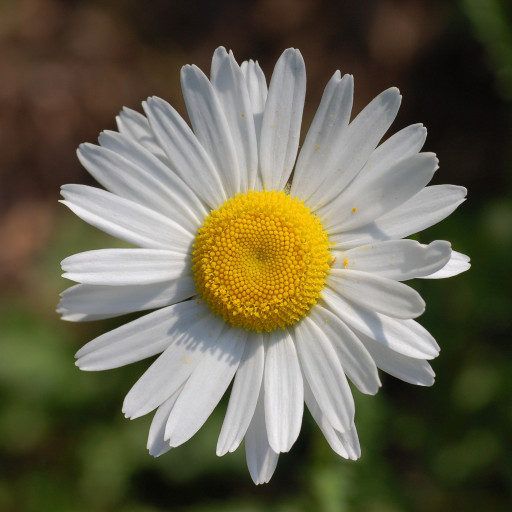
Plant Overview
Often called the "Moon Daisy" for its glowing white petals at dusk, the Oxeye Daisy is the quintessential wildflower of classic meadows and roadside banks. While it looks like a simple garden favorite, its history is steeped in romance—it is the original flower used for the "he loves me, he loves me not" fortune-telling game. It’s a hardy, cheerful survivor that brings a touch of the wild to any sunny landscape.
🔍 How to Identify
- 🌼 The "Fried Egg" Bloom: Features a distinct bright yellow center (disc florets) surrounded by 20–30 pure white petals (ray florets).
- 🍃 Toothed Foliage: The dark green leaves at the base are spoon-shaped and lobed, while the leaves higher up the stem are narrower and "clasp" the stalk directly.
- 📏 Grooved Stems: The stems are hairless, slightly furrowed, and grow vertically, usually reaching about 1 to 2 feet in height.
🏡 In Your Garden
- ☀️ Sun Seeker: This plant thrives in full sun and isn't picky about soil quality, often blooming where more delicate garden flowers struggle to survive.
- 🌱 Vigorous Spreader: Because it spreads via both prolific seed production and creeping underground rhizomes, it can become aggressive in small beds. Deadhead the spent flowers early if you want to prevent a "daisy takeover."
- 🦋 Pollinator Landing Pad: The flat, open face of the flower provides a perfect landing platform for hoverflies, beetles, and small butterflies who find the nectar easily accessible.
⚠️ Safety & Toxicity
- 🌿 Skin Sensitivity: While not considered poisonous, the sap contains compounds that can cause contact dermatitis (skin rashes) in people with sensitive skin or allergies to the Aster family.
- 🐾 Pet Safety: It is generally non-toxic to cats and dogs, though munching on large amounts may lead to mild stomach upset or vomiting.
- 🍽️ Edible Nuance: Young leaves are technically edible and often used in salads in some cultures, but they have a very strong, pungent flavor that isn't for everyone.
✨ Fun Fact
The name "Oxeye" comes from the ancient Greek leukos (white) and anthemon (flower), but the common name refers to the large, round shape of the flower head which was thought to resemble the wide eye of an ox.

Detailed Care Instructions
To grow Leucanthemum Vulgare (commonly known as oxeye daisy or white daisy), follow these steps:
- Choosing the right location: Oxeye daisies thrive in full sun, so select a planting location that receives at least 6 hours of direct sunlight each day. They can tolerate a range of soil types but prefer well-draining soil.
- Planting the seeds: You can sow the seeds directly into the ground in early spring or late fall. Prepare the soil by removing weeds and loosening it with a garden fork or tiller. Scatter the seeds evenly over the soil surface and lightly press them into the ground. Avoid burying the seeds too deeply, as they need light to germinate.
- Watering: Oxeye daisies are relatively drought-tolerant but will benefit from regular watering, especially during the initial growth period. Water the seeds and young plants consistently, keeping the soil moist but not waterlogged. Once established, they can withstand some dry spells.
- Thinning and spacing: When the seedlings reach 2-3 inches in height, thin them to a spacing of about 12-18 inches apart. This allows each plant to have sufficient room to grow and prevents overcrowding.
- Mulching and weeding: Apply a thin layer of organic mulch, such as shredded bark or straw, around the plants to help retain soil moisture and suppress weed growth. Regularly monitor and remove any weeds that may compete with the oxeye daisies for nutrients and sunlight.
- Fertilizing: Oxeye daisies generally do not require much fertilization, as they can thrive in nutrient-poor soils. However, if your soil is particularly poor, you can apply a balanced, slow-release fertilizer in early spring to help promote healthy growth.
- Pruning: To encourage bushier growth and prolong blooming, you can deadhead the spent flowers by cutting them back to just above a leaf node or branch intersection. This will redirect the plant's energy towards producing more flowers rather than developing seeds.
- Overwintering: Oxeye daisies are perennials and should survive winter in most climates. However, if you live in an area with harsh winters, you can protect the plant by covering it with a layer of mulch or straw in late fall.
By following these tips, you should be able to successfully grow Leucanthemum Vulgare and enjoy its beautiful white daisy flowers.

Place in a bright room that is sun drenched almost all day. Or directly in a south-facing window.

To effectively water this plant, you should first evaluate the moisture content of the soil. This can be done by inserting your finger into the soil to the depth of at least one inch and feeling for moisture. If the soil is dry at this depth, it is time to water.
When watering, use a gentle stream of water so as not to disturb the plant or soil. Water at the base of the plant, avoiding the leaves and flowers, as wet foliage can lead to fungal diseases.
Water deeply, allowing the water to soak into the soil and reach the root system. Ideally, the soil should be moist but not waterlogged.
It is generally recommended to water this plant once per week, but the frequency may vary depending on the climate and soil conditions. Monitor the soil moisture regularly and adjust watering as necessary.
- Choose a balanced fertilizer with equal parts nitrogen, phosphorus, and potassium.
- Apply the fertilizer to the soil in early spring before the plant begins to grow.
- Use a garden fork to lightly work the fertilizer into the soil, taking care not to disturb the plant's roots.
- Water the plant thoroughly after fertilizing to help the nutrients reach the roots.
- Repeat the fertilizer application once per year in early spring.
Leucanthemum Vulgare can grow in a range of soils, but it prefers soil that is moist, well-drained, and fertile. The pH level of the soil should be slightly acidic to neutral (between 6 and 7.5). The soil should have good water retention capacity, but it should not be waterlogged. Sandy loam or loam soils are ideal for this plant. The soil should be amended with organic matter, such as compost or well-rotted manure, to improve soil fertility and texture. Avoid using heavy clay soils or soils with poor drainage, as they can lead to root rot and other problems. In summary, the ideal soil for Leucanthemum Vulgare should be fertile, moist, well-drained, with good water retention capacity and a slightly acidic to neutral pH.
Leucanthemum Vulgare plant can be propagated through division of its root system or through stem cuttings. To propagate through division, carefully dig up the plant, separate the roots into smaller sections and replant in new locations. To propagate through stem cuttings, take cuttings from the top of the plant just below a node, remove the bottom leaves, dip the cut end of the stem in rooting hormone and plant in a well-draining soil. Keep the newly propagated plants well-watered and in a location with partial sun until they become established.
Common pests of the ox-eye daisy include Spider mites, aphids, whiteflies. Make a habit of checking your ox-eye daisy frequently for pests so that any infestations can be caught and managed early.








