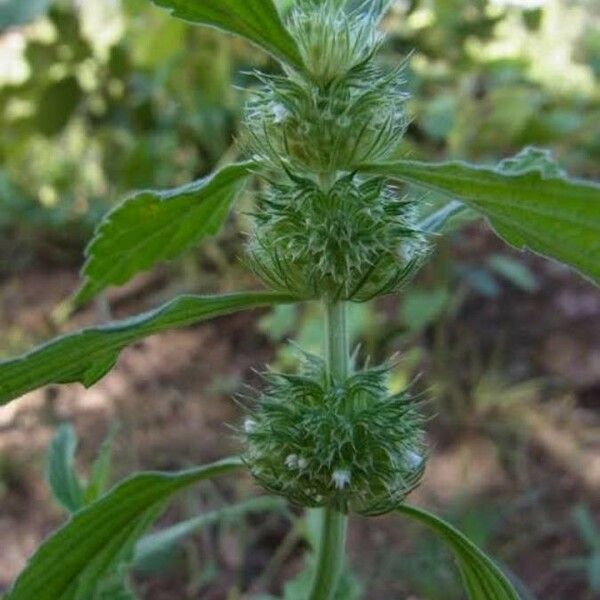
Plant Overview
Often called the Whitemouth Spiritweed, this resilient traveler has hopped across oceans from Africa and Asia to become a familiar sight in tropical gardens worldwide. While many gardeners initially dismiss it as a common weed, it belongs to the aromatic Mint family (Lamiaceae) and carries a subtle, spicy scent. Its "spirit" nickname stems from its historical use in folk rituals to ward off bad luck or "spirits."
🔍 How to Identify
- 🌿 Square Stems: True to its mint heritage, the plant features a very distinct four-sided, quadrangular stem that feels rigid to the touch.
- 🍃 Hairy Leaves: The leaves are lance-shaped with serrated (saw-toothed) edges and are covered in a fine, velvety fuzz that gives them a soft, matte appearance.
- ☁️ Whorled Flowers: Look for dense, globe-like clusters of tiny white flowers that wrap around the stem at intervals, resembling fluffy white "pom-poms" stacked vertically.
🏡 In Your Garden
- ☀️ Sun Seeker: This plant is a pioneer species; it thrives in full sun and disturbed soil. If you have a patch of dry, neglected earth, the Spiritweed will likely be the first to move in and stabilize the ground.
- 🌱 The Spreader: It is a prolific self-seeder. Because it produces thousands of tiny seeds within those dried flower "globes," it can quickly take over a garden bed if the flower heads aren't trimmed after they fade.
⚠️ Safety & Toxicity
- 🐾 Status: Generally considered non-toxic to touch, but it is not a culinary herb.
- ⚠️ Bioactive Oils: The plant contains concentrated essential oils used in traditional medicine. While not "poisonous" in the traditional sense, ingesting large amounts can cause stomach upset in pets or small children. Always supervise curious chewers around wild-growing plants.
✨ Fun Fact
In many regions of West Africa, dried bunches of Leucas martinicensis are hung in doorways or burnt as incense. The pungent, aromatic smoke acts as a highly effective, traditional mosquito repellent!

Detailed Care Instructions
To grow Leucas Martinicensis plant, also known as white Leucas or white weed, you can follow these steps:
- Obtain seeds or cuttings: You can purchase Leucas Martinicensis seeds or obtain cuttings from an existing plant. If using cuttings, ensure they are taken from a healthy and mature plant.
- Choose a suitable location: Leucas Martinicensis thrives in full sunlight, so choose a location that receives at least six hours of direct sunlight per day. Ensure the soil is well-draining and fertile.
- Prepare the soil: Prepare the soil by loosening it and removing any weeds or debris. Leucas Martinicensis grows well in slightly acidic to neutral soil (pH 6.5-7.5).
- Plant the seeds or cuttings: If using seeds, sow them directly into the prepared soil, following the recommended planting depth listed on the seed packet. If using cuttings, plant them at a depth of around 1-2 inches. Space the plants around 12-18 inches apart to allow room for growth.
- Water regularly: Keep the soil moist, but not waterlogged. Water thoroughly when the top inch of soil feels dry. Avoid overwatering as it can cause root rot.
- Fertilize occasionally: Leucas Martinicensis doesn't require much fertilizer. You can apply a balanced, slow-release fertilizer once or twice during the growing season to promote healthy growth.
- Mulch: Apply a layer of organic mulch around the base of the plants to help retain moisture, suppress weed growth, and regulate soil temperature.
- Prune if necessary: If the plant becomes leggy or bushy, you can prune it lightly to shape it. Also, removing spent flowers encourages new blooms.
- Protect from pests and diseases: Monitor the plant for any signs of pests or diseases, such as aphids or powdery mildew. Treat accordingly to prevent further damage.
- Harvest and propagate: Once the plant matures and produces flowers, you can harvest the leaves, flowers, or seeds for use. Additionally, you can propagate the plant by collecting seeds or taking stem cuttings.
By following these guidelines, you should be able to successfully grow Leucas Martinicensis plants. Remember to provide proper care, including regular watering, adequate sunlight, and occasional fertilization, to ensure healthy and vigorous growth.

To water this plant, it is important to provide thorough watering but not to overwater. The soil should be allowed to dry out slightly between waterings, but not completely. It is best to water at the base of the plant, avoiding the foliage, to prevent the leaves from getting wet and potentially developing fungal diseases. It is also important to ensure that the plant is not sitting in standing water, as this can lead to root rot. If the plant is grown in a container, make sure to allow excess water to drain out of the bottom. In general, aim to provide consistent moisture without allowing the soil to become too soggy or too dry.
To fertilize this plant, choose a high-quality liquid fertilizer and dilute it according to the instructions on the label. Feed the plant once every two weeks during the growing season, and reduce feeding frequency in the winter. Avoid over-fertilization, as this can harm the plant. Apply the diluted fertilizer around the base of the plant, taking care not to get it on the foliage. Water the plant immediately after fertilizing to help the nutrients penetrate the soil.
Leucas Martinicensis plant prefers a well-draining soil mix with adequate moisture retention and nutrient content. A soil mix that is loose, aerated, and slightly acidic with a pH range between 6 and 7 is ideal for its growth and development. It also requires regular fertilization with a balanced fertilizer that is rich in nitrogen, phosphorous, and potassium to support healthy growth and flowering. Organic matter such as compost and vermiculite can be added to the soil mix to improve its texture, fertility, and water-holding capacity. Avoid using heavy or compacted soils that can lead to poor drainage and root rot. Additionally, the plant requires moderate watering, enough to keep the soil moist but not waterlogged. It's important to monitor the soil moisture level regularly and adjust the watering schedule accordingly.
Leucas Martinicensis can be propagated through stem cuttings or division of the root ball.
For stem cuttings, select a healthy stem with multiple nodes and cut it with a clean, sharp pair of scissors or pruning shears. Remove the leaves from the bottom of the stem, leaving at least two leaves at the top. Dip the cut end of the stem in rooting hormone and plant it in a small pot filled with well-draining soil. Water the cutting and keep it in a warm, bright location with indirect sunlight. Keep the soil moist and in a few weeks, roots and new growth should appear.
For division of the root ball, gently remove the plant from its pot and carefully separate the root ball into smaller sections. Each section should have a good root system and some healthy foliage. Plant the sections in their own pots with fresh soil and water them thoroughly. Place the new plants in a warm, bright location with indirect sunlight and water them regularly.
Regardless of the method, it's important to keep newly propagated Leucas Martinicensis plants in a warm, bright location with indirect sunlight and to keep the soil moist but not waterlogged. With proper care, the new plants should thrive and be ready for transplanting in a few months.








