Plant Overview
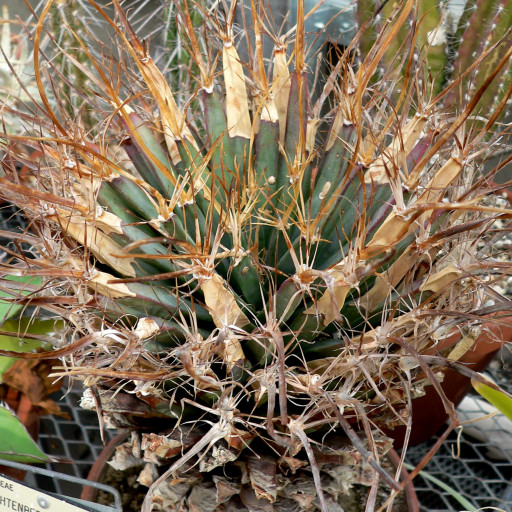
The Leuchtenbergia principis, often called the "Agave Cactus" or "Prism Cactus," is a master of disguise. At first glance, you might mistake it for a common Agave, but it is actually a unique, slow-growing cactus that is the only member of its genus. Native to the high-altitude deserts of North-central Mexico, it has spent centuries evolving to look like a cluster of dried grass to hide from hungry herbivores.
🔍 How to Identify
- 🌵 The Tubercles: Instead of a round body, it features long, slender, three-angled "fingers" (tubercles) that can reach up to 5 inches in length, giving it a starburst shape.
- 🌾 Papery Spines: The tips of the tubercles are topped with flexible, straw-like spines that look more like dried parchment or grass than traditional cactus needles.
- 🌼 Silky Blooms: During the summer, large, fragrant, funnel-shaped yellow flowers emerge directly from the center of the plant’s crown.
🏡 In Your Garden
- 🏺 The Deep Taproot: This cactus grows a massive, carrot-like taproot underground. Because of this, it requires a much deeper pot than your average succulent to allow its "anchor" to expand comfortably.
- ☀️ Light & Aging: It thrives in bright, direct sunlight which keeps its tubercles firm and blue-green. As the plant ages, the lower tubercles naturally turn brown and woody, eventually forming a thick, trunk-like base—a process that is perfectly normal and adds to its prehistoric charm.
⚠️ Safety & Toxicity
- ✅ Status: Generally non-toxic and safe.
- 🐕 Details: Unlike many of its desert cousins, the Agave Cactus does not have "stinging" spines or toxic sap. Its papery spines are relatively soft, making it a safer choice for households with pets or children, though the tips can still be slightly sharp.
✨ Fun Fact
This plant was named in honor of Maximilian de Beauharnais, the 3rd Duke of Leuchtenberg, who was a passionate amateur botanist and the son-in-law of Czar Nicholas I of Russia!

Detailed Care Instructions
To grow Leuchtenbergia Principis, also known as the Agave Cactus or Living Rock Cactus, you can follow these steps:
- Choose the right pot: Select a well-draining pot with drainage holes. The pot should be slightly larger than the plant's size, providing enough space for root growth.
- Soil mixture: Prepare a well-draining soil mixture by combining equal parts potting soil, sand, and pumice or perlite. This will ensure proper drainage and prevent waterlogging.
- Planting the cactus: Gently remove the plant from its nursery pot and place it in the center of the new pot. Fill the remaining space with the prepared soil mixture, pressing it gently around the roots to provide support.
- Sunlight: Leuchtenbergia Principis prefers full sun or bright, indirect light. Place the potted cactus near a south-facing window or outdoors, making sure it receives at least 6-8 hours of direct sunlight per day.
- Watering: Allow the soil to dry out between waterings, as overwatering can be detrimental. Aim to water the plant deeply once every 2-3 weeks during the growing season (spring to summer). Reduce watering during the dormant period in winter. Always check the soil's moisture level before watering and adjust accordingly.
- Temperature and humidity: This cactus thrives in warm temperatures between 70-90°F (21-32°C). It is tolerant of low humidity levels but appreciates occasional misting during hot and dry periods.
- Fertilization: Feed your Leuchtenbergia Principis with a balanced cactus fertilizer, diluted to half strength, once a month during the growing season. Avoid fertilizing during the winter months.
- Pruning: Leuchtenbergia Principis rarely requires pruning. However, remove any dead or damaged parts with a sharp and sterile tool to maintain its health and appearance.
- Propagation: Propagate Leuchtenbergia Principis through seeds or by carefully detaching offsets or pups from the parent plant. Allow the detached parts to dry for a few days before planting them in well-draining soil.
- Pest control: Monitor your plant for common cactus pests such as mealybugs or spider mites. If an infestation occurs, apply appropriate pest control treatment or use insecticidal soap to manage the problem.
Remember to handle Leuchtenbergia Principis with care, as its spines can cause injury. Wear thick gardening gloves while handling and repotting the plant.

Place in a bright room that is sun drenched almost all day. Or directly in a south-facing window.

To properly water this plant, you should first understand its specific watering needs. This plant should be watered sparingly, allowing the soil to fully dry out between waterings. It is important not to overwater the plant as this can lead to root rot and other issues. When watering, use room temperature water and thoroughly saturate the soil around the plant, being careful not to wet the leaves or stem. It is also important to avoid getting water in the plant's center, as this can cause rotting. Finally, it is recommended to avoid watering during the plant's dormant period, which typically occurs during the winter months.
To fertilize this plant, use a balanced fertilizer with equal parts nitrogen, phosphorus, and potassium. Apply the fertilizer at half strength every 2-3 weeks during the growing season, which is typically from spring to early fall. Dilute the fertilizer with water and pour it over the soil, taking care not to get any on the leaves or stem of the plant. During the dormant season, reduce fertilization to once a month or stop completely. Always follow the instructions on the fertilizer package and avoid over-fertilization, as this can cause damage to the plant.
Leuchtenbergia Principis prefers well-draining and nutrient-rich soil. A recommended soil mix for this plant would include a combination of sand, perlite, and a well-draining potting mix. The soil mix should not retain too much water, as this can lead to root rot. Additionally, adding a small amount of organic matter, such as compost or peat moss, can help improve soil fertility. It is important to avoid using heavy clay soils or soils that are too alkaline, as this can negatively affect plant growth.
Leuchtenbergia Principis can be propagated through stem cuttings. The stem cuttings should be taken from a mature plant, around 2-4 inches in length, and should be completely dry. The cutting should be left to dry for a few days before planting it in soil.
The soil should be well-draining with a mixture of sand and perlite. A small hole should be made in the soil, and the stem cutting should be gently placed in the soil. The cutting should be watered sparingly until new growth is visible.
It is important to keep the plant in a warm and bright location, but out of direct sunlight. After a few weeks, new growth will be visible, and the plant will be ready to be propagated further or transplanted into a larger pot.
Propagation via seeds is also possible, but it can be challenging. The seeds should be sown in well-draining soil and kept moist until germination occurs. It may take several weeks for the seeds to germinate. Once the seedlings have emerged, they should be kept in a warm and bright location and allowed to grow for a few months before being transplanted into their own individual pots.
Common pests of the agave cactus include Scale insect, mealybugs, spider mites. Make a habit of checking your agave cactus frequently for pests so that any infestations can be caught and managed early.








