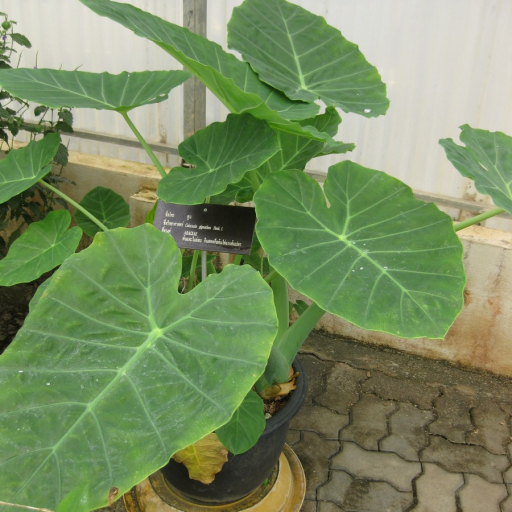
Plant Overview
Known as the "Thailand Giant," this botanical marvel is a true architectural masterpiece of the tropical world. With leaves large enough to act as an umbrella for a small child, it creates an instant Jurassic-period vibe in any garden or bright sunroom. Native to the lush jungles of Southeast Asia, it is the crown jewel for collectors who believe that, when it comes to foliage, bigger is always better.
🔍 How to Identify
- 🍃 Massive Foliage: The most striking feature is the heart-shaped (cordate) leaves that can reach up to 5 feet long and 4 feet wide in ideal conditions.
- 🟢 Matte Texture: Unlike some glossy Alocasia cousins, the Leucocasia has a soft, matte, light-green finish with prominent, pale-green veins branching from the center.
- 🦒 Upright Stature: The leaves are held aloft by thick, succulent-like stalks (petioles) that grow vertically, giving the plant a regal, shield-like appearance rather than a drooping habit.
🏡 In Your Garden
- 🍴 A Heavy Feeder: Because it grows so rapidly, this plant is incredibly "hungry." It requires nutrient-rich, organic soil and frequent fertilizing during the growing season to maintain its prehistoric size.
- 💧 Thirst for Humidity: It thrives in high humidity and prefers "wet feet." In its natural habitat, it often grows near stream banks, so it’s important to never let the soil dry out completely, or the massive leaves will quickly lose their turgor and wilt.
⚠️ Safety & Toxicity
- 🚫 Status: Toxic to humans and pets.
- 🧪 Details: The plant contains calcium oxalate crystals, which act like tiny needles if chewed. Ingestion causes immediate swelling of the mouth, tongue, and throat. Always wear gloves when pruning, as the sap can cause skin irritation for those with sensitive skin.
✨ Fun Fact
In Vietnam, a specific cultivar of this plant known as Bạc hà is used as a vegetable in traditional dishes like Canh chua (sour soup). However, don't try this at home—it requires expert preparation to neutralize the stinging crystals before it is safe to eat!

Detailed Care Instructions
To grow a Leucocasia Gigantea plant, also known as Giant Taro or Elephant's Ear, you can follow these steps:
- Planting: Choose a sunny location or provide a spot with partial shade. Ensure the soil is well-draining, fertile, and rich in organic matter. Dig a hole that is wide and deep enough to accommodate the root ball of the plant.
- Soil preparation: Mix compost or well-rotted manure into the soil to improve its fertility and drainage. This plant prefers a slightly acidic to neutral pH.
- Planting the tuber or cutting: Place the tuber or cutting in the hole, ensuring that the growing bud points upward and is just below the soil surface. Make sure to cover it with soil gently, leaving the bud exposed.
- Watering: After planting, water the plant thoroughly until the soil is evenly moistened. Avoid overwatering as it can cause root rot. Once established, water the plant regularly, keeping the soil consistently moist but not waterlogged.
- Mulching: Apply a layer of organic mulch, such as wood chips or straw, around the base of the plant to help retain moisture, suppress weeds, and regulate soil temperature.
- Fertilizing: Feed the plant regularly with a balanced fertilizer during the growing season, following the instructions on the fertilizer packaging. This will provide the nutrients necessary for healthy growth.
- Support: As the plant grows, it may require support to prevent it from toppling. Stake or tie the main stem to a support structure, such as a bamboo cane or garden trellis.
- Pruning: Remove any dead or damaged leaves to maintain plant health and appearance. Trimming can also be done to control the spread of the plant if desired.
- Cold protection: In colder regions, where temperatures drop below freezing, it is recommended to lift the tuber before the first frost and store it in a cool, dry place for the winter.
- Propagation: Leucocasia Gigantea can be propagated by division. Lift the plant, divide the tubers, ensuring each division has a bud, and plant them in separate containers or areas of the garden.
By following these steps and providing proper care, your Leucocasia Gigantea plant should grow well and thrive.

Place in a window with dappled sun or a spot in the middle of a room. Or directly in a window facing west or east.

To water Leucocasia Gigantea plant efficiently, ensure that the soil is evenly moist, promoting healthy growth and preventing root rot. Here are some detailed steps:
1. Observe the soil's moisture level: Before watering, assess the moisture content of the soil. Insert your finger about an inch deep into the soil to check for moisture. If it feels dry, it's time to water.
2. Choose appropriate watering tools: Select a watering can, hose, or spray bottle that can provide a gentle and even distribution of water. Avoid using a strong jet of water that may dislodge the soil or damage the plant.
3. Water thoroughly and evenly: Begin watering around the base of the plant, allowing the water to gently soak into the soil. Continue watering until the top inch of soil feels adequately moist. Ensure that water reaches all areas around the plant to promote even hydration.
4. Avoid overwatering: Leucocasia Gigantea plants prefer consistently moist soil, but overwatering can lead to root rot. If excess water collects in the pot's saucer or there is prolonged waterlogging, remove the excess water to prevent damage to the roots.
5. Monitor drainage: Adequate drainage is crucial for Leucocasia Gigantea plants. Check that the container or planting site has proper drainage holes to prevent water from accumulating at the root level. This helps to maintain the plant's health and prevents soil saturation.
6. Consider environmental factors: Factors such as temperature, humidity, and light intensity affect the plant's water needs. In hot and dry conditions, the plant may require more frequent watering, while in cooler environments, watering frequency may be reduced.
7. Watering frequency: As a general guideline, water the Leucocasia Gigantea plant when the top inch of soil feels dry to the touch. This frequency typically ranges from once or twice a week in warmer weather to once every 10-14 days in cooler seasons.
8. Adjust watering during dormancy: During periods of dormancy, such as winter, the Leucocasia Gigantea plant's water requirements decrease. Ensure that you reduce the watering frequency accordingly to prevent waterlogged soil during this time.
Remember to always monitor the plant's response to watering and make adjustments as needed. Each plant's watering needs may vary based on factors such as the size of the container, environmental conditions, and the stage of growth.
- Choose a well-draining potting mix that contains a balanced blend of nutrients.
- Begin fertilizing your Leucocasia Gigantea plant in the early spring, as the growing season starts.
- Dilute a liquid all-purpose fertilizer according to the package instructions, typically using a ratio of 1:10 (fertilizer to water).
- Apply the diluted fertilizer to the soil around the base of the plant, avoiding direct contact with the leaves.
- Repeat the fertilization process every 2-4 weeks throughout the growing season.
- Adjust the frequency of fertilization based on the health and growth of your plant, observing for any signs of nutrient deficiency or over-fertilization.
- Water the plant thoroughly after fertilization to ensure the nutrients are absorbed properly.
- Avoid over-fertilization, as it can result in nutrient burn or other adverse effects on the plant's health.
- During the winter months, reduce or suspend fertilization, as the plant enters a period of dormancy.
- Monitor the plant's response to fertilization and adjust the feeding regimen accordingly to promote healthy growth and overall vitality.
The Leucocasia Gigantea plant thrives in a specific type of soil that is rich in nutrients and possesses certain characteristics to support its growth. It prefers a well-draining soil that provides adequate moisture retention, promoting healthy root development without leading to waterlogged conditions. The ideal soil composition for this plant consists of a combination of organic matter, such as compost or well-rotted manure, and a loose, loamy texture.
The soil should be slightly acidic to neutral, with a pH range between 6.0 and 7.0, as this enables the plant to efficiently absorb nutrients from the soil. Additionally, the soil should be able to hold moisture to keep the plant hydrated while allowing excess water to drain away, preventing the roots from becoming waterlogged. Good soil structure is crucial, ensuring that it retains enough moisture without becoming compacted, creating a balance between drainage and moisture retention.
Furthermore, it is recommended to incorporate coarse sand or perlite into the soil mix to improve drainage and prevent the soil from becoming too compact. This amendment will help create a soil structure that allows oxygen to reach the roots and prevents root rot. It is also beneficial to incorporate organic matter into the soil, such as leaf mold or compost, to enhance fertility and provide a continual release of nutrients for the plant's growth.
In summary, the Leucocasia Gigantea plant thrives in well-draining soil that is rich in organic matter, possesses a loose, loamy texture, and has a slightly acidic to neutral pH. Incorporating amendments like coarse sand or perlite and organic matter such as compost provides an optimal growing environment, ensuring the plant's successful establishment and growth.
Propagation of Leucocasia gigantea can be carried out through both division and stem cuttings. Here is a detailed overview of each method:
- Division:
- Start by carefully digging up the mature plant during the dormant season.
- Gently remove excess soil from the roots, allowing you to observe the rhizomes.
- Divide the clump into smaller sections, ensuring that each division has a sufficient number of roots and shoots.
- Trim off any damaged or rotten parts from the rhizomes.
- Plant each division in a separate container or desired planting location. Make sure to provide adequate space for the plant to grow.
- Water the divisions thoroughly and place them in a location with bright, indirect light.
- Continue to provide regular watering and maintain a temperature between 70-85°F (21-29°C) to promote healthy growth.
- Start by carefully digging up the mature plant during the dormant season.
- Stem Cuttings:
- Choose a healthy, mature stem with several leaves from the parent plant.
- Using a sharp, sterile knife or pruning shears, make a clean cut, ensuring that the cutting is approximately 6-8 inches long.
- Remove the lower leaves to expose a few nodes on the stem.
- Prepare a well-draining potting mixture using a combination of peat moss, perlite, or vermiculite.
- Moisten the potting mixture, making it damp but not saturated.
- Dip the cut end of the stem into a rooting hormone powder to encourage root development.
- Insert the cutting into the potting mixture, burying at least 2 nodes into the soil.
- Place the pot in a warm and humid environment with bright, indirect light.
- Mist the cutting regularly to maintain moisture levels and cover the pot with a clear plastic bag to create a mini greenhouse effect.
- After a few weeks, check for root development by gently pulling the cutting. If you feel resistance, it indicates successful root growth.
- Once roots have formed, transplant the rooted cutting into individual pots or the desired planting area, ensuring it receives appropriate care and maintenance.
Remember, providing consistent warmth, moisture, and indirect light are crucial for successful propagation of Leucocasia gigantea. Additionally, maintaining proper care and appropriate growing conditions will aid in the healthy development of the plant.
- Choose a healthy, mature stem with several leaves from the parent plant.
Common pests of the elephant's-ear include Mealybugs, spider mites, fungus gnats, thrips. Make a habit of checking your elephant's-ear frequently for pests so that any infestations can be caught and managed early.








