Plant Overview
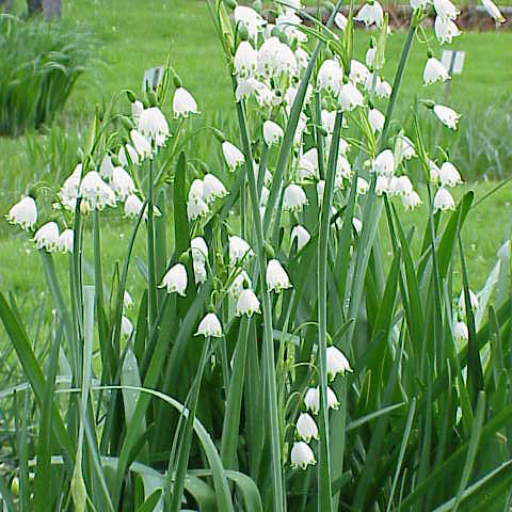
Known as the "Summer Snowflake," Leucojum aestivum is a graceful perennial that looks like a giant, refined version of the common Snowdrop. Despite its name, it often makes its debut in late spring, hanging its dainty white lanterns just as the true winter bulbs begin to fade. These charming plants are the "sturdy dancers" of the garden, swaying on long, elegant stems above clumps of glossy, strap-like leaves.
🔍 How to Identify
- 🔔 The Flowers: Large, drooping, bell-shaped blooms that appear in clusters (umbels) of three to seven per stalk.
- 🟢 The Signature Spot: Each of the six white tepals is uniquely tipped with a tiny, vivid green or yellowish-green "beauty mark" at the apex.
- 🌿 The Foliage: Long, dark green, strap-shaped leaves that resemble those of a Daffodil, forming a lush, upright clump.
🏡 In Your Garden
- 💧 Water Lovers: Unlike many bulbs that fear "wet feet," the Summer Snowflake thrives in damp, even boggy soil. It is a perfect choice for the edges of ponds or low-lying areas of the lawn that stay moist.
- 🌱 Naturalizing Pro: This plant is excellent for "wilding" a garden. Once established, it spreads via offsets and seeds, creating a more impressive white-and-green carpet each passing year.
- ⛅ Lighting Flexibility: While it blooms most prolifically in full sun, it is remarkably shade-tolerant, making it a versatile filler for the dappled light beneath deciduous trees.
⚠️ Safety & Toxicity
- 🚫 Status: Toxic to ingest.
- 🐾 The Risks: All parts of the plant, especially the bulb, contain alkaloids like lycorine. If eaten by pets or curious children, it can cause vomiting, diarrhea, and general lethargy.
- 🧤 Skin Sensitivity: While not as irritating as some plants, sensitive individuals should wear gloves when handling the bulbs to avoid potential skin inflammation.
✨ Fun Fact
Though it is a beautiful ornamental plant, Leucojum aestivum is also a "scientist’s friend." It contains Galantamine, a compound that has been extensively researched and used in treatments to help manage the symptoms of Alzheimer’s disease.

Detailed Care Instructions
| Lighting | Full Sun |
| Hardiness Zones | 4A - 9A |
To successfully grow Leucojum Aestivum, also known as summer snowflake, follow these steps:
- Climate and soil conditions: Leucojum Aestivum thrives in temperate climates with mild winters and cool summers. It prefers moist, well-drained soil that is slightly acidic to neutral in pH. If your climate or soil conditions are not ideal, you can consider growing them in containers.
- Planting location: Choose a location that receives partial shade to full sun. While Leucojum Aestivum can tolerate full sun, it prefers some shade, especially during the hottest part of the day. Plant them in an area with sufficient air circulation.
- Planting time: Plant the bulbs in early autumn, around September or October, before the first frost, or in early spring if you missed the autumn planting window.
- Soil preparation: Prepare the soil by removing weeds, rocks, and other debris. Loosen the soil to a depth of at least 8-10 inches using a garden fork or tiller. Mix organic matter, such as compost or well-rotted manure, into the soil to improve drainage and add nutrients.
- Bulb planting: Dig holes that are about 4-6 inches deep, spacing them 3-4 inches apart. Place the bulbs in the holes with the pointed end facing up and cover them with soil, gently firming it around the bulbs.
- Watering: After planting, water the bulbs thoroughly to settle the soil and initiate growth. During the growing season, keep the soil consistently moist, but not waterlogged. Water deeply and regularly, especially during dry spells.
- Fertilization: Apply a balanced, slow-release fertilizer in early spring when new growth emerges. Follow the manufacturer's instructions for application rates. Additionally, you can top-dress the soil with compost or a general-purpose fertilizer every spring.
- Mulching: Apply a layer of organic mulch, such as shredded leaves or bark, around the plants to help conserve moisture, suppress weeds, and moderate soil temperature.
- Care: Leucojum Aestivum is a relatively low-maintenance plant. Remove faded flowers to prevent seed formation and promote bulb health. In late summer or early autumn, when the foliage turns yellow or brown, do not cut it back. Allow the foliage to die back naturally, as it provides nutrients for next year's growth.
- Division: Every 3-5 years, when the clumps become congested, you can divide the bulbs. Lift the clumps gently with a garden fork and separate them into smaller groups. Replant the bulbs immediately, spacing them as mentioned earlier.
With proper care, Leucojum Aestivum plants should grow and bloom reliably, adding beauty to your garden.

Place in a bright room that is sun drenched almost all day. Or directly in a south-facing window.

To properly water this plant, you should first make sure that the soil is slightly moist at all times. This can be achieved by watering it once a week or whenever the top inch of soil feels dry to the touch. It is important not to overwater the plant, as this can cause root rot and other issues. Additionally, Leucojum Aestivum prefers well-draining soil, so make sure that the pot or garden bed provides adequate drainage. In general, the plant can thrive in areas with moderate to high humidity levels and prefers partial shade to full sun.
To fertilize this plant, apply a balanced, slow-release fertilizer at the beginning of the growing season. Use a fertilizer with equal parts nitrogen, phosphorus, and potassium, such as 10-10-10. Apply the fertilizer at a rate of one pound for every 100 square feet of soil surface area. Water the plant thoroughly after applying the fertilizer.
The ideal soil for the plant in question should be well-draining, but should also retain moisture. The soil should be slightly acidic with a pH range of 6.0 to 7.0. It should be rich in organic matter, but not too dense or compact. The plant prefers soils that are loamy or sandy, and it needs good air circulation around its roots. The soil should be loose and friable, allowing water to penetrate easily. It is important to avoid heavy clay soils that are prone to waterlogging, as this can lead to root rot. Overall, the soil should be fertile, well-draining, and able to retain moisture, while still allowing good air circulation around the roots.
Leucojum aestivum can be propagated through several methods. The first method is division. The plant can be carefully dug up, and the bulbs can be separated into smaller sections. Each section should have a small portion of the root system attached. These smaller sections can be replanted in well-draining soil. The second method is to allow the plant to self-seed. The plant will produce small bulbils around the base of the parent bulb in the autumn. These bulbils can be carefully removed and replanted in a well-draining soil. The third method is to take offsets. These are small bulbs that grow from the parent bulb. The offsets can be removed and planted separately in well-draining soil. Regardless of the method used, the new plants should be watered regularly and kept in a shaded area until they are established.
Common pests of the summer snowflake include Scale insect, mealybugs, spider mites, fungus gnats, aphids, thrips, whiteflies, snails. Make a habit of checking your summer snowflake frequently for pests so that any infestations can be caught and managed early.








