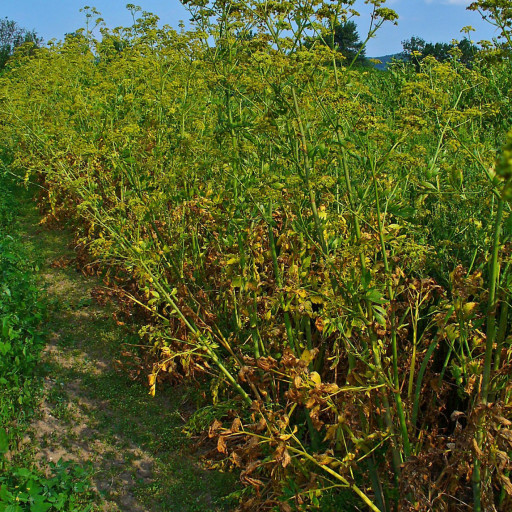
Plant Overview
Known as the "Maggi plant" due to its uncanny resemblance to the flavor of concentrated bouillon, Lovage is an old-world perennial that feels like a cross between giant celery and flat-leaf parsley. This towering herb was once a staple in every medieval monastery garden, prized for its ability to flavor entire pots of stew with just a few leaves. It is the ultimate "secret ingredient" for home cooks looking to add a deep, savory depth to their dishes.
🔍 How to Identify
- 🌿 Folliage: The leaves are large, glossy, and dark green, divided into distinct leaflets that look remarkably like celery or flat-leaf parsley.
- 🎋 The Stalks: It produces thick, hollow, ribbed stems that can reach an impressive height of 6 to 8 feet when in full bloom.
- 🌼 Flowers: In mid-summer, it sprouts broad, flat-topped clusters (umbels) of tiny, greenish-yellow flowers that attract a wide variety of beneficial pollinators.
🏡 In Your Garden
- ⚓ The Taproot Rule: Lovage develops a massive, deep taproot. Because of this, it is notoriously difficult to transplant once established; choose its "forever home" carefully in a spot with deep, rich soil.
- 💧 Thirst for Moisture: Unlike many Mediterranean herbs that prefer dry feet, Lovage thrives in consistently moist, fertile ground. If it dries out too much, the leaves can become bitter and lose their signature aroma.
- ✂️ Size Management: Because it grows so large, one single plant is usually enough to supply a whole family. Plant it at the back of a border so it doesn't shade out your smaller herbs.
⚠️ Safety & Toxicity
- 🍽️ Status: Edible and highly aromatic for humans. The leaves, stems, and seeds are all used in cooking.
- ☀️ Skin Sensitivity: Like many members of the carrot family (Apiaceae), Lovage contains furanocoumarins. Touching the sap followed by sun exposure can cause mild skin irritation or "phytophotodermatitis" in sensitive individuals.
- 🐾 Pets: While not typically listed as high-risk, large ingestions can cause digestive upset in cats and dogs. Always use in moderation around curious pets.
✨ Fun Fact
The name "Lovage" is a corruption of the Old French word luvesche, but in folklore, it became associated with "love-ache." In the Middle Ages, travelers would put lovage leaves in their shoes to revive weary feet and supposedly attract a romantic partner at their next destination!

Detailed Care Instructions
| Humidity | Normal |
| Lighting | Full Sun |
| Difficulty | Easy |
| Hardiness Zones | 4 - 8 |
To grow Levisticum officinale, also known as lovage, follow these steps:
- Choose the right location: Lovage prefers full sun to partial shade. It is a hardy perennial plant that can tolerate a range of soil conditions but prefers moist, fertile soil.
- Sow seeds: Lovage seeds can be sown directly into the ground in early spring once the threat of frost has passed. You can also start seeds indoors 6-8 weeks before the last frost date and transplant them outdoors once they have grown a few inches tall.
- Prepare the soil: Clear the planting area of any weeds or debris and loosen the soil using a garden fork or tiller. Add organic matter like compost or well-rotted manure to enrich the soil and improve drainage.
- Plant the seeds or seedlings: Sow the seeds about 1/4 inch deep and space them 12-18 inches apart. If transplanting seedlings, space them accordingly. Water gently after planting.
- Watering and maintenance: Ensure that the soil stays consistently moist but not waterlogged. To minimize weed competition, mulch around the plants with organic mulch like straw or wood chips. Lovage plants don't usually require fertilizer but can benefit from a balanced fertilizer application once or twice during the growing season.
- Pruning and harvesting: Once your lovage plant has grown to a height of 12-18 inches, you can start harvesting leaves for culinary use. Cut the stalks at the base, leaving at least a third of the plant's foliage intact for continued growth. Regular harvesting will encourage bushier growth. Pruning mature plants in early spring can also promote healthy growth.
- Winter care: Lovage plants are quite hardy and can tolerate cold temperatures. However, in regions with very harsh winters, it's beneficial to provide some winter protection by adding a layer of mulch or straw around the base of the plant to insulate the roots.
By following these steps, you can successfully grow Levisticum officinale and enjoy its aromatic leaves and flavorful culinary uses.

Place in a bright room that is sun drenched almost all day. Or directly in a south-facing window.

Levisticum Officinale is a plant that requires consistent watering to thrive. It is important to ensure that the soil remains consistently moist, but not waterlogged. Overwatering can lead to root rot, which can be detrimental to the health of the plant.
One way to water Levisticum Officinale is to water deeply and infrequently, allowing the soil to dry out slightly in between watering sessions. This will encourage the plant to develop a strong root system and will help prevent waterlogged soil.
Another method of watering is to use a drip irrigation system, which allows water to gradually seep into the soil over a period of time. This can be especially useful for plants that require consistent moisture, such as Levisticum Officinale.
When watering your plant, it is important to avoid getting the leaves and stem wet, as this can increase the risk of disease. Instead, water at the base of the plant, using a watering can or hose with a gentle spray nozzle.
In summary, Levisticum Officinale requires consistent watering to thrive. Water deeply and infrequently, or use a drip irrigation system, being careful to avoid getting the leaves and stem wet.
To fertilize this plant, begin by selecting a high-quality, balanced fertilizer that is rich in nutrients such as nitrogen, phosphorus, and potassium. Apply the fertilizer evenly around the base of the plant, taking care not to over-fertilize, as this can cause damage. Water the plant well after fertilizing to help distribute the nutrients throughout the soil. Repeat this process every 4-6 weeks during the active growing season.
The ideal soil for this plant is rich and fertile, with good drainage. It should have a slightly acidic to neutral pH level, with a range between 6.0 and 7.5. The soil should be well-draining, but also retain moisture, as the plant likes to be consistently moist rather than completely dry or waterlogged. A good option is a loamy soil, which contains a mixture of sand, silt, and clay particles, as well as organic matter such as compost or well-rotted manure. Adding perlite or vermiculite to the soil can also improve drainage. It is important to ensure that the soil is not too compacted, as this can limit growth and lead to poor drainage.
Levisticum Officinale can be propagated through cuttings or seed.
To propagate through cuttings, choose a healthy stem from the parent plant, about 6 inches in length. Cut the stem at a 45-degree angle with a sharp, sanitized blade. Remove the lower leaves from the stem and dip the cut end in rooting hormone. Plant the cutting in well-draining soil and keep it moist. Place the pot in a warm, shady area and wait for the roots to grow.
To propagate through seeds, wait for the plant to produce mature seed heads. Collect the seeds and plant them in soil, covering them lightly. Keep the soil moist and place the pot in a warm, sunny area. The seeds should germinate within 1-2 weeks.
Once the new plants have established roots, they can be transplanted to a permanent location in the garden or a larger pot.
Common pests of the lovage include Spider mites, larvae, snails. Make a habit of checking your lovage frequently for pests so that any infestations can be caught and managed early.








