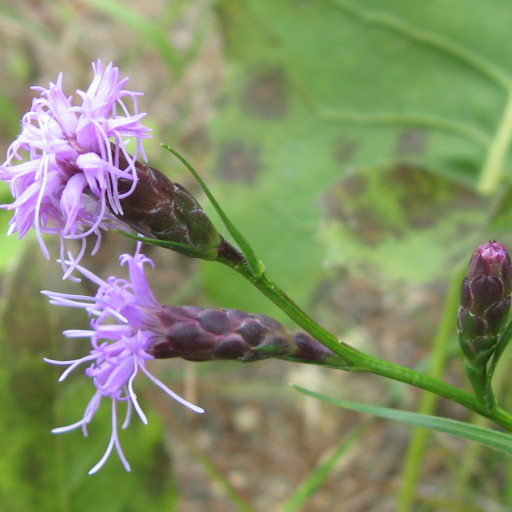
Plant Overview
Known as the "Cylindrical Blazing Star" or "Ontario Blazing Star," this hardy prairie native acts like a vibrant purple firework for the late summer garden. Unlike its taller, shaggier cousins, this species is a rugged survivor, often found clinging to rocky slopes and sandy dunes across North America. It is a legendary "nectar bar" for migrating Monarch butterflies and a favorite for those seeking a "plant-it-and-forget-it" beauty.
🔍 How to Identify
- 🌸 Barrel-Shaped Blooms: The flower heads are distinct; instead of tiny tufts, they look like small, bristly purple cylinders or "barrels" tucked along the top of the stem.
- 🌿 Grassy Foliage: The leaves are remarkably thin and grass-like, staying mostly at the base of the plant to conserve moisture.
- 📏 Compact Stature: It is a "mini" Blazing Star, usually topping out at only 12 to 18 inches, which prevents it from flopping over like taller Liatris varieties.
🏡 In Your Garden
- 🏜️ Drought Warrior: Because it evolved in harsh prairies, it possesses a deep corm (a bulb-like root) that stores water and energy, making it incredibly resilient during summer heatwaves.
- 🏜️ Lean Soil Lover: This plant actually prefers "poor" soil. If the ground is too rich or fertilized, the plant grows too fast and loses its sturdy, upright shape.
- 🦋 Pollinator Paradise: It is a primary food source for native bees and butterflies; planting this is one of the best ways to support local biodiversity in a small space.
⚠️ Safety & Toxicity
- ✅ Non-Toxic: Liatris cylindracea is considered safe and non-toxic for humans, dogs, and cats.
- 🦌 Deer Resistant: While safe, the tough, wiry texture of the leaves is generally unappealing to deer and rabbits, making it a "safe" bet for unfenced gardens.
✨ Fun Fact
Most spike-shaped flowers bloom from the bottom toward the top, but the Blazing Star is a rebel of the plant world—it blooms from the very top of the stalk downward! This unique trait makes it a favorite for floral arrangements, as the "show" starts at the peak.

Detailed Care Instructions
Here are some steps you can follow to grow Liatris cylindracea, also known as cylindrical blazing star:
- Choose a suitable location: Liatris cylindracea prefers full sun to partial shade. Select a spot in your garden that receives at least 6-8 hours of direct sunlight per day.
- Prepare the soil: Liatris cylindracea prefers well-draining soil. If your soil is heavy or clayey, amend it with organic matter, such as compost, to improve drainage. This will help prevent root rot.
- Plant the bulbs: Liatris cylindracea is typically grown from bulbs. Plant the bulbs in early spring or fall. Dig a hole that is about 2-3 inches deep and place the bulb in the hole with the pointed end facing up. Space the bulbs about 6-8 inches apart.
- Water adequately: Liatris cylindracea prefers moderately moist soil. Water the plant deeply but infrequently, allowing the top inch of soil to dry out between watering sessions. Avoid overwatering, as it may cause the bulbs to rot.
- Mulch the area: Apply a layer of organic mulch, such as wood chips or straw, around the base of the plant. Mulch helps retain soil moisture, suppresses weeds, and maintains a more consistent soil temperature.
- Provide support: Liatris cylindracea can benefit from staking or support as it grows taller. Install stakes or a small plant cage around the plant to prevent it from falling over due to wind or its own weight.
- Fertilize occasionally: Liatris cylindracea doesn't require heavy fertilization. You can apply a balanced, slow-release fertilizer in early spring or use a liquid fertilizer diluted according to the manufacturer's instructions every 4-6 weeks during the growing season.
- Protect from pests: Monitor the plant for any signs of pests, such as aphids or caterpillars. If infestation occurs, consider using organic pest control methods such as neem oil or insecticidal soap.
- Enjoy the blooms: Liatris cylindracea usually blooms in mid to late summer. It produces stunning upright spikes of purple or pink flowers that attract butterflies and bees. Allow the flowers to fully mature and dry on the plant before deadheading.
By following these steps, you should be able to successfully grow Liatris cylindracea in your garden.

Place in a bright room that is sun drenched almost all day. Or directly in a south-facing window.

To water this plant, you will want to use a well-draining soil mix to prevent waterlogging. Make sure the top inch of soil feels dry before watering. When you do water, give the plant a thorough soaking until the excess water drains out of the drainage holes. Avoid getting water on the leaves and flowers as this can cause damage or disease. Water less frequently during the winter when the plant is dormant.
To fertilize this particular plant, use a balanced fertilizer with equal parts nitrogen, phosphorus, and potassium. Apply the fertilizer once a month during the growing season, starting in the spring. Be sure to follow the instructions on the fertilizer label carefully and avoid over-fertilizing, as this can cause the plant to become too tall and leggy. Finally, always water the plant thoroughly before applying any fertilizer to avoid burning the roots.
The ideal soil for this particular plant should be well-draining, with a high sand and gravel content to promote good drainage, as the plant does not like to sit in water. The soil should also contain a moderate amount of organic matter, as the plant thrives in nutrient-rich environments. Additionally, the pH level of the soil should be slightly acidic to neutral, ideally between 5.8 and 7.2. The plant prefers full sun to partial shade exposure, and a consistent watering schedule to maintain soil moisture levels.
To propagate this plant, you will need to use its corms. These are underground organs that store food for the plant and can be used to produce new plants. First, carefully dig up the corms from the soil using a garden fork or trowel. Gently wash them to remove any dirt and allow them to dry in a cool, dry location for a few days.
Once the corms have dried, you can divide them into smaller pieces. Use a sharp, sterile knife to cut the corms into sections, making sure each section has at least one bud or shoot.
Prepare pots or trays filled with well-draining soil and compost. Place the corm sections horizontally, with the bud or shoot facing upwards, and cover with soil. Water the soil thoroughly and keep it moist until the new plants begin to emerge.
Once the new plants have grown to a suitable size, they can be transplanted to their final location. Choose a sunny, well-drained spot with fertile soil. Plant the new Liatris cylindracea plants at the same depth they were in their original pots or trays. Water them well and continue to keep the soil moist until they are established.
It's important to note that Liatris cylindracea is a slow-growing plant, so be patient when propagating it. It may take several years for the new plants to reach maturity and produce flowers.








