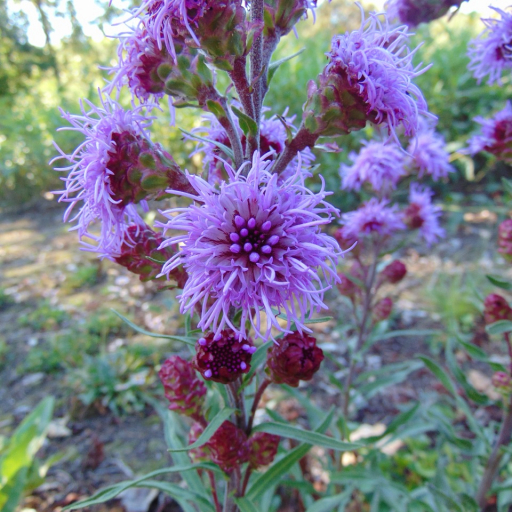
Plant Overview
Known as the "Monarch Magnet," the Meadow Blazing Star is the ultimate superstar of the prairie garden. While many flowers attract butterflies, this specific Liatris species is famously irresistible to Monarchs, who often swarm the purple wands in dozens during their autumn migration. It is a striking, vertical accent that brings a sense of wild, ethereal beauty to any landscape.
🔍 How to Identify
- 🌸 Shaggy Pom-Poms: The flowers appear as fuzzy, button-like clusters of bright purple or magenta, spaced out along a tall, central stalk.
- 📏 Top-Down Blooming: Uniquely, this plant blooms from the very top of the spike downward, ensuring a long-lasting display of color throughout the late summer.
- 🌿 Grass-like Foliage: Before the flower spikes emerge, the plant forms a lush clump of narrow, lance-shaped leaves that look remarkably like a tuft of ornamental grass.
🏡 In Your Garden
- 🦋 The Monarch Siren: If you plant this, they will come. It contains a high concentration of specific nutrients that male Monarchs use to produce mating pheromones, making it a "must-have" for pollinator waystations.
- 💧 Moisture Nuance: Unlike some other Blazing Stars that prefer bone-dry soil, Liatris ligulistylis thrives in medium to moist conditions. It is perfect for rain gardens or spots in the yard that stay a bit damp after a storm.
- 🏗️ Avoiding the Flop: In very rich soil or too much shade, the heavy flower spikes may lean or "flop." Planting them near sturdy neighbors like Big Bluestem or stiff Goldenrods provides natural structural support.
⚠️ Safety & Toxicity
- 🛡️ Non-Toxic: This plant is generally considered safe and non-toxic for humans, dogs, and cats.
- 🦌 Deer Resistance: While highly attractive to butterflies, the bitter taste of the foliage makes it relatively "deer resistant," though hungry rabbits may occasionally nibble the young shoots in spring.
✨ Fun Fact
🦋 Butterfly Fuel: During the peak of the Monarch migration, a single Meadow Blazing Star plant can sometimes host over 20 butterflies at once, making it one of the most photographed plants in North American "wildlife backyard" competitions!

Detailed Care Instructions
Liatris ligulistylis, also known as western blazing star or gayfeather, is a perennial plant that is native to North America. It is known for its tall spikes of purple, fluffy flowers and is a great addition to gardens, particularly for attracting pollinators like butterflies and bees. Here are some steps and tips for growing Liatris ligulistylis:
1. Choosing the Right Location
- Sunlight: Liatris ligulistylis thrives in full sun. Choose a location that receives at least 6 to 8 hours of direct sunlight each day.
- Soil: Well-drained soil is essential. The plant prefers sandy or loamy soils and is tolerant of poor soil conditions. Avoid heavy clay soils that retain water.
2. Planting
- Timing: The best time to plant Liatris ligulistylis is in the spring after the last frost or in the fall before the first frost.
- Spacing: Space the plants about 12 to 18 inches apart to allow for their growth.
- Planting Depth: Dig a hole deep enough to accommodate the root system, usually about 2 to 3 inches deep. Place the crown of the plant just above the soil level.
3. Watering
- Initial Watering: Water the plants thoroughly right after planting.
- Ongoing Watering: Liatris is drought-tolerant once established, but it will benefit from regular watering during dry spells, especially during the first year as it establishes roots. Avoid overwatering.
4. Fertilization
- Fertilizing is generally not necessary for Liatris if grown in good soil. However, if the soil is poor, you can apply a balanced, slow-release fertilizer in the spring.
5. Maintenance
- Deadheading: To encourage more blooms and prevent seed spreading, deadhead spent flowers.
- Pruning: Cut back the foliage in late fall or early spring to keep the planting area tidy and to promote new growth.
- Weed Control: Keep the area around the plants free from weeds, particularly during the early stages of growth.
6. Pests and Diseases
- Liatris ligulistylis is generally resistant to pests and diseases. However, keep an eye out for common issues such as aphids or fungal diseases, and address them promptly if they occur.
7. Propagation
- Seeds: You can propagate Liatris ligulistylis by collecting seeds from mature plants and sowing them in the fall or spring.
- Division: Established plants can also be divided every few years in spring or fall to encourage stronger growth and create new plants.
8. Winter Care
- In colder regions, a light mulch can help protect the roots during winter. Remove the mulch in spring to allow for new growth.
By following these steps, you should be able to successfully grow Liatris ligulistylis in your garden. Enjoy the vibrant colors and the wildlife it attracts!

Place in a bright room that is sun drenched almost all day. Or directly in a south-facing window.

To properly water Liatris Ligulistylis, follow these guidelines:
1. Soil Moisture: Ensure that you check the moisture level of the soil before watering. The top inch of soil should be dry before you proceed to add water.
2. Watering Technique: Water the plant deeply to encourage deep root growth. This means providing enough water so that it penetrates several inches down into the soil.
3. Frequency: Watering frequency will depend on the climate, soil type, and stage of growth. Generally, during the growing season, you may need to water once a week, but this can vary. In hot and dry conditions, more frequent watering may be necessary.
4. Time of Day: It is best to water in the early morning or late afternoon to reduce evaporation and allow the plants to absorb moisture effectively. Avoid watering during the hottest part of the day.
5. Drainage: Ensure that the plant is in well-draining soil to prevent waterlogged conditions. Excess water should be able to drain away easily to avoid root rot.
6. Mulching: Applying a layer of organic mulch around the base of the plant can help retain soil moisture and reduce the frequency of watering.
7. Observation: Monitor the plant regularly for signs of underwatering (e.g., wilting or browning of leaf tips) or overwatering (e.g., yellowing of leaves or root rot). Adjust your watering schedule based on these observations.
By following these guidelines, you will support the healthy growth of the Liatris Ligulistylis plant while ensuring it receives adequate moisture.
To effectively fertilize Liatris ligulistylis, follow these guidelines:
- Soil Testing: Before fertilizing, conduct a soil test to determine nutrient levels and pH. This will help you select the appropriate fertilizer.
- Fertilizer Type: Use a balanced fertilizer that has equal parts nitrogen (N), phosphorus (P), and potassium (K), such as a 10-10-10 formulation. Alternatively, a slow-release granular fertilizer is also suitable.
- Timing: Apply fertilizer in early spring, just as new growth begins to emerge. This timing supports the active growth phase of the plant.
- Application Rate: Follow the manufacturer's instructions for the appropriate application rate based on your soil test results. Generally, apply 1 to 2 pounds of fertilizer per 100 square feet of bed area.
- Method of Application: Evenly distribute the fertilizer around the base of the plant, avoiding direct contact with the stems. Incorporate the fertilizer lightly into the top few inches of soil, and then water thoroughly to help the nutrients penetrate.
- Supplementary Feeding: If desired, a second application can be made in mid-summer, using a diluted liquid fertilizer. This can enhance bloom production and overall health.
- Observation: Monitor the plant's growth and foliage color. Yellowing leaves may indicate a nutrient deficiency, while excessive leaf growth with few flowers may suggest over-fertilization.
By following these instructions, you can support the healthy growth and flowering of Liatris ligulistylis.
Liatris ligulistylis thrives in well-draining soil that is rich in organic matter. A loamy or sandy-loam soil is ideal, allowing for adequate drainage while retaining some moisture. It's beneficial for the soil pH to be slightly acidic to neutral, ideally around 6.0 to 7.0.
Incorporating compost or well-rotted manure into the soil can enhance its fertility and improve moisture retention without becoming waterlogged. Avoid heavy clay soils, as they can retain too much water and lead to root rot. Additionally, ensure that the planting site receives full sun to partial shade to promote healthy growth.
Implementing mulch can help regulate soil temperature and moisture, but ensure it does not suffocate the plant's crown or encourage excessive moisture retention.
Liatris ligulistylis can be propagated through several methods, primarily by division and seeds. Here's a detailed overview of each method:
Propagation by Division
- Time of Year: The best time to divide the plant is in the spring or early fall when the plant is either emerging or after it has finished its bloom.
- Preparation:
- Choose a mature plant that is at least three years old for division.
- Prepare the site where you intend to move the divisions, ensuring it has well-draining soil and suitable light conditions.
- Choose a mature plant that is at least three years old for division.
- Division Process:
- Carefully dig around the root zone of the plant to avoid damaging the roots.
- Lift the clump out of the ground using a garden fork or spade.
- Shake off excess soil gently to expose the crown and roots.
- Use a sharp spade or knife to divide the clump into smaller sections, ensuring each division has roots and healthy shoots.
- Carefully dig around the root zone of the plant to avoid damaging the roots.
- Replanting:
- Immediately plant the divisions at the same soil depth they were previously growing, spacing them adequately to allow for growth.
- Water lightly to settle the soil around the roots and provide moisture.
- Immediately plant the divisions at the same soil depth they were previously growing, spacing them adequately to allow for growth.
- Care Post-Division:
- Ensure the newly planted divisions are watered adequately in the first few weeks until they establish.
- Mulch around the base to retain moisture and suppress weeds.
Propagation by Seed
- Ensure the newly planted divisions are watered adequately in the first few weeks until they establish.
- Seed Collection:
- Collect seeds from mature flower heads when they turn brown and dry, typically in late summer to early fall.
- Store seeds in a cool, dry place until ready for sowing.
- Collect seeds from mature flower heads when they turn brown and dry, typically in late summer to early fall.
- Sowing Seeds:
- You can sow seeds directly in the garden in the fall or start them indoors.
- If sowing indoors, use seed trays with a light seed starting mix.
- Sow seeds on the surface, as they require light for germination, and lightly press them into the soil.
- You can sow seeds directly in the garden in the fall or start them indoors.
- Germination Conditions:
- Keep the soil consistently moist but not soggy.
- Provide warmth and light, if indoors, to encourage germination. A temperature range of 65-70°F (18-21°C) is ideal.
- Germination may take several weeks to occur.
- Keep the soil consistently moist but not soggy.
- Transplanting Seedlings:
- Once seedlings have developed a few true leaves and are large enough to handle, they can be transplanted into larger pots or directly into the garden.
- Space them appropriately to allow for growth.
Additional Tips
- Once seedlings have developed a few true leaves and are large enough to handle, they can be transplanted into larger pots or directly into the garden.
- For both methods, ensure the new plants are placed in an area with full sun to partial shade and well-draining soil to promote healthy growth.
- Regular watering and periodic fertilization, especially during the growing season, can help establish new plants.
- Be patient, as plants propagated from seed may take longer to bloom compared to those established from divisions.
By following these methods, you can successfully propagate Liatris ligulistylis and enjoy its unique blooms in your garden.








