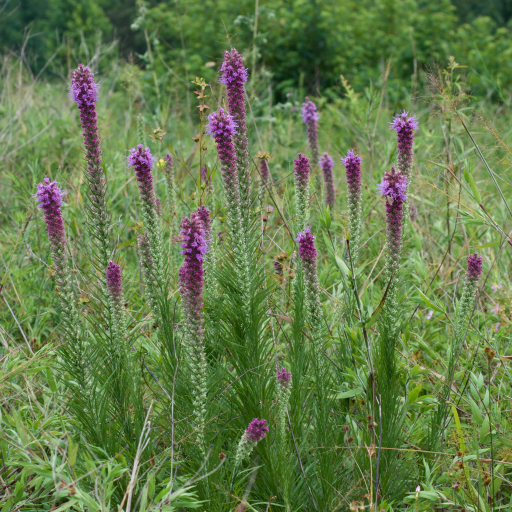
Plant Overview
Known as the Prairie Blazing Star or Kansas Gayfeather, this striking perennial is a vertical masterpiece of the North American grasslands. It is famous for its "bottlebrush" appearance and its unusual habit of blooming from the top of the spike downward, looking like a purple torch held aloft in the summer sun. It is a cornerstone species for prairie restorations and a legendary magnet for migrating Monarch butterflies.
🔍 How to Identify
- 🌸 Flower Spikes: Dense, fuzzy flower heads in shades of bright magenta or deep purple. The individual florets have tiny, thread-like petals that give the entire spike a feathered texture.
- 🍃 Grass-like Foliage: The leaves are narrow, lance-shaped, and very crowded along the stem. They start lush at the base and become significantly smaller and more needle-like as they climb toward the flowers.
- 📏 Growth Habit: A strictly upright plant that typically reaches 3 to 5 feet in height. The stems are sturdy and unbranched, standing like exclamation points in the landscape.
🏡 In Your Garden
- 💧 Soil Adaptability: Unlike some of its relatives that require dry, sandy soil, Liatris pycnostachya is a champion of heavy clay and moist conditions. It can handle "wet feet" in the spring but is surprisingly drought-tolerant once summer heat sets in.
- 🦋 The Pollinator Magnet: This plant produces high-quality nectar that is irresistible to long-tongued bees, hummingbirds, and butterflies. It is often cited as one of the single best plants for attracting the endangered Rusty Patched Bumblebee.
- ⚓ Root Sensitivity: It grows from a woody underground corm (similar to a bulb). Because it develops a deep system to survive prairie droughts, it hates being moved. Once planted, it is best to leave it undisturbed for several years.
⚠️ Safety & Toxicity
- ✅ Non-Toxic: The Prairie Blazing Star is considered safe and non-toxic for humans, cats, dogs, and horses.
- 🦌 Wildlife Nibbles: While safe for pets, it is a favorite snack for garden visitors. Rabbits often target the tender young shoots in spring, and deer may "deadhead" your flowers by eating the tops of the spikes.
✨ Fun Fact
Most spiked flowers (like Foxgloves or Snapdragons) bloom from the bottom up to lead bees toward the youngest, most pollen-rich flowers. Liatris is one of the few plants in the world that does the exact opposite, blooming from the top down! This is why you will often see a fluffy purple top and a green, un-bloomed base.

Detailed Care Instructions
| Color | Purple |
| Soil Ph | Can Tolerate A Wide Range |
| Humidity | Dry |
| Lighting | Full Sun |
| Soil Type | Tolerant Of A Variety Of Soil Types - Preference For It To Be Moist |
| Bloom Time | Late Summer |
| Difficulty | Easy |
| Plant Type | Herbaceous Perennial |
| Hibernation | Cold Period |
| Mature Size | Up To 5 Foot |
| Native Area | Prairies Of Central United States |
| Sun Exposure | Full Sun |
| Hardiness Zones | 3-9 |
To grow Liatris pycnostachya, also known as prairie blazing star or Kansas gayfeather, follow these steps:
- Choose the right planting location: Liatris pycnostachya prefers full sun and well-draining soil. Ensure the area gets at least 6-8 hours of direct sunlight per day.
- Prepare the soil: Dig up the soil and remove any weeds, rocks, or debris. Liatris pycnostachya prefers slightly acidic to neutral soils with good drainage. If your soil is heavy or compacted, mix in compost or sand to improve drainage.
- Planting: Liatris pycnostachya can be grown from seeds or transplants. If using seeds, sow them directly in the ground in the spring or fall. Make sure the seeds are lightly covered with soil, as they need light for germination. If using transplants, dig a hole slightly larger than the plant's root ball and place the plant in the hole. Backfill the hole with soil, ensuring that the top of the root ball is level with the ground.
- Watering: Keep the soil consistently moist but not overly saturated after planting until the plants establish themselves. Once established, Liatris pycnostachya is relatively drought-tolerant and only requires watering during prolonged dry periods.
- Mulching and Weed Control: Apply a layer of organic mulch, such as wood chips or shredded leaves, around the base of the plants to help retain moisture, suppress weeds, and regulate soil temperature.
- Fertilization: Liatris pycnostachya is a native plant that generally doesn't require additional fertilization. However, if your soil is poor or lacking in nutrients, you can apply a balanced slow-release fertilizer during the growing season.
- Maintenance: Remove any weeds that may compete with the plant for nutrients and water. Deadhead the flowers after they fade to encourage more blooms and prevent self-seeding. In late fall or early winter, leave the dead stems standing to provide wildlife habitat and protection over the winter months. Cut them back to the ground in early spring before new growth begins.
- Pest and Disease Control: Liatris pycnostachya is relatively resistant to pests and diseases. However, keep an eye out for common garden pests like aphids, slugs, or spider mites. If necessary, treat with organic insecticides or use natural pest control methods.
- Division and Propagation: Liatris pycnostachya can be divided every 3-4 years to rejuvenate the plant and control its size. Dig up the clump in spring or fall, separate it into several sections, each with roots and shoots, and replant them.
By following these tips and providing proper care, you can enjoy beautiful, vibrant Liatris pycnostachya plants in your garden.

Place in a bright room that is sun drenched almost all day. Or directly in a south-facing window.

Liatris Pycnostachya is a perennial plant that requires appropriate watering practices to thrive and stay healthy. When watering this plant, it is important to ensure that the soil is moist but not waterlogged. Overwatering can lead to root rot, which can ultimately lead to the death of the plant.
To water this plant, start by checking the soil moisture level. Insert your finger into the soil up to the second knuckle. If the soil feels dry at this depth, it is time to water the plant. Avoid watering the plant if the soil feels moist to the touch.
When watering the plant, apply water slowly and evenly, avoiding flooding the soil. Watering cans or a garden hose fitted with a misting nozzle can help to distribute water evenly. Water the plant at soil level, not on the leaves or stems, to avoid fungal diseases.
During periods of drought or when temperatures are high, the plant may require more frequent watering. Conversely, during periods of heavy rainfall, reduce watering to avoid waterlogging.
In summary, watering Liatris Pycnostachya requires monitoring soil moisture levels, watering slowly and evenly, and avoiding overwatering.
To fertilize this plant, use a balanced, slow-release fertilizer with equal amounts of nitrogen, phosphorus, and potassium. Apply the fertilizer in early spring before new growth starts and then again in mid-summer. Be careful not to over-fertilize as this can lead to excessive vegetative growth at the expense of flowering. Water the plant after fertilizing to help distribute the nutrients evenly and promote absorption.
Liatris pycnostachya prefers a well-draining soil that is slightly acidic to neutral in pH. Sandy loam soil with a good amount of organic matter is ideal for promoting healthy growth and development. The soil should also be fairly moist but not waterlogged, as the plant can quickly develop root rot in wet conditions. Additionally, adding a slow-release fertilizer or compost to the soil during planting can help to provide essential nutrients for the plant's growth. Overall, the soil should be well-aerated, nutrient-rich, and provide good drainage to support optimal growth conditions for Liatris pycnostachya.
To propagate this plant, first gather mature seeds from the flower heads in the fall. Then, lightly scarify the seeds with sandpaper to help break through the seed coat. Next, stratify the seeds by placing them in a plastic bag with moist sand or sphagnum moss and storing in the refrigerator for 4-6 weeks. After stratification, sow the seeds in a well-draining soil mix and keep consistently moist until germination. Alternatively, divide established clumps of the plant in the spring or fall and replant the divisions.








