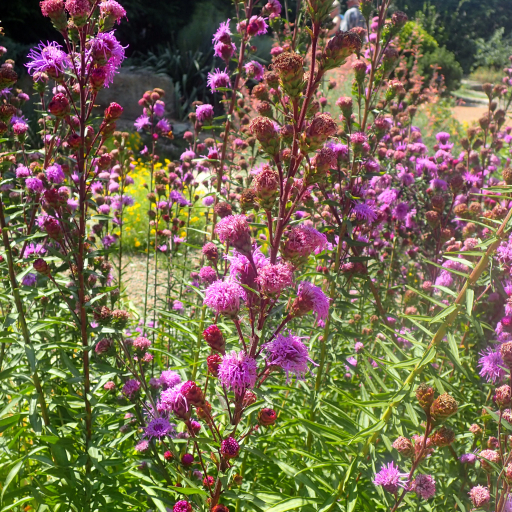
Plant Overview
Known famously as the Northern Blazing Star or "Devil’s Bit," this perennial is a showstopper of the American prairie. Unlike most flowering spikes that bloom from the bottom up, the Liatris scariosa defies gravity by opening its fluffy, magenta blossoms from the top down. It is a legendary "magnet" for late-summer pollinators, often seen hosting a frantic party of Monarch butterflies and bumblebees.
🔍 How to Identify
- 💜 The Flowers: Large, button-like flower heads that look like miniature exploding stars or fuzzy pom-poms, typically in shades of vibrant purple or deep lavender.
- 🌿 The Foliage: Slender, grass-like leaves that are wider at the base and become smaller as they move up the stem, giving the plant a textured, ruffled appearance.
- 📏 The Stature: An upright, unbranched stem that can reach up to 3 feet tall, often possessing a slightly rough or "scabrous" texture (which gives the plant its species name, scariosa).
🏡 In Your Garden
- ☀️ Sun-Drenched Spaces: This plant is a sun-worshipper. It requires full light to keep its stems sturdy; otherwise, it may lean or "flop" over in search of the sun.
- 🏜️ Tough Love Soil: It actually prefers poor, well-draining soil. Over-fertilizing or keeping the roots too soggy will lead to root rot. It is extremely drought-tolerant once established thanks to its bulb-like woody base (corm).
- 🦋 Pollinator Highway: If you want a butterfly garden, this is non-negotiable. It provides high-quality nectar during the late summer when other flowers are beginning to fade.
⚠️ Safety & Toxicity
- ✅ Pet & Human Safe: Liatris scariosa is generally considered non-toxic to dogs, cats, and horses. It is a safe choice for families with curious pets.
- 🧤 Skin Sensitivity: While not poisonous, the rough texture of the leaves and stems can occasionally cause mild skin irritation for those with very sensitive skin during pruning.
✨ Fun Fact
The Northern Blazing Star is a "climax" species of the savanna, meaning its presence often indicates a high-quality, healthy ecosystem. Interestingly, its thick, underground corms were historically used by some Native American tribes as a topical poultice for snakebites, earning it another old nickname: "Snakeroot."

Detailed Care Instructions
To grow Liatris scariosa, also known as button blazing star or eastern gayfeather, follow these steps:
- Choose the right location: Liatris scariosa thrives in full sun to partial shade. Select a well-draining soil with a pH range of 5.5 to 7.5.
- Prepare the soil: Prior to planting, loosen the soil and remove any weeds or grass from the area. Incorporate organic matter, such as compost, to improve fertility and drainage.
- Obtain healthy plants: Purchase Liatris scariosa plants from a reputable nursery or online store. Check the roots for any signs of disease or damage before planting.
- Planting: Dig a hole that is slightly larger than the root ball of the plant. Place the plant in the hole, ensuring that the crown of the plant (where the roots meet the stems) is level with or slightly above the soil surface. Backfill the hole with soil, gently firming it around the roots.
- Watering: After planting, water the Liatris scariosa thoroughly to settle the soil and help the roots establish. For the first few weeks, keep the soil consistently moist but not waterlogged. Once established, the plant is relatively drought-tolerant and requires less frequent watering.
- Mulching: Apply a layer of organic mulch, such as wood chips or straw, around the base of the plant to suppress weeds, conserve moisture, and regulate soil temperature.
- Care and maintenance: Liatris scariosa is a low-maintenance plant. Remove any weeds that may compete for resources, and prune the plant to promote better air circulation and prevent overgrowth. In the fall, remove any dead flower stalks and foliage.
- Fertilization: These plants generally do not require frequent fertilization. However, if the soil is poor, you can apply a balanced fertilizer once or twice a year, following the package instructions.
- Division and propagation: Over time, Liatris scariosa may require division to maintain vigor. Dig up the clumps in early spring or fall, and carefully separate the individual plants. Replant them in suitable locations with adequate spacing.
By following these steps, you can successfully grow Liatris scariosa. Enjoy the beautiful spikes of purple or white flowers that this plant produces in summer and fall!

Place in a bright room that is sun drenched almost all day. Or directly in a south-facing window.

To properly water this plant, it is important to consider the soil moisture level and weather conditions. It is recommended to plant this species in well-draining soil and allow the top inch of soil to dry out before watering. When watering, it is important to water the soil and not the leaves to prevent the plant from developing fungal diseases. Additionally, it is important to water in the morning or evening to reduce evaporation and allow the plant to better absorb the water. Avoid overwatering the plant as it can lead to root rot and other issues.
For optimal growth and vibrant blooms, it is recommended to fertilize this plant during the spring and early summer months. Use a slow-release fertilizer with balanced nutrients, applying it to the soil around the base of the plant. Be sure to follow the manufacturer's instructions for application rates and frequency. Avoid over-fertilizing, as this can lead to excessive growth and reduced flowering. It is also important to water the plant thoroughly after fertilizing to help distribute the nutrients evenly throughout the soil.
When planting Liatris Scariosa, it is important to use well-draining soil. This can be achieved by utilizing a mix of sand and loamy soil. The soil should have a neutral pH level, ideally between 6.0 and 8.0. It is also recommended to incorporate organic matter into the soil, such as compost or leaf litter, to improve soil fertility. Additionally, Liatris Scariosa requires full sun exposure for optimal growth, so the planting area should be in a location that receives at least 6 hours of direct sunlight each day.
To propagate this plant, you will need to start with a healthy and mature specimen. First, make sure to select a stem that is strong and straight, without any diseases or pests. Once you have selected the ideal stem, take a sharp knife and cut it about four inches from the base of the plant.
Next, dip the cut end of the stem into rooting hormone powder to promote root growth. Plant the stem in a pot filled with well-draining soil, and water thoroughly. Place the pot in a warm and bright location, but out of direct sunlight.
Keep the soil evenly moist, but not too wet, and wait for roots to form. This can take several weeks or longer, depending on the conditions. Once the new plant has established roots and begins to grow, it can be transplanted to a larger container or outdoors in the garden.
By using this propagation method, you can create new plants from an existing one and enjoy the beauty of Liatris Scariosa in multiple locations.








