Plant Overview
Known in the Amazon as Caraipé, Licania alba is a majestic canopy tree often called the "Tinajito" or "White Kimboto." It is celebrated in South American forests for its towering presence and its silver-lined leaves that seem to shimmer when caught in the wind. Historically, it has been a vital resource for indigenous artisans who have utilized its unique bark for centuries.
🔍 How to Identify
- 🍃 Leaf Contrast: The leaves are deep green on top but feature a striking, dense layer of white or grayish hairs underneath, which is exactly how it earned its Latin name alba.
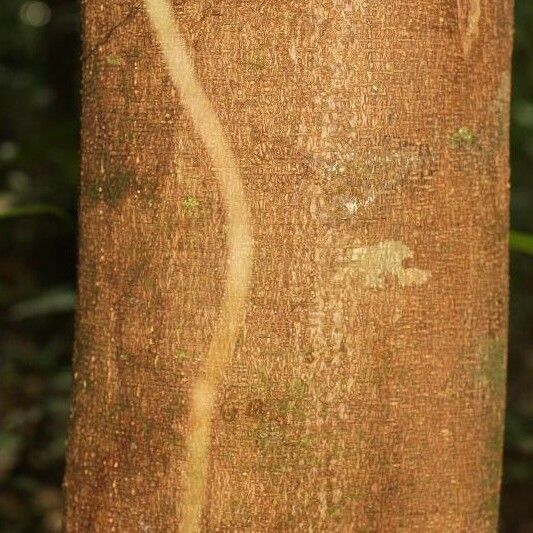
- 🪵 Bark Texture: Its bark is relatively smooth and greyish-brown. If you were to look under a microscope, you would see it is packed with microscopic silica crystals.
- 🥜 Fleshy Fruit: It produces small, oblong fruits with a woody shell and a fleshy interior. While not a grocery store staple, these fruits are essential food for rainforest mammals.
🏡 In Your Garden
- 🌳 Space Requirements: This is a true giant of the tropics. If you are planting one, ensure it has ample room to stretch its canopy; it is far better suited for large estates or botanical collections than small suburban yards.
- 💧 Soil Nuance: It thrives in the nutrient-poor, acidic "terra firme" soils of the Amazon. It is highly sensitive to "wet feet," meaning it requires excellent drainage to prevent the roots from suffocating.
- ☀️ Light Strategy: As a "climax" species, young saplings are patient and can wait in the shade of larger trees, but they eventually require full, unfiltered sun to reach their massive potential height.
⚠️ Safety & Toxicity
- ✅ Safe Status: Licania alba is generally considered non-toxic to humans and domestic animals.
- 🐾 Pet Safety: There are no documented cases of toxicity for cats or dogs. However, because the fallen fruits are hard and woody, they can pose a minor choking hazard for curious puppies.
✨ Fun Fact
Indigenous potters in the Amazon have a "secret ingredient": they burn the bark of the Licania alba and mix the resulting ash into their clay. Because the bark is so rich in silica, this ash acts as a natural reinforcing agent, preventing the pottery from shrinking or cracking when it is fired!

Detailed Care Instructions

Place in a bright room that is sun drenched almost all day. Or directly in a south-facing window.

To water this plant, it is important to first assess the soil moisture level before applying any water. Stick your finger into the soil a few inches deep to determine if the soil is dry or moist. Ensure that water is applied evenly around the base of the plant, avoiding getting water on the leaves or stem. Avoid overwatering as this can lead to root rot and other diseases. It is recommended to water the plant deeply at least once a week, but this may vary depending on the climate and soil conditions. Remember to adjust watering frequency during different seasons, as the plant's water needs change with the environment.
To ensure optimal growth for Licania Alba plant, it is recommended to use a well-draining soil mix that is rich in nutrients. It is important to avoid heavy clay soils, as they tend to retain excess water and can result in root rot. For best results, a mix of loam soil, perlite, and organic matter such as compost or aged manure is ideal. Additionally, the soil pH should be slightly acidic to neutral, ranging from 6.0 to 7.5. It is also important to ensure that the soil is consistently moist but not waterlogged, as Licania Alba prefers regular watering but can be sensitive to overwatering.








