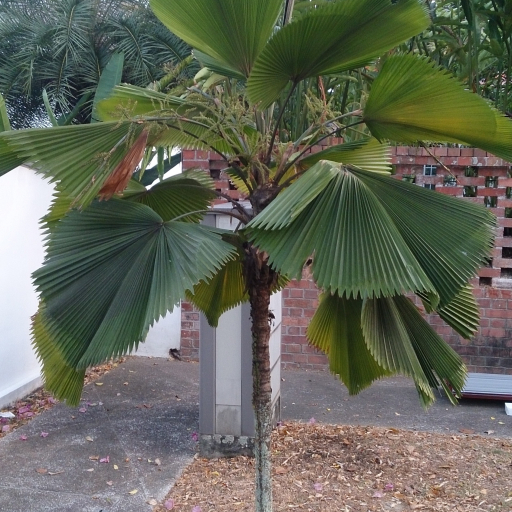
Plant Overview
The Licuala Peltata, often hailed as the "Grand Licuala Palm" or "Jewel of the Jungle," is a show-stopping tropical palm known for its nearly perfect, circular fan leaves. Native to the humid rainforests of Southeast Asia, it carries an air of prehistoric mystery, looking less like a modern plant and more like a decorative prop from an ancient palace garden. Whether in its "split leaf" form or the prized "sumawongii" variety with solid fronds, it is the ultimate status symbol for tropical plant collectors.
🔍 How to Identify
- 🍃 The Circular Canopy: Its most striking feature is the large, flat, fan-shaped leaves that can form a nearly perfect circle, pleated like a hand-held fan.
- 📏 Stately Stature: It typically grows on a single, slender trunk that remains relatively short for many years, making the massive crown of leaves the main focal point.
- 🦷 Armed Petioles: The long stems (petioles) supporting the leaves are often armed with small, sharp teeth along the edges—a "look but don't touch" defense mechanism.
🏡 In Your Garden
- 🛡️ The Wind Factor: Because those gorgeous leaves are so large and thin, they act like sails. High winds will easily shred the fronds into ribbons, so it requires a sheltered spot or a calm indoor corner to maintain its pristine look.
- ☁️ Filtered Light Lover: In nature, this palm lives on the forest floor. It craves bright, dappled light but will "sunburn" (turning brown and crispy) if exposed to harsh, direct afternoon sun.
- 💧 Humidity is Key: This is not a "set it and forget it" desert plant. It thrives on high humidity; if the air is too dry, the leaf tips will quickly turn brown, signaling its discontent.
⚠️ Safety & Toxicity
- 🟢 Non-Toxic Status: The Licuala Peltata is generally considered non-toxic to cats, dogs, and humans, making it a "pet-safe" choice for a tropical interior.
- 🌵 Mechanical Hazards: While not poisonous, the small spines along the leaf stems can cause scratches. It’s best to wear gloves when pruning or moving the plant to avoid "paper cuts" from the foliage.
✨ Fun Fact
In its native habitats in Thailand and Malaysia, the massive, waxy leaves of the Licuala palm were traditionally used by locals as natural umbrellas during sudden tropical downpours and even as durable thatch for roofing!

Detailed Care Instructions
To successfully grow a Licuala peltata plant, also known as the fan palm, follow these steps:
- Lighting: Licuala peltata plants prefer bright, indirect light. Place your plant near a window with filtered sunlight or create a shaded spot in your garden.
- Temperature: These plants thrive in warm and humid conditions, ideally between 70°F to 85°F (21°C to 29°C) during the day and not below 60°F (15°C) at night.
- Soil: Use a well-draining potting mixture that retains moisture. A mix of peat moss, perlite, and sand works well. Plant the Licuala peltata in a pot with good drainage holes.
- Watering: Keep the soil evenly moist but not soggy. Water your plant when the top inch of soil feels dry. Avoid overwatering as it can lead to root rot.
- Humidity: The Licuala peltata plant prefers high humidity levels. Consider placing a tray filled with water near the plant to increase humidity or use a humidifier.
- Fertilizer: During the growing season (spring and summer), feed your plant with a balanced liquid fertilizer once a month. Follow the package instructions for appropriate dosage.
- Pruning: Remove any dead or yellowing fronds to promote healthy growth. However, be careful not to remove too many fronds, as it may harm the plant.
- Potting: Repot your Licuala peltata only when necessary, such as when roots start to emerge from the drainage holes. Choose a pot that provides sufficient room for root growth.
- Pests and Diseases: Monitor your plant for pests like spider mites, scale insects, or mealybugs. If you notice any infestation, treat it with an appropriate pesticide or insecticidal soap. Avoid overwatering to prevent fungal diseases.
- Patience: Growing a Licuala peltata requires patience and care. These plants are known to grow slowly, so it may take time for new fronds to emerge.
By following these guidelines, you can provide the proper conditions and care for your Licuala peltata plant to grow and thrive.
The Licuala peltata plant requires moderate watering, and it is essential to keep the soil evenly moist. The best way to water this plant is to wait until the top inch of the soil has dried out and then water thoroughly, allowing the excess water to drain away. It is recommended to use lukewarm water and avoid using cold water, which can cause shock to the plant. The plant prefers high humidity levels, so it is beneficial to mist the leaves regularly or place a tray of water nearby to increase the moisture in the air. Avoid overwatering, as it can cause root rot or other fungal diseases. Additionally, ensure that the pot has drainage holes and avoid letting the plant sit in standing water. It is recommended to use a well-draining potting mix and perlite to improve drainage and prevent waterlogging.
To fertilize this plant, you should apply a balanced, slow-release fertilizer to the soil around the base of the plant. Avoid placing the fertilizer directly on the plant or near the roots. Water the plant thoroughly after fertilizing to help distribute the nutrients. Fertilize every 2-3 months during the growing season (spring and summer), and reduce or stop fertilizing during the fall and winter when growth slows down.
Licuala Peltata plants prefer a rich, well-draining soil with good fertility. A mixture of peat moss, perlite, and vermiculite, with additional organic matter such as compost or leaf mold, is ideal. The soil pH for Licuala Peltata plants should be slightly acidic, around 5.5 to 6.5. Avoid using heavy clay soils or soils with poor drainage, as these can lead to root rot and other problems. It is also important to ensure that the soil is consistently moist but not waterlogged, as Licuala Peltata requires regular watering. Fertilizing with a balanced liquid or granular fertilizer every 4-6 weeks during the growing season can also improve plant health and encourage strong growth.
To propagate this plant, first, select and cut off a healthy stem or sucker from the parent plant using a sharp and sterilized pruning tool. Remove any leaves that are at the bottom of the cutting to ensure that the stem is bare. Then, dip the cut end of the stem into a rooting hormone powder or gel to promote root growth. Afterward, plant the cutting in a well-draining and moist potting mix and cover it with a plastic bag or transparent container to create a humid environment. Place the container in a warm and bright spot, but away from direct sunlight. Mist the plant every few days to maintain humidity and water it regularly. After a few weeks, you should see new growth and roots starting to form. Once the roots have developed, remove the plastic cover and transfer the plant into a larger pot with well-draining soil. Keep the plant in a bright area with some shade and continue to water it regularly.








