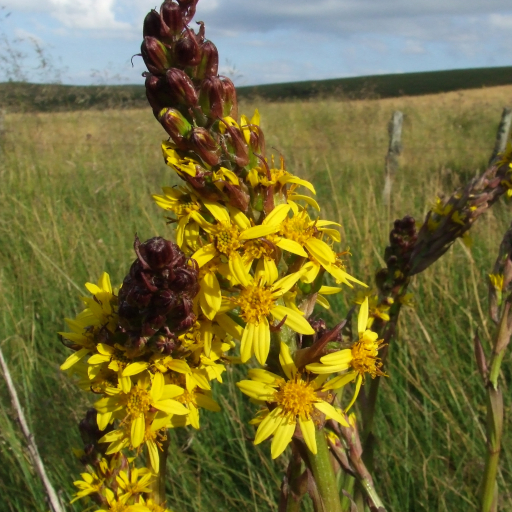
Plant Overview
Ligularia, often called the "Leopard Plant" or "Golden Groundsel," is the undisputed drama queen of the shade garden. Famous for its massive, architectural foliage and striking towers of yellow flowers, it brings a prehistoric, lush feel to any damp corner of your yard. Whether you are growing the tall, spiked "The Rocket" or the dark-leaved "Britt-Marie Crawford," this plant is a favorite for those looking to add bold texture where other flowers struggle to grow.
🔍 How to Identify
- 🍃 Massive Foliage: Most varieties feature huge, heart-shaped or kidney-shaped leaves that can grow up to a foot wide, often with distinct jagged or "toothed" edges.
- 🌼 Golden Blooms: It produces either tall, narrow spikes (racemes) or flat-topped clusters of bright yellow to deep orange daisy-like flowers that stand high above the leaves.
- 🟣 Rich Undersides: Many popular garden cultivars have deep chocolate, burgundy, or purple undersides on their leaves, creating a stunning color contrast.
🏡 In Your Garden
- 💧 The "Wilt" Warning: Ligularia is famous for its dramatic wilting behavior on hot afternoons. This doesn't always mean it's dying; it's a defense mechanism. However, it truly thrives in "boggy" conditions and will struggle in dry, sandy soil.
- 🐌 Slug Magnet: Because the leaves are so lush and tender, they are a favorite snack for slugs and snails. You may need to provide some protection in the spring to prevent your plant from looking like "Swiss cheese."
⚠️ Safety & Toxicity
- 🚫 Toxic if Ingested: Ligularia contains pyrrolizidine alkaloids, which are natural defense chemicals that can be harmful to the liver if consumed in significant quantities.
- 🐾 Keep Pets Away: While the plant is beautiful, it is not pet-friendly. Ensure dogs and cats do not chew on the leaves, as ingestion can lead to lethargy or stomach upset.
✨ Fun Fact
The name Ligularia comes from the Latin word ligula, which means "little tongue." This refers to the long, strap-shaped ray florets that make up the outer edge of its golden flowers!

Detailed Care Instructions
To grow Ligularia plant, you can follow these steps:
- Choose a suitable location: Ligularia plants prefer partial shade to full shade. Select a spot in your garden that receives morning sunlight and afternoon shade or filtered light.
- Prepare the soil: Ligularia plants thrive in moist and well-draining soil. Amend the soil with organic matter such as compost or peat moss to improve its drainage and fertility.
- Planting: Dig a hole that is slightly larger than the plant's root ball. Gently remove the Ligularia plant from its container and place it in the hole, making sure that the top of the root ball is level with the soil surface. Backfill the hole with soil and firm it gently around the plant.
- Watering: Keep the soil consistently moist but not waterlogged. Water the Ligularia plant regularly to prevent it from drying out. Mulching around the plant can help retain moisture and suppress weeds.
- Fertilizing: Use a balanced slow-release fertilizer in the spring when new growth appears. Follow the manufacturer's instructions for dosage and application.
- Pruning: Remove any dead or damaged leaves and flower stalks regularly. Ligularia plants can develop large, lush foliage, but it's essential to maintain good airflow around the plant to prevent fungal diseases.
- Protection from extreme heat: In regions with hot summers, provide some shade or protection from the intense afternoon sun. Mulching and regular watering can also help keep the soil cool.
- Overwintering: Some Ligularia varieties are hardy and can withstand cold temperatures, while others may need protection during winter. Mulch around the base of the plant to insulate the roots, or consider moving container-grown plants indoors or to a sheltered location.
- Pest and disease control: Watch out for snails, slugs, or aphids, as they can sometimes attack Ligularia plants. Regularly inspect the leaves for any signs of pests or diseases and take appropriate measures, such as organic insecticides or removing affected parts of the plant.
By following these steps, you can successfully grow Ligularia plants and enjoy their attractive foliage and unique blooms.

To water this plant, it is important to monitor the soil moisture level. It prefers consistently moist soil but not waterlogged conditions. It is best to water deeply and thoroughly, allowing the water to penetrate the soil and reach the roots. It is important to avoid getting water on the leaves as it can lead to fungal diseases. During hot and dry periods, it may be necessary to water more frequently. Mulching around the base of the plant can help retain moisture in the soil.
To fertilize this plant, use a balanced, all-purpose fertilizer that is formulated for flowering plants. Apply the fertilizer to the soil around the base of the plant, being careful not to get any on the leaves or stems. Water the plant well after fertilizing. Repeat the process every 4-6 weeks during the growing season. Avoid over-fertilizing, as this can lead to excessive growth and weak stems.
The recommended soil for Ligularia plants should have good drainage and moderate levels of moisture. It should have a slightly acidic pH level and be rich in organic matter. A mixture of loamy soil with perlite or sand can improve drainage, while adding peat moss or compost can enhance moisture retention and nutrient content. It is important to avoid using soils that are too heavy or dense, as this can lead to waterlogged roots and subsequent disease. Additionally, young plants may benefit from occasional fertilization with a balanced, water-soluble fertilizer.
Ligularia plant can be propagated through three common means: division, stem cuttings, and seed. Here are the details on how to propagate Ligularia plant without using its common names:
- Division: The ideal time to divide Ligularia plant is in the spring or fall, when the plant is not actively growing. Dig up the plant, and then separate the roots into clumps with a sharp knife. Each clump should have several shoots and roots. Transplant the clumps into a pot or directly into the ground but make sure to water them well.
- Stem cuttings: Take a cutting of Ligularia plant in the summer, choosing a stem that is several inches long and has several leaves. Remove the lower leaves, but keep the top ones. Dip the cut end in rooting hormone powder and plant it in a pot containing a well-draining soil mix. Keep the soil moist and place the pot in a warm, bright spot, but not in direct sunlight. After several weeks, roots should form, and the plant can be transferred to a larger pot or directly into the ground.
- Seed: Ligularia plant can be grown from seed, but it needs to be stratified before planting. Soak the seeds in warm water overnight, then mix them with moist vermiculite. Place the mixture in a plastic bag and refrigerate for 8-10 weeks. After the stratification period is over, plant the seeds in moist, well-draining soil mix in a pot or directly into the ground. Keep the soil moist but not waterlogged, and place the container in a warm, bright spot, but not in direct sunlight. Seedlings should appear in a few weeks.







