Plant Overview
Often referred to as the Western Grasswort, this resilient little perennial is a master of the "living carpet" look. Native to the salt marshes and muddy coastlines of Western North America, it spends its life navigating the boundary between land and water. Whether it is stabilizing a riverbank or creating a lush green meadow in a home aquarium, this plant is a favorite for those seeking a miniature, grassy aesthetic.
🔍 How to Identify
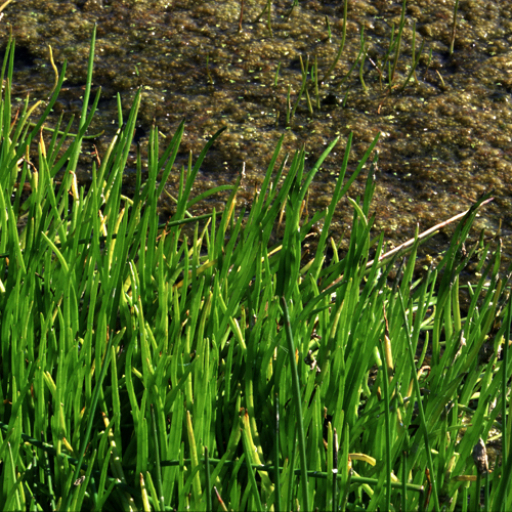
- 🍃 Blade Structure: The leaves are bright green, hollow, and cylindrical, looking much like tiny chives or thick blades of turf grass that grow 2 to 6 inches tall.
- 🌱 Creeping Rhizomes: It doesn't grow in isolated clumps; instead, it spreads through horizontal underground stems (rhizomes) that knit together to form a dense, tangled mat.
- 🌸 Secret Flowers: If you look very closely near the base, you might spot tiny, inconspicuous white or pinkish flower clusters that look like miniature umbrellas (umbels).
🏡 In Your Garden & Aquarium
- 🌊 Brackish Specialist: This is one of the few "grass-like" plants that can handle salt. It thrives in brackish water, making it a perfect choice for coastal gardens or specialized estuarine aquariums.
- ☀️ Light Dictates Height: Its appearance changes based on its environment. Under high light, it stays short and forms a tight, "shorn" carpet; in lower light, the blades stretch taller as they reach for the sun.
- 🪴 Substrate Anchor: Because of its aggressive root system, it is excellent at preventing soil erosion in boggy areas or keeping the "floor" of an aquarium from shifting.
⚠️ Safety & Toxicity
- ✅ Safe Status: Lilaeopsis occidentalis is considered non-toxic to humans, dogs, and cats.
- 🐟 Aquatic Sanctuary: In a tank setting, it is 100% safe for fish and invertebrates. In fact, its dense growth provides a vital "nursery" for shrimp and tiny fish fry to hide from larger predators.
✨ Fun Fact
Despite its appearance, the Western Grasswort isn't a grass at all! It is actually a member of the Apiaceae family, making it a distant, water-loving cousin to carrots, celery, and parsley.

Detailed Care Instructions
To grow Lilaeopsis Occidentalis (also known as Western Lilaeopsis), follow these steps:
- Choose a suitable location: Lilaeopsis Occidentalis is a bog plant that thrives in wet and marshy conditions. It prefers full to partial sunlight, so select a location that receives at least 4-6 hours of direct sunlight per day.
- Prepare the planting area: Clear the area of any weeds or vegetation. Dig the soil to a depth of at least 6 inches and remove any rocks or debris. Ensure that the soil is well-drained and rich in organic matter.
- Plant the Lilaeopsis Occidentalis: Plant the Lilaeopsis Occidentalis about 1-2 inches deep in the soil. Space the plants about 2-3 inches apart to allow them room to spread and grow. If you are planting in a pond or water garden, make sure the plants are submerged in water.
- Provide adequate water: Lilaeopsis Occidentalis requires consistently moist soil or waterlogged conditions. Regularly water the plants to keep the soil or water around them consistently moist. In a water garden, the water level should cover the plants but not submerge them completely.
- Fertilize regularly: Use a slow-release aquatic plant fertilizer according to the manufacturer's instructions. Fertilize the Lilaeopsis Occidentalis every 3-4 months during the growing season to promote healthy growth.
- Control weeds: Monitor for the growth of weeds around the Lilaeopsis Occidentalis plants and remove them promptly to prevent competition for nutrients and space.
- Prune when necessary: Trim back any yellow or damaged leaves to promote new growth. If the Lilaeopsis Occidentalis becomes too dense, thin out the plants by removing excess foliage to maintain a healthy and balanced appearance.
- Overwintering: Lilaeopsis Occidentalis is perennial in nature and should withstand mild winters. However, in colder climates, provide protection by covering the plants with straw or a floating row cover to insulate them from freezing temperatures.
By following these steps, you should be able to successfully grow Lilaeopsis Occidentalis plants.
To water this particular plant, it is important to keep the soil moist but not soggy. It is recommended to water deeply once a week or more frequent if the weather is hot and dry. Avoid overhead watering and instead, direct the water at the base of the plant to prevent the leaves from getting wet. It is also essential to ensure good drainage as this plant is sensitive to waterlogged soil.
To fertilize this plant, use a balanced fertilizer with equal parts nitrogen, phosphorus, and potassium. Apply the fertilizer once a month during the growing season and follow the instructions on the package for application rate. Avoid over-fertilizing, as it can cause harm to the plant. Additionally, consider supplementing with trace elements such as iron and magnesium to promote healthy growth.
Lilaeopsis Occidentalis plant prefers well-draining, sandy soil with a neutral to slightly acidic pH. The soil should also be rich in nutrients and organic matter. It is important to avoid soils that are heavy and water-logged as this can cause root rot. Adding compost or other organic amendments to the soil can help improve soil structure and fertility. It is recommended to use a soil that is specifically designed for aquatic plants as this will provide the necessary nutrients and minerals for the plant to thrive.
To propagate this plant, you will need to carefully and gently separate the young plantlets from the main clump. This can be done by gently pulling or cutting away the plantlets with a sharp, sterile knife or scissors. Be sure to take care not to damage the main plant or its roots during the process.
Once you have separated the plantlets, you can plant them in a separate container or in a different area of your garden. Be sure to provide them with the appropriate amount of light and water, and monitor their growth to ensure they are thriving.
It is also possible to propagate this plant through division. This involves carefully separating the main plant into smaller sections, each with its own roots and stem. This can be done by digging up the plant and carefully cutting it into sections, using a sharp, sterile knife.
After dividing the plant, you can replant the sections in a new location or separate containers. Be sure to water and care for the plants as needed to ensure their health and growth.








