Plant Overview
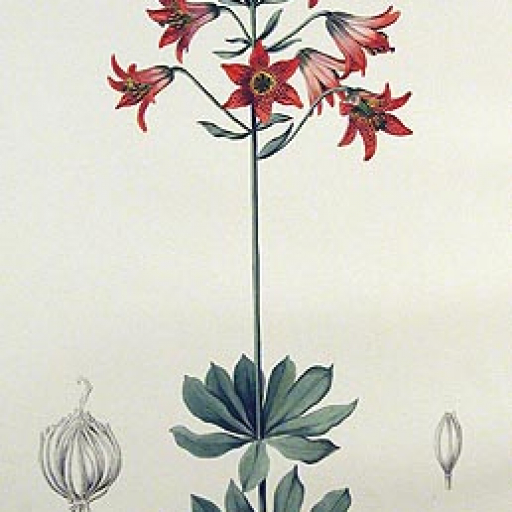
Often called Bolander’s Lily, this rare mountain beauty is a true gem of the Pacific Northwest. Native to the rugged Siskiyou Mountains of California and Oregon, it thrives in rocky, "difficult" soils where few other flowers dare to grow. With its delicate, nodding bells and deep wine-colored petals, it looks like a piece of living jewelry hidden among the mountain scrub.
🔍 How to Identify
- 🌸 Flower Shape: The blooms are distinctly bell-shaped (campanulate) and nodding, usually hanging downward to protect their nectar from unpredictable mountain rain.
- 🎨 Color Palette: Petals range from a soft reddish-pink to a deep, dark maroon, heavily freckled on the inside with dark purple or chocolate-colored spots.
- 🍃 Leaf Arrangement: The blue-green leaves grow in "whorls"—circular patterns that wrap around the stem like small, pointed stars stacked at intervals.
🏡 In Your Garden
- ⛰️ Serpentine Specialist: In the wild, this lily is a "serpentine endemic," meaning it loves mineral-heavy, rocky soil. In a home setting, it requires impeccable drainage; it hates "wet feet" and will suffer from bulb rot if kept in heavy, clay-based garden soil.
- 🌦️ The Goldilocks Climate: It prefers a Mediterranean-style cycle of wet winters and very dry summers. It is best suited for rock gardens or raised beds where you can mimic the cool, airy environment of a mountain slope.
⚠️ Safety & Toxicity
- 🐱 Extreme Feline Danger: As a member of the Lilium genus, this plant is deadly to cats. Even a small amount of pollen or a nibble of a leaf can lead to rapid kidney failure in felines.
- 👶 General Caution: While not considered highly toxic to humans or dogs, ingesting any part of the bulb or plant can cause stomach upset and vomiting. It is best kept out of reach of children and pets.
✨ Fun Fact
The Bolander’s Lily has evolved its vibrant reddish-maroon hue specifically to catch the eye of Hummingbirds. Unlike many other flowers that use scent to attract bees, this lily relies on its "visual siren" to call in birds who are the primary pollinators of these high-altitude peaks.

Detailed Care Instructions
Growing Lilium Bolanderi plants can be done using the following steps:
- Site selection: Choose a suitable location for your plants. Lilium Bolanderi requires bright but indirect sunlight, so select an area that receives partial shade or filtered sunlight. The soil should be well-draining and rich in organic matter.
- Planting process:
a. Dig holes that are about 8-10 inches deep and spaced 6-8 inches apart.
b. Place the bulbs in the holes with the pointy ends facing upwards.
c. Fill the holes with soil, gently pressing it around the bulbs to provide stability.
d. Water the bulbs thoroughly after planting to help settle the soil and encourage root growth.
- Watering and fertilizing: Regular watering is crucial for Lilium Bolanderi plants. Keep the soil moist but not waterlogged during the growing season. Provide a deep watering once to twice a week. Apply a balanced fertilizer every 4-6 weeks during the growing season to ensure healthy growth.
- Mulching: Apply a layer of organic mulch around the plants to help retain moisture, suppress weed growth, and provide insulation to the roots.
- Support: Lilium Bolanderi plants often benefit from staking or support, especially if grown in areas prone to strong winds.
- Pest and disease control: Monitor your plants for pests like aphids, caterpillars, and lily beetles. Apply suitable insecticides as needed. Ensure good air circulation to prevent diseases like powdery mildew or fungal infections.
- Winter care: Lilium Bolanderi is winter-hardy, but a layer of mulch can be added to protect the bulbs from harsh freezing temperatures. In areas with severe winters, it may be necessary to lift and store the bulbs during the cold season.
- Additional care tips:
- Remove faded flowers to prevent energy loss for seed production.
- Avoid overwatering, as it can lead to root rot.
- Regularly inspect plants for signs of disease or pest damage.
- Propagate through bulb division every few years to maintain plant vigor.
By following these guidelines, you can successfully grow Lilium Bolanderi plants and enjoy their beautiful blooms.
- Remove faded flowers to prevent energy loss for seed production.

Place in a bright room that is sun drenched almost all day. Or directly in a south-facing window.

To ensure proper watering for the Lilium Bolanderi plant, it is important to consider a few factors. One crucial aspect is the plant's watering requirements, which are influenced by factors such as its natural habitat, soil type, and climate. Here are some guidelines to water the Lilium Bolanderi plant effectively:
1. Location: Determine the suitable location for the Lilium Bolanderi plant based on its preference for well-draining soil. This type of soil allows water to penetrate through, preventing the plant from sitting in moisture for extended periods, which can lead to root rot.
2. Watering frequency: Lilium Bolanderi plants generally prefer consistent moisture in the soil, but they do not tolerate waterlogging. The frequency of watering should be adjusted based on factors like temperature, humidity, and rainfall. Aim to keep the soil slightly moist, but not overly saturated.
3. Observation: Regularly observe the plant and its surrounding soil to assess whether it needs watering. Insert your finger about 1-2 inches into the soil near the plant's base. If it feels dry at this depth, it is an indication that watering is required.
4. Watering method: When watering Lilium Bolanderi plants, it is best to use a gentle stream of water to avoid disrupting the soil or damaging the plant. Aim the stream directly at the base of the plant, allowing the water to seep into the soil gradually. This method ensures that water reaches the roots effectively.
5. Avoiding foliage: Try to avoid wetting the leaves and flowers of the Lilium Bolanderi plant while watering. Moisture on the foliage can increase the risk of fungal diseases and sunburn. Directing the water stream towards the soil minimizes the chance of wetting the plant's aerial parts.
6. Mulching: Applying a layer of organic mulch around the plant will help retain moisture in the soil, reduce evaporation, and regulate soil temperature. Mulching also inhibits weed growth around the plant, preventing competition for water and nutrients.
7. Rainwater harvesting: Consider collecting rainwater for use in watering the Lilium Bolanderi plant. Rainwater is usually free from harmful chemicals found in tap water and is naturally suited to the plant's needs.
Remember that these guidelines are generalized recommendations. Observing the Lilium Bolanderi plant, monitoring soil moisture, and adapting watering practices based on its specific needs will help ensure its healthy growth and overall well-being.
To fertilize Lilium Bolanderi plants, follow these instructions:
- Choose a balanced, slow-release fertilizer specifically formulated for flowering plants.
- Begin fertilizing in early spring, just as new growth appears.
- Dilute the fertilizer according to the manufacturer's instructions. Decrease the recommended dosage slightly to avoid over-fertilization.
- Apply the fertilizer evenly around the base of the plant, taking care not to let it come into direct contact with the stems or leaves.
- Gently work the fertilizer into the top layer of soil, using a hand trowel or fork.
- Water the plant well after fertilizing to allow the nutrients to penetrate the soil and reach the plant's root system.
- Repeat the fertilization process every four to six weeks throughout the growing season, usually until late summer or early fall.
- Cease fertilization during the plant's dormant period in fall and winter.
- Regularly monitor the health and growth of the plant to determine if adjustments to the fertilization schedule are necessary.
Remember, it's important to always follow the specific care instructions for the Lilium Bolanderi plant, as individual plant needs can vary.
Lilium bolanderi is a unique and delicate plant species that requires specific soil conditions to thrive. It is important to choose the appropriate soil type to ensure optimal growth and health for this plant.
The ideal soil for Lilium bolanderi should have a well-draining texture while retaining moisture. It is preferable to use a slightly acidic to neutral soil with a pH level ranging from 6.0 to 7.0. This plant prefers a soil rich in organic matter, which helps retain moisture and provides vital nutrients.
To achieve the ideal soil composition, a combination of loamy soil and organic matter is recommended. Loamy soil contains a balanced mixture of sand, silt, and clay, which allows for excellent drainage while retaining some moisture. Organic matter, such as compost or well-rotted manure, should be incorporated into the soil to improve its structure and nutrient content.
It is important to avoid using heavy clay soils or soils with poor drainage, as this can lead to root rot and other moisture-related issues. Additionally, alkaline soils should be avoided, as they can adversely affect the plant's ability to take up nutrients from the soil.
In summary, Lilium bolanderi thrives in a well-draining, slightly acidic to neutral soil rich in organic matter. By providing the appropriate soil conditions, you can ensure the optimal growth and health of this unique and beautiful plant.
Propagation of Lilium Bolanderi can be done through various methods including seed propagation, bulb division, and scaling. Here's a detailed guide on how to propagate this plant:
- Seed Propagation:
- Collect mature seed pods from a healthy Lilium Bolanderi plant.
- Allow the pods to dry completely before removing the seeds.
- Fill a seed tray or small pots with a well-draining seed-starting mix.
- Sow the seeds on the surface and lightly cover them with a thin layer of soil.
- Mist the soil with water to keep it moist, but avoid overwatering.
- Place the tray or pots in a warm location with indirect sunlight.
- Germination usually takes around 2-4 weeks.
- Once the seedlings have developed a few true leaves, transplant them into individual pots with a suitable growing medium.
- Continue to care for the seedlings by providing them with adequate water, light, and nutrients until they are ready for transplanting in the garden.
- Collect mature seed pods from a healthy Lilium Bolanderi plant.
- Bulb Division:
- Dig up an established Lilium Bolanderi plant during its dormant period, which is usually in late fall or early spring.
- Carefully separate the bulbs by gently pulling them apart or cutting them with a clean, sharp knife.
- Each division should have a healthy bulb and a few roots attached.
- Trim any damaged or infected parts of the bulbs.
- Dust the cut surfaces with a fungicide to prevent any potential infections.
- Plant the divisions immediately in a well-prepared garden bed or containers with well-draining soil.
- Ensure that the bulbs are planted at a suitable depth, around 4-6 inches deep.
- Water the newly divided bulbs thoroughly but be cautious not to overwater.
- Provide the plants with adequate sunlight and protect them from extreme weather conditions until they establish themselves.
- Dig up an established Lilium Bolanderi plant during its dormant period, which is usually in late fall or early spring.
- Scaling:
- Select a mature Lilium Bolanderi bulb and sterilize it with a fungicidal solution.
- Remove the scales from the bulb using a clean, sharp knife.
- Each scale should have a small section of basal plate attached.
- Prepare a sterile growing medium such as a mixture of peat and perlite or use a commercial propagation mix.
- Place the scales horizontally on top of the growing medium in a sterile container or a plastic bag.
- Seal the container or bag to create a humid environment.
- Keep the container or bag in a warm location with indirect light.
- After a few weeks, small bulblets will form at the base of each scale.
- At this point, transfer the bulblets to individual pots filled with a suitable growing medium.
- Continue to care for the bulblets by providing them with adequate water, light, and nutrients until they are ready for transplanting in the garden.
Remember to be patient when propagating Lilium Bolanderi as it may take some time for the new plants to establish and grow. Proper care and attention during the propagation process will greatly increase the chances of success.
- Select a mature Lilium Bolanderi bulb and sterilize it with a fungicidal solution.








