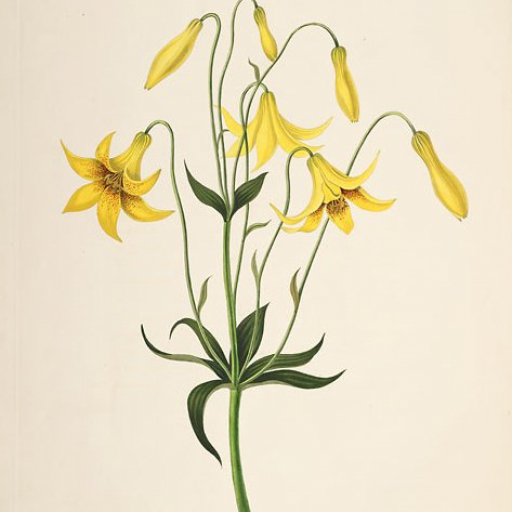
Plant Overview
Often called the Meadow Lily or the Wild Yellow Lily, Lilium canadense is the quintessential wildflower of the American Northeast. Imagine a tall, elegant wand topped with golden, nodding bells that seem to dance in the summer breeze. It was one of the first American lilies to be sent back to Europe in the 1600s, where it enchanted royal gardeners with its graceful, downward-facing blooms and statuesque height.
🔍 How to Identify
- 🔔 The Flowers: Large, 2-3 inch bell-shaped flowers that hang downward (pendulous). The petals curve outward gracefully but do not curl back completely like the "Turk’s Cap" variety.
- 🐆 The Interior: Usually bright yellow to deep reddish-orange, the inside of the bell is heavily dusted with dark purple or chocolate-colored spots that act as nectar guides for pollinators.
- 🌿 The Foliage: Look for "whorled" leaves. Instead of growing randomly, the lance-shaped leaves grow in neat circles (whorls) around the stem at regular intervals, looking like green starbursts.
🏡 In Your Garden
- 💧 Moisture Lovers: Unlike many common garden lilies that prefer well-drained pots, the Canada Lily thrives in moist, slightly acidic environments. It is a perfect candidate for rain gardens or the edges of a backyard pond where the soil stays consistently damp.
- ⏳ The Long Game: If you are planting these from seed, you’ll need the virtue of patience. They are slow growers and can take anywhere from 5 to 7 years to produce their first magnificent bloom. Because of this, they are often considered a "heritage" plant in a permanent garden bed.
⚠️ Safety & Toxicity
- 🐈 CRITICAL WARNING: This plant is lethal to cats. Every part of the plant—the petals, the leaves, and even the pollen—can cause total kidney failure in felines. Even drinking the water from a vase containing these lilies can be fatal to a cat.
- 👶 Human Safety: While not considered highly toxic to humans or dogs, ingesting large amounts of the raw bulb can cause stomach upset. Always keep an eye on curious toddlers around the bright flowers.
✨ Fun Fact
🏹 Ancient Nutrition: Native American tribes, including the Iroquois, historically harvested the starchy bulbs of the Canada Lily. When cooked, the bulbs were said to have a flavor profile similar to a spicy, peppery potato and were often used to thicken corn-based soups.

Detailed Care Instructions
| Lighting | Full Sun |
To grow Lilium Canadense plants, also known as Canada lilies, you can follow these steps:
- Choosing a location: Canada lilies prefer partial shade to full sun, so select a location in your garden that receives at least 6 hours of sunlight per day. Ensure the soil is well-drained, as excessive moisture can lead to root rot.
- Soil preparation: Prepare the soil by removing any weeds, rocks, or debris. Canada lilies prefer slightly acidic to neutral soil, with a pH range of 5.5 to 7.0. Incorporate organic matter like compost or well-rotted manure to improve soil fertility and drainage.
- Planting: Plant the lily bulbs in the spring or fall. Dig a hole that is about 2-3 times the depth of the bulb and place the bulb in the hole with the pointed end facing upwards. Space the bulbs around 12 inches apart.
- Watering: Water the newly planted bulbs thoroughly after planting, ensuring the soil is moist but not waterlogged. Water regularly to keep the soil evenly moist during the growing season.
- Mulching: Apply a layer of organic mulch, such as wood chips or straw, around the bulbs to help retain moisture, suppress weed growth, and insulate the soil.
- Fertilizing: Fertilize the plants with a balanced, slow-release fertilizer once or twice during the growing season. Follow the instructions on the fertilizer packaging for rates and application methods.
- Pruning: Remove the faded flowers by cutting them off near the base, as this will prevent the plant from putting energy into seed production. Leave the stalks and foliage intact until they turn yellow and die back naturally. This allows the bulbs to store energy for future growth.
- Overwintering: Canada lilies are hardy perennials and can withstand freezing temperatures. Mulching with a layer of straw or leaves can help protect the bulbs during winter. Remove any excess mulch in the spring.
- Division: Over time, Canada lilies may become overcrowded. Divide the bulbs in early fall when they are dormant (after the foliage has died back). Carefully dig up the bulbs, separate the offsets, and replant them at the desired spacing.
- Pests and diseases: Monitor the plants for common pests like aphids or lily beetles. Treat infestations promptly using organic insecticidal soap or other appropriate methods. Watch out for fungal diseases like botrytis or gray mold; ensure good air circulation and avoid overhead watering to reduce the risk.
By following these steps and providing proper care, your Lilium Canadense plants can thrive and grow beautifully in your garden.

Place in a bright room that is sun drenched almost all day. Or directly in a south-facing window.

When watering the Lilium Canadense plant, it is important to provide adequate hydration while taking into consideration its specific water needs. Begin by ensuring that the plant is potted in a well-draining soil mix, as excessive water retention can lead to root rot.
To determine when to water, monitor the top inch of soil and water once it feels moderately dry to the touch. It is essential not to let the soil fully dry out, as this can negatively impact the plant's overall health. However, overwatering should also be avoided, as it can cause root suffocation and other problems.
When applying water, use a gentle, steady stream and aim to moisten the soil evenly throughout the pot. Avoid excessive splashing or pouring of water over the leaves, as this can increase the risk of developing fungal diseases.
Consider using room temperature water, as extreme temperature variations may shock the plant. It is often recommended to use distilled or filtered water to prevent the accumulation of mineral salts in the soil, which can harm the plant over time. However, if this is not readily available, tap water can be used after leaving it to stand for 24 hours to allow any chlorine to dissipate.
Take note of the environmental conditions that may affect the plant's water requirements. During hot summer months or periods of high sunlight, the Lilium Canadense plant may require more frequent watering. On the other hand, in cooler seasons or lower light conditions, the watering frequency should be adjusted accordingly to prevent overwatering.
Regularly inspect the plant for any signs of water stress or excessive moisture, such as wilting or yellowing leaves, mold growth, or a foul odor from the soil. These indicators can help in adjusting the watering schedule and preventing potential issues.
Remember, each individual Lilium Canadense plant may have slightly different water requirements, so it is important to observe and adjust accordingly based on its specific needs and environmental conditions.
- Choose a well-draining soil mixture with a pH between 6 and 7 for your Lilium Canadense plant.
- Ensure that the soil is moist before applying fertilizer.
- Use a balanced, slow-release fertilizer with an NPK ratio of 10-10-10 or similar.
- Apply the fertilizer according to the package instructions or at a rate of approximately 1 tablespoon per square foot of planting area.
- Spread the fertilizer evenly over the soil surface around the base of the plant, avoiding direct contact with the stems or foliage.
- Gently work the fertilizer into the top layer of soil using a hand trowel or rake.
- Water the plant thoroughly after fertilizing to help the nutrients reach the roots.
- Repeat the fertilization process every four to six weeks during the growing season, usually from spring to early autumn.
- Be cautious not to over-fertilize, as this can lead to excessive growth at the expense of flower production.
- Monitor the plant's response to the fertilizer and adjust the frequency or dosage as needed to maintain healthy growth and blooms.
Lilium canadense is a species of flowering plant that has specific soil requirements for optimal growth and development. It thrives in well-draining soils that are rich in organic matter and moisture-retentive.
The soil should be slightly acidic to neutral, with a pH level ranging from 5.5 to 7.0. This range ensures that essential nutrients are readily available to the plant. Incorporating organic matter such as compost or well-rotted manure into the soil improves its fertility and drainage, creating a favorable growing environment for the Lilium canadense.
It is recommended to avoid heavy clay soils, as they tend to retain excessive moisture and can lead to root rot. Similarly, sandy soils should be amended with organic matter to enhance their water-holding capacity and nutrient content.
Providing a well-drained growing medium is crucial for Lilium canadense. Excessive moisture around the roots can cause rotting or promote fungal diseases. Therefore, it is advisable to ensure proper drainage by adding coarse materials such as perlite or sand to the soil mix.
In terms of texture, a loamy soil is preferred as it strikes a balance between water retention and drainage. Loam soils are composed of a mixture of clay, sand, and silt, providing a great foundation for healthy root growth.
Additionally, it is essential to consider the location of the planting site. Lilium canadense prefers partial shade to full sun exposure. While it can tolerate some shade, providing at least six hours of sunlight daily will support better flowering and overall plant vigor.
In summary, Lilium canadense thrives in a slightly acidic to neutral, well-draining soil that is rich in organic matter. A loamy soil texture, amended with organic compost or manure, ensures proper moisture retention and optimal nutrient availability. Avoid heavy clay soils and provide adequate sunlight for the best results when growing Lilium canadense.
To propagate Lilium Canadense, you can follow these steps:
- Choose a healthy mature plant: Select a well-established Lilium Canadense plant that is free from diseases and pests. The plant should have a strong root system and vibrant foliage.
- Timing: The best time to propagate Lilium Canadense is in the fall, just before the plant goes dormant. This is typically between August and October, depending on your specific climate.
- Prepare the soil: Prepare a suitable location in your garden or a pot with well-drained soil rich in organic matter. Lilium Canadense prefers slightly acidic soil, pH level around 6.0 to 6.5.
- Digging up the bulbs: Carefully dig around the base of the plant, ensuring you don't damage the bulbs. Gently lift the bulbs out of the ground or pot.
- Dividing the bulbs: Separate the bulbs by carefully pulling them apart, ensuring that each division has at least one healthy shoot and a portion of the root system attached. You may need to use a knife to carefully separate stubborn bulbs.
- Preparing the bulbs for planting: Remove any damaged or dead parts from the bulbs, but make sure to leave the scales intact. You can also dust the bulbs with a fungicide to prevent any future fungal diseases.
- Planting the bulbs: Dig holes in the prepared soil or pot, ensuring they are deep enough to accommodate the bulbs without crowding them. Place each bulb in a hole, ensuring proper spacing (typically, 6-8 inches apart). Cover the bulbs with soil, gently firming it down.
- Watering and care: After planting, water the bulbs thoroughly to settle the soil and provide enough moisture. Keep the soil consistently moist, but not waterlogged, throughout the growing season. Mulching around the newly planted bulbs can help retain moisture and suppress weeds.
- Monitoring and maintenance: Keep an eye on your newly propagated plants for any signs of stress, diseases, or pests. Provide adequate sunlight, preferably 6-8 hours of direct sunlight per day. Remove any weeds that may compete with the bulbs for nutrients and water.
- Overwintering: Lilium Canadense is winter hardy and will go through a natural dormant period during the cold months. Insulate the bulbs with a layer of mulch or straw to protect them from extreme temperature fluctuations and frost damage.
By following these steps, you can successfully propagate Lilium Canadense and enjoy its beautiful blooms in your garden.








