Plant Overview
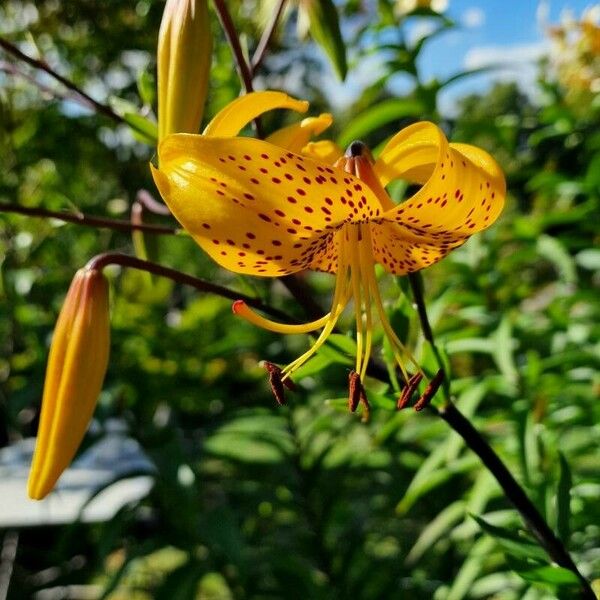
Often called the Leichtlin's Lily or the Yellow Tiger Lily, this Japanese native is a masterpiece of natural symmetry. Unlike the common orange tiger lilies seen in many roadside ditches, this variety offers a sophisticated palette of citron-yellow and deep chocolate speckles. It is a favorite among collectors for its elegant "Turk’s cap" shape and its ability to dance gracefully on slender, dark stems in a summer breeze.
🔍 How to Identify
- 🌼 The Blooms: Features distinct, nodding flowers with petals that strongly reflex (curve backward) toward the stem, creating a crown-like appearance.
- 🎨 Coloration: Each bloom is a vivid lemon-yellow, heavily decorated with small, dark purple-maroon spots that look like hand-painted freckles.
- 🌿 Stem & Foliage: The stems are surprisingly dark, almost purplish-black, providing a sharp contrast to the bright flowers. The leaves are narrow, lance-shaped, and whorled around the stem.
🏡 In Your Garden
- 🦶 Cool Feet, Warm Head: This lily follows the classic rule of "feet in the shade, head in the sun." It thrives when the bulb and roots are kept cool by groundcover or mulch, while the flowers reach upward for bright, filtered sunlight.
- 💧 Drainage is Key: While it enjoys consistent moisture, it is highly susceptible to bulb rot. It prefers "rich but gritty" soil—think of a mountain slope where water moves quickly but the soil remains nutrient-heavy.
- 🦋 Pollinator Magnet: Because the flowers hang downward, they are perfectly positioned for hovering insects and butterflies to access nectar while getting dusted with bright orange pollen.
⚠️ Safety & Toxicity
- 🐱 High Alert for Cats: Like all true lilies (Lilium genus), this plant is deadly toxic to cats. Even a small amount of pollen licked off their fur or a sip of water from a vase can cause fatal kidney failure.
- 👶 Humans & Dogs: Generally considered less toxic to humans and dogs, but ingestion can still cause stomach upset or vomiting. The pollen can also permanently stain skin and clothing.
✨ Fun Fact
This lily was named in honor of Max Leichtlin, a famous 19th-century German botanist who was known for his incredible private garden containing rare bulbs from all over the world. Interestingly, while the yellow form is most famous today, in its wild Japanese mountain habitat, a rare red-flowered version can sometimes be found!

Detailed Care Instructions
To grow Lilium Leichtlinii, follow these steps:
- Choose a suitable location: Lilium Leichtlinii plants require a sunny spot with well-draining soil. Ensure the site receives at least 6 hours of direct sunlight per day.
- Prepare the soil: Loosen the soil and remove any weeds or debris. Add organic matter, such as compost, to improve soil fertility and drainage.
- Plant the bulbs: Dig holes about 6-8 inches deep and space them around 8-12 inches apart. Place the bulbs with the pointed end upwards and cover them with soil, gently firming it down.
- Watering: Water the bulbs thoroughly after planting. Keep the soil evenly moist but not waterlogged throughout the growing season. Avoid overwatering, as it may cause the bulbs to rot.
- Fertilizing: Apply a balanced fertilizer, such as a 10-10-10 or a bulb fertilizer, before and after blooming. Follow the manufacturer's instructions for the appropriate amount and frequency.
- Mulching: Mulch around the base of the plants with organic mulch, like straw or wood chips, to retain moisture, suppress weed growth, and regulate soil temperature.
- Staking: As the plant grows taller, it may require support. Stake the stems using bamboo stakes or other support structures to prevent bending or breaking.
- Pruning: Remove any dead or yellowing leaves or flowers to maintain plant health and appearance. After blooming, let the foliage die back naturally before cutting it back to ground level.
- Overwintering: Lilium Leichtlinii is a hardy plant, but in cold climates, apply a thick layer of mulch over the bulbs to protect them from freezing temperatures.
- Pests and diseases: Keep an eye out for common lily pests like aphids, slugs, or red lily beetles. Treat any infestations promptly with suitable insecticides or organic pest-control methods. Monitor the plants for signs of diseases, such as fungal infections, and promptly remove and destroy affected plant parts.
By following these guidelines, you can successfully grow Lilium Leichtlinii plants and enjoy their beautiful blooms in your garden.

Place in a bright room that is sun drenched almost all day. Or directly in a south-facing window.

To properly water Lilium Leichtlinii, it is important to understand the specific needs of the plant. Here are some guidelines:
1. Soil moisture: Lilium Leichtlinii requires consistently moist soil, but not waterlogged conditions. The soil should be well-draining to prevent root rot.
2. Watering frequency: Water the plant regularly, aiming for a balance between keeping the soil moist and letting it dry out slightly between waterings. Typically, watering every 3-4 days during the growing season is recommended.
3. Watering method: Use a watering can or a hose with a gentle spray nozzle to water the plant. Avoid overwatering or creating excessive splashing that may damage the leaves or cause soil erosion.
4. Amount of water: Provide enough water to thoroughly saturate the root zone. The water should penetrate deeply into the soil to encourage the development of a robust root system. However, avoid excessive watering to the point where the soil becomes waterlogged.
5. Temperature considerations: Adjust the watering frequency depending on temperature and weather conditions. During hot and dry periods, the plant may require more frequent watering, while during cool or rainy spells, you can reduce the frequency.
6. Morning watering: It is generally best to water Lilium Leichtlinii in the morning. This allows the foliage to dry off during the day, preventing the growth of fungi and other diseases that thrive in damp conditions.
7. Mulching: Apply a layer of organic mulch around the base of the plant to help retain soil moisture and regulate temperature. This will also protect the roots from extreme weather conditions.
8. Check soil moisture: Before watering, check the moisture level of the soil by inserting your finger or a gardening tool into the soil. If it feels slightly dry about an inch below the surface, it is time to water the plant.
Remember that these are general watering guidelines, and the specific watering needs of Lilium Leichtlinii may vary depending on factors such as climate, soil type, and plant maturity. Observing the plant's response to watering and adjusting accordingly will help ensure its healthy growth.
To ensure the healthy growth and blooming of your Lilium Leichtlinii plant, here are fertilizing instructions:
- Choose a balanced, slow-release fertilizer with equal amounts of nitrogen (N), phosphorus (P), and potassium (K), such as a 10-10-10 or 20-20-20 ratio fertilizer.
- Start fertilizing the Lilium Leichtlinii plant in early spring when new growth begins to emerge.
- Dilute the fertilizer according to the package instructions. usually, a ratio of 1 tablespoon of fertilizer to 1 gallon of water is sufficient.
- Apply the diluted fertilizer around the base of the plant, avoiding direct contact with the foliage or flowers.
- Water the plant thoroughly after fertilizing to help the roots absorb the nutrients.
- Repeat the fertilizing process every four to six weeks throughout the growing season, from spring through early fall.
- Be cautious not to over-fertilize, as this can lead to nutrient burn or damage to the plant.
- In late fall, stop fertilizing as the plant enters its dormant period.
- Remove any visible fertilizer residue from the leaves or petals to prevent potential damage.
- Monitor the plant's response to fertilization and adjust the frequency or amount accordingly based on its overall health and growth.
Remember, these instructions are specific to the Lilium Leichtlinii plant. If you have other plants, specific fertilizing requirements may vary.
Lilium leichtlinii is a beautiful flowering plant that requires a specific type of soil to thrive. The ideal soil for this plant should have specific characteristics that mimic its natural habitat. Here are some details about the soil required for Lilium leichtlinii:
- Texture: Lilium leichtlinii prefers well-draining soil that is rich in organic matter. It thrives in loamy or sandy soil types. The texture should allow excess water to drain away quickly to prevent waterlogging, which can lead to root rot.
- pH Level: The recommended pH range for Lilium leichtlinii is slightly acidic to neutral, ideally between 6.0 and 7.0. This range provides optimal nutrient availability for the plant.
- Organic Matter: Incorporating organic matter into the soil is crucial for the successful growth of Lilium leichtlinii. Organic matter improves soil fertility, structure, and moisture retention. It can be added in the form of compost, well-rotted manure, or leaf mold.
- Moisture Retention: Lilium leichtlinii requires soil that is able to hold adequate moisture without becoming waterlogged. However, it's important to strike a balance, as excessive moisture can lead to root and bulb rot. The soil should be well-draining yet able to retain some moisture to sustain the plant's growth.
- Nutrient Availability: The soil should be nutrient-rich, offering all the essential macronutrients (nitrogen, phosphorus, and potassium) as well as micronutrients. Regularly adding organic matter and supplementing with a balanced fertilizer can help maintain the required nutrient levels.
It's important to note that Lilium leichtlinii is a species plant, and while the above characteristics define its preferred soil conditions, specific regional variations may exist.
To propagate Lilium Leichtlinii plants, follow these steps:
- Select a healthy and mature Lilium Leichtlinii plant to use as the parent plant for propagation.
- Choose the ideal season for propagation, which is typically spring or early summer.
- Prepare a suitable potting mix by combining equal parts of well-draining soil, perlite, and organic matter to provide the necessary nutrients for the new plants.
- Fill a small pot or seed tray with the potting mix, leaving some space at the top for watering.
- Gently remove the parent plant from its pot by loosening the soil around the roots and carefully lifting it out.
- Inspect the parent plant's rhizomes (underground stems) and select a healthy, disease-free rhizome for propagation.
- Using a clean and sharp knife, divide the chosen rhizome into multiple sections. Each section should have at least one bud.
- Dust the cut surfaces of the rhizome sections with a fungicide powder to prevent any potential infections.
- Place each rhizome section on the prepared potting mix in the new pots or seed trays. Make sure to leave enough space between each section for proper growth.
- Gently press the rhizome sections into the potting mix, ensuring that the top bud is slightly exposed.
- Water the newly potted rhizome sections thoroughly, making sure the potting mix is evenly moist.
- Place the pots or seed trays in a warm and sunny location, but protect them from direct sunlight to prevent dehydration.
- Keep the potting mix consistently moist but not waterlogged. Check the moisture level regularly and adjust watering accordingly.
- Over the next few weeks, the rhizome sections will develop roots and start producing new shoots.
- Once the new shoots reach a height of 3-4 inches, carefully transplant each individual section into separate pots with a well-draining soil mixture.
- Continue to provide adequate light, water, and nutrients to the newly propagated Lilium Leichtlinii plants, allowing them to establish strong roots and grow into healthy plants.
- After a year or two, when the plants have grown well, they can be transplanted to their permanent location in the garden or larger containers.








