Plant Overview
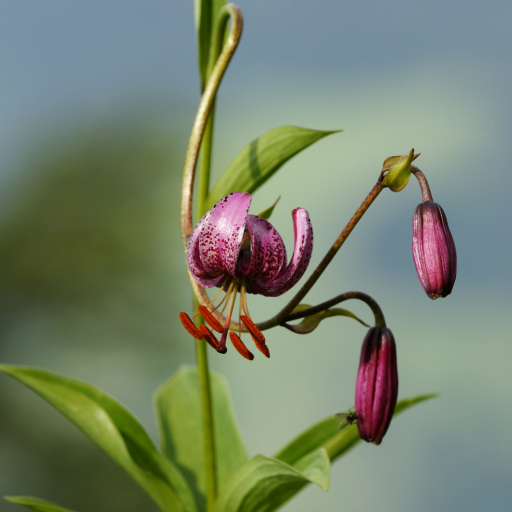
Known affectionately as the Turk's Cap Lily, Lilium martagon is a woodland aristocrat that brings an air of ancient mystery to any garden. Native to a vast stretch from central Europe to northern Asia, this plant has been a staple of folklore for centuries; medieval alchemists once believed its golden bulbs could turn lead into gold, while warriors tucked them into their armor for protection. With its distinctive "turban-shaped" blooms, it is widely considered one of the most elegant and resilient of all wild lilies.
🔍 How to Identify
- 🌸 The Bloom Shape: Its flowers are famous for petals that reflex (curl backward) so tightly they almost touch the stem, creating a shape reminiscent of a traditional Turkish hat.
- 🍃 Whorled Foliage: Unlike many lilies that have alternating leaves, the Martagon features leaves arranged in distinct circles or "whorls" around the stem, giving the plant a structured, architectural look even before it flowers.
- 🎨 Speckled Patterns: The petals—usually in shades of soft pink, deep purple, or white—are often decorated with intricate, dark maroon spots that look like delicate ink splatters.
🏡 In Your Garden
- 🌳 The Shade Exception: While most lilies crave the scorching sun, the Martagon is a woodland creature at heart. It thrives in dappled shade and is the perfect candidate for those "difficult" spots under deciduous trees where other flowers struggle.
- ⏳ Patience is Key: This lily is known for being a bit "grumpy" after planting. It often spends its first year settling its deep root system and may not bloom until its second or third season. However, once established, it is incredibly long-lived and can thrive for decades without being moved.
- 💎 Soil Preferences: It has a unique fondness for alkaline (lime-rich) soils, though it is quite adaptable as long as the drainage is excellent. It hates "wet feet," which can cause the bulb to rot during the winter dormancy.
⚠️ Safety & Toxicity
- 🐱 Severe Danger to Cats: Like all true lilies, Lilium martagon is extremely toxic to cats. Even a small amount of pollen licked off their fur or water from a vase can cause fatal kidney failure.
- 👶 Human & Dog Safety: While not as deadly to humans or dogs as it is to felines, ingesting the bulbs or flowers can cause stomach upset, nausea, and vomiting. It is best kept out of reach of curious toddlers and pets.
✨ Fun Fact
The name "Martagon" is believed to be derived from the Ottoman Turkish word martagan, a type of turban adopted by Sultan Mehmed I. This reflects the period of the 16th century when many "exotic" plants were being traded from the Ottoman Empire into European botanical gardens.

Detailed Care Instructions
| Humidity | Normal |
| Lighting | Part Sun |
| Toxicity | Poisonous |
| Difficulty | Medium |
| Hibernation | Cold Period |
| Hardiness Zones | 3 - 9 |
To grow Lilium Martagon (Turk's cap lily) successfully, follow these steps:
- Choose the right location: Turf's cap lilies prefer a partially shaded spot that receives a few hours of sunlight, especially in the morning. They also need well-draining soil with a slightly acidic pH level.
- Prepare the soil: Before planting, amend the soil by adding organic matter such as compost or well-rotted manure. This will improve drainage and nutrient content.
- Planting: Plant the bulbs or rhizomes in the fall, around 6-8 inches deep and 8-10 inches apart. Space each plant well to allow airflow and help prevent diseases. Make sure the pointed ends of the bulbs are facing upwards.
- Watering: Keep the soil evenly moist, but not overly saturated. Avoid overwatering, as it can cause bulb rot. Watering deeply once a week is usually sufficient, but adjust based on the weather conditions.
- Mulching: Apply a layer of organic mulch around the base of the plants to conserve moisture, suppress weeds, and regulate soil temperature.
- Fertilizing: Feed the plants with a slow-release balanced fertilizer in early spring and again after they have finished flowering. Follow the manufacturer's instructions for the appropriate dosage.
- Staking: As Lilium Martagon plants grow tall (up to 4 feet), they may require staking to prevent them from falling over or being damaged by strong winds.
- Pruning: Deadhead the faded flowers to redirect energy back into the bulbs. Once the foliage turns brown and dies back naturally in late summer or fall, cut it back to ground level.
- Protecting against pests and diseases: Turk's cap lilies are generally resistant to common pests and diseases. However, keeping the area clean and free from debris can help minimize problems. If necessary, treat any pest or disease issues with appropriate organic or chemical solutions.
- Dividing: Every 3-4 years, dig up the bulbs in the fall or early spring, divide them, and replant to maintain plant vigour and prevent overcrowding.
By following these steps, you can enjoy the beauty of Lilium Martagon in your garden.

Place in a window with dappled sun or a spot in the middle of a room. Or directly in a window facing west or east.

Lilium Martagon plants prefer to be watered deeply and consistently, but not excessively. It is recommended to water them around once every week, or whenever the top inch of soil becomes dry to the touch. When watering, be sure to avoid wetting the foliage or flowers, as this can lead to fungal diseases. Instead, aim for the soil around the plant's base. To prevent the soil from becoming waterlogged, ensure that the pot or soil has proper drainage.
To fertilize this plant, wait until it has finished blooming. Then, apply a balanced fertilizer with equal amounts of nitrogen, phosphorus, and potassium. You can also add a small amount of liquid fertilizer diluted in water every two weeks during the growing season. Be sure to water the plant thoroughly after fertilizing. Avoid getting any fertilizer on the leaves or flowers.
The ideal soil for the Lilium Martagon plant is a well-draining, humus-rich soil with a neutral to slightly acidic pH level. It should also be rich in nutrients, particularly nitrogen, phosphorus, and potassium, to support healthy growth and blooming. The soil should be fertile and loamy, with a good balance of sand, clay, and organic matter. It is important to avoid heavy clay soils or waterlogged soils, as this can lead to root rot and other diseases. Additionally, adding mulch or organic matter to the soil can help to retain moisture and improve soil health.
Lilium Martagon is a plant that can be propagated by using several different methods. One method is through bulb division, where the plant's bulb is divided into smaller sections and then replanted. Another method is by taking stem cuttings, which involves cutting a section of stem and then planting it into soil or water until it develops roots and can be transplanted into the ground. Lastly, Lilium Martagon can also be propagated through seed propagation, where its seeds are collected and then planted in soil to germinate. Regardless of the method used, Lilium Martagon requires consistent watering and protection from extreme weather conditions to ensure healthy growth and successful propagation.
Common pests of the martagon lily include Spider mites, aphids, thrips, larvae. Make a habit of checking your martagon lily frequently for pests so that any infestations can be caught and managed early.








