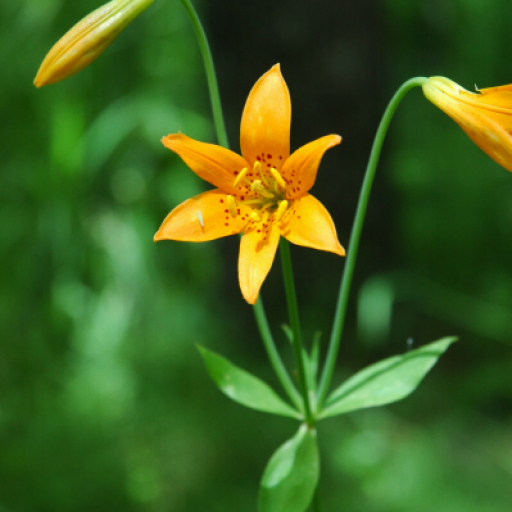
Plant Overview
The Lilium parvum, affectionately known as the Sierra Tiger Lily, is a delicate mountaineer that graces the moist, high-altitude meadows of the Sierra Nevada. Unlike its larger, more boisterous lily cousins, this species is prized for its petite, bell-shaped blooms that look like glowing lanterns hanging in the grass. It is a true gem for native plant enthusiasts who want to bring a piece of the cool, crisp mountain air into their landscape.
🔍 How to Identify
- 🌸 The Bloom: Small, funnel-shaped flowers (about 1–1.5 inches) that transition from a sunny yellow-orange throat to vibrant reddish-orange tips.
- 🐆 The Pattern: The interior of the petals is "freckled" with dark maroon spots, a characteristic that earned it the "Tiger" nickname.
- 🍃 The Foliage: Dark green, lance-shaped leaves are arranged in elegant "whorls" (circles) around the stem, giving the plant a structured, architectural look even before it flowers.
🏡 In Your Garden
- 💧 Moisture Seeker: In the wild, this lily grows near snow-melt streams and boggy seeps. It loves having "cool feet," meaning it requires consistently moist soil but demands excellent drainage to prevent the bulb from rotting.
- 🏔️ Climate Sensitivity: Because it is an alpine native, it struggles in sweltering heat. If you live in a warmer zone, plant it in a spot that receives morning sun and afternoon shade, and use a thick layer of mulch to keep the roots chilled.
⚠️ Safety & Toxicity
- 🐱 Fatal for Felines: Like all members of the Lilium genus, this plant is deadly to cats. Ingesting even a tiny amount of pollen or water from a vase can lead to rapid kidney failure.
- 👶 General Caution: The plant is generally considered non-toxic to humans and dogs, though the bulbs can cause gastrointestinal upset if eaten in large quantities.
✨ Fun Fact
🌸 The Hummingbird's Lantern: Because the Lilium parvum flowers often face slightly downward or horizontally, they are perfectly designed for hummingbirds. These tiny birds hover beneath the "lantern" to sip nectar, getting a dusting of pollen on their heads in the process!

Detailed Care Instructions
| Humidity | Normal |
| Lighting | Part Sun |
| Toxicity | Poisonous |
| Difficulty | Medium |
| Hibernation | Cold Period |
| Hardiness Zones | 3 - 9 |
To successfully grow Lilium Parvum plant, follow these steps:
- Choosing a location: Select a well-draining area with full sunlight or partial shade. The soil should be rich in organic matter.
- Planting bulbs: Plant the bulbs in the fall, as they require a cold period for sprouting. Dig a hole about 6-8 inches deep and place the bulb in the hole with the pointed side up. Space the bulbs about 6-8 inches apart.
- Soil preparation: Before planting, prepare the soil by adding compost or aged manure to improve its quality. Ensure the soil drains well, as Lilium Parvum prefers moist but not waterlogged soil.
- Watering: After planting, water the bulbs thoroughly and keep the soil consistently moist, but not overly saturated. Increase watering during hot and dry periods.
- Mulching: Apply a layer of organic mulch around the plants to retain moisture, suppress weed growth, and protect the bulbs from temperature fluctuations.
- Fertilizing: Lilium Parvum plants benefit from regular feeding. Apply a balanced fertilizer, such as a slow-release granular fertilizer, in early spring and again after flowering. Follow the packaging instructions for dosage.
- Staking and support: As the plants grow, they may require support to prevent them from drooping or breaking under their weight. Place garden stakes or use a support grid around the plants, being careful not to damage the bulbs or roots.
- Pests and diseases: Monitor the plants regularly for any signs of pests or diseases such as aphids, lily beetles, or fungal infections. Treat as necessary with organic or chemical controls.
- Deadheading and pruning: After flowering, remove the spent flowers by cutting them back to the main stem. This helps redirect energy into bulb growth. Avoid cutting back the foliage until it turns brown and dies naturally.
- Winter care: Lilium Parvum is hardy, but if you live in colder regions, you may want to add a layer of mulch or straw in late fall as a protective layer for the bulbs.
By following these steps, you can successfully grow Lilium Parvum plants and enjoy their beautiful blooms in your garden.

Place in a bright room that is sun drenched almost all day. Or directly in a south-facing window.

To properly water the plant, it is recommended to use a watering can or hose and gently pour water at the base of the stem and roots. It is important to avoid getting water on the leaves as this can lead to fungal diseases. The plant should be watered regularly, but be careful not to overwater as this can lead to root rot. It is also helpful to ensure the soil is well-draining to prevent water from sitting around the roots.
For Lilium Parvum, it is recommended to fertilize the plant once a month during the growing season (spring-summer) using a balanced fertilizer. Dilute the fertilizer with water according to the manufacturer's instructions and apply to the soil around the plant, avoiding contact with the leaves and stem. Be careful not to over-fertilize, as this could damage the plant. After fertilizing, water the plant thoroughly to help the nutrients penetrate the soil and reach the roots.
The Lilium Parvum plant prefers a well-draining soil that is humus-rich and slightly acidic. The soil should have a pH range of 5.5 to 6.5. It is recommended to use a soil mix composed of a combination of organic matter such as peat moss, leaf mold, and well-aged compost. The soil mix must also have some coarse materials for drainage. Adding perlite, sand, or small rocks to the soil mix can help improve drainage. It is essential to avoid using heavy clay soils and soils that hold water for long periods, as these conditions can lead to root rot.
Lilium Parvum plant can be propagated through several methods, including division, bulb scaling, and seed propagation.
To propagate through division, the plant should be carefully dug up and separated into smaller sections, ensuring that each section has roots attached. These smaller sections can then be replanted into new pots or directly into the garden.
Bulb scaling involves removing scales from the parent bulb, treating them with a fungicide, and planting them in a sterile medium until they develop into new bulbs. This method can produce many new plants from a single parent bulb.
Seed propagation involves collecting mature seed pods from the plant, removing the seeds, and planting them in a seed tray or directly into the garden. The seeds should be covered lightly with soil and kept moist until they germinate.
Regardless of the propagation method chosen, it is important to provide the plant with proper care and conditions, including well-draining soil, adequate sunlight, and regular watering.








