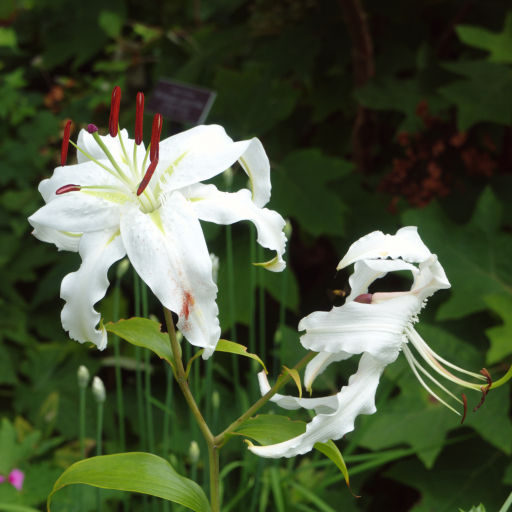
Plant Overview
Often called the "Jewel of the Orient," Lilium speciosum is one of the most celebrated wild lilies in the world. Known for its dramatic, swept-back petals and intoxicating evening fragrance, this late-summer bloomer brings a touch of exotic elegance to temperate gardens. It has long been a favorite in Japanese art and folklore, symbolizing a refined and resilient beauty.
🔍 How to Identify
- 🌸 The "Turk’s Cap" Bloom: The flowers are "recurved," meaning the petals curl backward toward the stem, exposing long, graceful stamens that hang like chandeliers.
- 🍓 Crimson Freckles: The inner petals are icy white or pale pink, heavily dusted with raised, ruby-red spots and tiny, "toothy" bumps called papillae.
- 🌿 Sturdy Foliage: Unlike some leggy lilies, this species has broad, lance-shaped leaves that grow in a dense, lush spiral up the stem, providing a deep green backdrop for the bright flowers.
🏡 In Your Garden
- 🦶 "Cool Feet, Warm Head": This lily thrives when its roots are kept cool and shaded by mulch or low-growing groundcovers, while its flowers reach up toward the bright morning sun.
- 💧 Drainage is Vital: Native to rocky hillsides, it is highly sensitive to "wet feet." Plant it in loose, slightly acidic soil to prevent the bulbs from rotting during the dormant winter months.
- ⏳ Late Season Star: While most lilies fade by mid-summer, Lilium speciosum waits until August or September to bloom, acting as a grand finale for the gardening season.
⚠️ Safety & Toxicity
- 🐱 CRITICAL WARNING: This plant is lethal to cats. Every part of the lily—including the pollen, leaves, and even the water in a vase—can cause rapid, fatal kidney failure in felines.
- 👶 Human Safety: While not usually fatal to humans or dogs, ingesting the bulbs or flowers can cause nausea, vomiting, and skin irritation in sensitive individuals. Keep out of reach of curious toddlers.
✨ Fun Fact
The Lilium speciosum is a famous "parent" plant! It was used by breeders to create the world-renowned 'Stargazer' lily, passing down its iconic spots and heavenly perfume to one of the most popular floral varieties in history.

Detailed Care Instructions
To grow Lilium speciosum plants, also known as the Lily of Japan, here are several steps you can follow:
- Planting: Choose a suitable location that receives full to partial sun and has well-draining soil. Spring or fall is the best time to plant the bulbs. Dig a hole about 6-8 inches deep and place the bulb with the pointed end facing up. Space the bulbs around 8-12 inches apart.
- Soil preparation: Prepare the soil by adding organic matter like compost or well-rotted manure to improve drainage and fertility. The soil pH should be slightly acidic to neutral (around 6 to 7).
- Watering: Lilium speciosum plants require regular watering, especially during dry spells. Keep the soil moist but not waterlogged. Mulching around the plants can help retain moisture.
- Fertilization: Apply a balanced fertilizer, such as a slow-release granular fertilizer, during the growing season. Follow the dosage instructions on the package. Additionally, top-dress with compost or organic matter in spring or fall.
- Pruning: After the lilies have finished flowering, you can remove the spent flowers to prevent seed set. However, leave the foliage intact as it helps with energy storage for next year's growth. Trim the foliage only when it turns yellow and starts to die back.
- Pest and disease control: Keep an eye out for pests like aphids, lily beetles, or slugs, and take appropriate measures to control them. Lilium plants can also be susceptible to diseases like Botrytis, so ensure good air circulation around the plants and avoid overhead watering.
- Winter care: In regions with cold winters, protect the bulbs by adding a layer of mulch or straw over the planting area. This will insulate them from extreme temperatures. Remove the mulch in spring once the danger of frost has passed.
By following these steps, you can successfully grow Lilium speciosum plants and enjoy their beautiful blooms.

Place in a window with dappled sun or a spot in the middle of a room. Or directly in a window facing west or east.

Lilium Speciosum plant requires regular watering to maintain its health. It is essential to water the plant deeply at least once a week during its growing season. Once the soil is dry to the touch, it is an indication that it needs watering. While watering, make sure to water the soil around the plant's base and not the leaves or flowers as it can cause damage. Avoid overwatering as it can lead to root rot and eventually, the death of the plant. Additionally, it is best to water this plant in the early morning or late evening to minimize water evaporation and allow the plant adequate time to absorb the water.
To fertilize this plant, you can use a balanced, water-soluble fertilizer, such as a 10-10-10 formula. Apply it once a month during the growing season, from spring to early fall. Make sure to dilute the fertilizer according to the package instructions, and apply it to moist soil around the base of the plant. Avoid getting fertilizer on the leaves or flowers, as this can cause damage.
Lilium Speciosum plants do best in well-draining soil that is rich in nutrients. The soil should have a pH level between 5.5 and 6.5, which is slightly acidic. It is important to avoid using heavy clay soil or soil that is prone to waterlogging as this can lead to root rot.
The ideal soil for Lilium Speciosum plants should be a mix of organic matter, such as compost or leaf mold, and coarse sand or perlite. This ensures that the soil has good drainage while also providing the plant with the necessary nutrients.
When planting Lilium Speciosum, it is recommended to add a slow-release fertilizer to the soil. This will provide the plant with a steady source of nutrients over time, helping it to grow strong and healthy.
It is also important to water Lilium Speciosum plants regularly but not excessively. The soil should be kept moist but not waterlogged, as this can also lead to root rot. Mulching around the base of the plant can help to retain moisture in the soil, while also suppressing weed growth.
Overall, the key to growing healthy Lilium Speciosum plants is to ensure that they are planted in well-draining soil that is rich in nutrients, and that they receive adequate water and fertilization.
Lilium Speciosum is a flowering plant that can be propagated through a process known as bulb scaling. This method involves removing scales from the parent bulb and planting them individually to produce new plants.
To do this, start by selecting a healthy parent bulb that is free of any disease or damage. The bulb should also be mature and have several scales that can be removed.
Carefully remove the scales from the bulb using a clean, sharp knife. Each scale should have a small piece of basal plate attached to it. Place the scales in a plastic bag containing a mixture of equal parts of moist peat moss and perlite.
Seal the bag and store it in a cool, dark place for about three months. During this time, the scales will produce bulblets that can be planted individually in pots or directly in the ground.
To plant the bulblets, fill a container or planting hole with a well-draining soil mix. Press the bulblet gently into the soil with the basal plate facing downward and the pointed end facing upward. Cover the bulblet with soil, leaving only the tip exposed.
Water the soil until it is moist but not soaking wet, then place the container in a bright, cool location. The new plant will begin to grow within a few weeks, and should be watered regularly but not excessively.
With proper care, the new plant should thrive and produce beautiful flowers in the following growing season.








