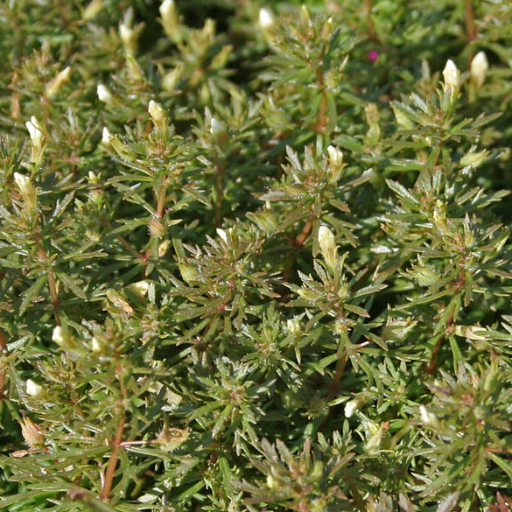
Plant Overview
Commonly known as "Ambulia" or "Asian Marshweed," this delicate-looking aquatic beauty is a superstar in the world of aquascaping. Originating from the wetlands of Southeast Asia, it is often called the "poor man’s Cabomba" because it offers the same ethereal, feathery look but is significantly easier to keep alive. In an aquarium, it acts as a high-speed oxygenator, creating lush, lime-green jungles that make any fish feel right at home.
🔍 How to Identify
- 🌿 Feathery Whorls: The leaves are finely divided into many segments, appearing like soft, vibrant green feathers arranged in circular patterns (whorls) around a central stem.
- 📏 Stretching Habit: In lower light, the gaps between these leaf whorls (internodes) get longer as the plant "reaches" for the surface, giving it a tall, elegant silhouette.
- 🌸 Emergent Flowers: If allowed to grow above the water surface, it transforms! The underwater feathery leaves give way to broader, tougher leaves and tiny, trumpet-shaped purple or white flowers.
🏡 In Your Garden (or Aquarium)
- ✂️ The Propagation King: This plant is a "stem plant," meaning you can create a whole new forest just by snipping the top off and pushing it into the sand or gravel. It develops roots almost overnight.
- 💡 Light Sensitivity: While it is a "low-tech" favorite, its color depends on the light. Under intense lighting, the tips of the plant can turn a stunning bronze or reddish hue, whereas in low light, it remains a bright "Granny Smith" apple green.
- 🌊 Water Polisher: Because it grows so fast, it is excellent at sucking up excess nitrates and phosphates from the water, acting as a natural filter that prevents algae outbreaks.
⚠️ Safety & Toxicity
- 🟢 Safe for Residents: This plant is completely non-toxic to fish, shrimp, snails, and curious household pets like cats or dogs who might take a sip from the tank.
- 🚫 Environmental Alert: WARNING. In many parts of the world, including several US states, Limnophila sessiliflora is classified as a prohibited noxious weed. It is so hardy that it can easily escape into local ponds and choke out native species. Always dispose of your trimmings in the trash or compost—never flush them or toss them into local waterways.
✨ Fun Fact
- In its native habitat, Limnophila sessiliflora is sometimes used in traditional medicine or even eaten as a potherb. However, in the hobby, it’s most famous for its "sleep" cycle; at night, the top leaves fold upward together to "close" for the evening, re-opening as soon as the light hits them in the morning!

Detailed Care Instructions
To grow Limnophila Sessiliflora (also known as Ambulia), you can follow these steps:
- Choose a suitable aquarium or pond: Limnophila Sessiliflora can be grown in either an aquarium or a pond. Ensure that the water parameters, including pH and temperature, are suitable for aquatic plants.
- Provide adequate lighting: This plant requires moderate to high lighting conditions, so make sure to provide appropriate lighting in your tank or pond. LED lights or fluorescent lights can be used.
- Planting: If you are growing Limnophila Sessiliflora in an aquarium, it can be planted directly into the substrate. Ensure that the substrate is rich in nutrients and has good water circulation. If you are growing it in a pond, you can either plant it directly into the soil at the bottom or use a pot filled with soil and place it in the water.
- Fertilization: Limnophila Sessiliflora benefits from regular fertilization. You can use liquid fertilizers specifically formulated for aquatic plants to provide essential nutrients.
- CO2 injection: Although not mandatory, injecting CO2 into the aquarium can promote the growth of Limnophila Sessiliflora. It is especially beneficial if you have high lighting.
- Water maintenance: Maintain proper water conditions by regularly testing and adjusting the parameters. Ensure that the water temperature is suitable and the nitrate and phosphate levels are not excessive.
- Pruning: Regular pruning is necessary to keep the plant healthy and encourage bushy growth. Trim the top part of the stem to promote lateral branching. You can also remove any yellow or decaying leaves.
- Propagation: Limnophila Sessiliflora can be easily propagated by cuttings. Simply cut a healthy stem with several leaves and plant it back into the substrate or soil. It will soon develop roots and start growing.
With proper care and maintenance, Limnophila Sessiliflora can grow rapidly and provide a beautiful addition to your aquarium or pond.

Place in a bright room that is sun drenched almost all day. Or directly in a south-facing window.

To properly water Limnophila sessiliflora plants, it is important to consider a few key factors. Here are some detailed instructions on watering this specific plant:
1. Observe the soil: Before watering, check the moisture level of the soil. Insert your finger about an inch into the soil, near the plant's base, to check if it feels dry. If the soil feels moist, it indicates that watering is not immediately required.
2. Watering frequency: Limnophila sessiliflora generally prefers slightly moist soil. However, it is imperative not to overwater. Watering every 7-10 days, or when the soil feels dry, is usually sufficient. Adjust the frequency of watering according to the plant's needs.
3. Watering technique: Aim to water the plant at its base, directly onto the soil. Use a watering can or a container with a narrow spout to precisely target the area around the plant's root system. This helps ensure that water reaches the plant's roots, promoting healthy growth.
4. Water volume: Pour water slowly onto the soil to allow it to penetrate deeply into the pot or the ground, without creating runoff or pooling. The volume of water needed depends on factors such as pot size, environmental conditions, and drainage capacity. Aim to moisten the soil thoroughly without causing waterlogging.
5. Evaporation control: If the plant is kept in an outdoor environment with high temperatures, consider watering early in the morning or late in the evening to minimize water loss due to evaporation. This way, the plant can absorb water more effectively.
6. Observation and adjustment: After watering, monitor the plant closely for signs of either overwatering or underwatering. Drooping leaves or wilting may indicate overwatering, while dry, crispy leaves might imply underwatering. Adjust the watering frequency accordingly to maintain a balance.
Remember, these guidelines provide a general understanding of how to water Limnophila sessiliflora plants. It is essential to assess the specific needs of your individual plant based on factors such as climate, humidity, and water retention capacity of the soil to ensure optimal care.
To fertilize the Limnophila Sessiliflora plant, follow these instructions:
- Choose a balanced liquid fertilizer specifically formulated for aquarium plants. Ensure that it contains essential nutrients like nitrogen, phosphorus, and potassium.
- Dilute the fertilizer according to the instructions provided on the packaging. Typically, a ratio of 1 to 2 milliliters per 10 gallons of water is recommended.
- Start by turning off any airstones or water pumps to reduce disruption during the fertilization process.
- Carefully pour the diluted fertilizer into the aquarium. You may want to use a syringe or measuring cup to ensure accurate measurement and prevent over-fertilization.
- Spread the fertilizer evenly throughout the water to ensure all plants can access the nutrients.
- It is important to monitor the nutrient levels in the aquarium to avoid excess fertilization. Regular water testing will help you maintain a healthy balance.
- For optimal growth, it is recommended to fertilize the Limnophila Sessiliflora plant once or twice a week, depending on the intensity of lighting and the nutrient demands of other aquatic plant species in the aquarium.
Remember to always follow the instructions provided by the fertilizer manufacturer and make adjustments based on the specific needs of your aquarium ecosystem.
Limnophila Sessiliflora prefers a well-draining substrate that is rich in nutrients. It thrives in soil that is slightly acidic to neutral in pH, with a range of 6.0 to 7.0 being ideal. It is important that the soil is loose and airy, allowing for proper circulation of oxygen to the roots.
This plant also benefits from a substrate that can retain moisture while preventing waterlogging. It is recommended to use a mixture of fine-grained, nutrient-rich soil with a layer of coarse sand or gravel at the bottom of the aquarium or pot to improve drainage.
An ideal substrate for Limnophila Sessiliflora can be a combination of materials like laterite or clay soil, sphagnum moss, and well-decomposed organic matter. These ingredients provide a good balance of nutrients, moisture retention, and aeration.
Additionally, adding some root tabs or liquid fertilizers specifically formulated for aquatic plants can provide the necessary nutrients for healthy growth. These fertilizers typically contain macronutrients like nitrogen, phosphorus, and potassium, as well as micronutrients like iron and trace elements.
Regular monitoring of the plant's health and adjusting the nutrient levels in the soil if necessary is essential to ensure optimal growth and overall well-being of the Limnophila Sessiliflora plant.
To propagate the Limnophila sessiliflora plant, follow these steps:
- Begin by selecting a healthy, mature plant to use as the parent for propagation. Look for a plant with vibrant green leaves and strong stems.
- Prepare a suitable growing medium. Limnophila sessiliflora can be propagated in either soil or water. If using soil, choose a well-draining potting mix. If propagating in water, fill a container with clean, dechlorinated water.
- Take cuttings from the parent plant. Use sharp, sterilized scissors or pruning shears to cut a 3-6 inch section of a healthy stem. Ensure that each cutting has multiple nodes, which are the points from which leaves and branches emerge.
- Remove the lower leaves from the cuttings. Leave only a few leaves at the top of each cutting to allow for photosynthesis. This will help the cuttings establish roots faster.
- If propagating in soil, make a small hole in the prepared potting mix with a pencil or your finger. Gently insert the stem cutting into the hole, ensuring that at least one node is buried in the soil. Keep the soil moist.
- If propagating in water, place the stem cuttings in the container filled with clean water so that the nodes are submerged. It is essential to change the water every few days to prevent the growth of bacteria.
- Provide suitable growing conditions. Regardless of the chosen propagation method, the cuttings should be placed in a well-lit area, but protected from direct sunlight. Maintain a temperature of around 70-80°F (21-27°C) to encourage root development.
- Be patient and monitor the progress. Within a few weeks, you should notice new root growth on the stem cuttings. Once the roots are well-established, you can transfer the propagated Limnophila sessiliflora plants into individual pots or the desired location in your aquarium.
Remember to provide proper care and attention to the propagated plants, including regular watering, adequate lighting, and nutrient supplementation if necessary. With time, the propagated plants will grow and flourish, eventually producing their distinct leaves and vibrant green foliage.








