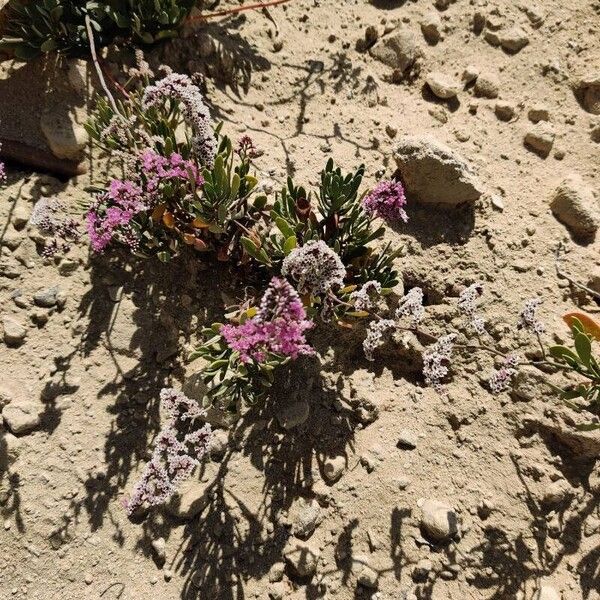
Plant Overview
Often called "Barchas" or the "Coastal Statice," Limonium axillare is a true survivor of the Arabian coastlines and arid dunes. This hardy evergreen shrub is celebrated for its ability to thrive in white, salty sands where few other plants can breathe. Its delicate, papery blooms offer a surprising splash of lavender-pink against the harsh, sun-drenched landscapes of the Middle East.
🔍 How to Identify
- 🌿 Fleshy Foliage: The leaves are thick, spoon-shaped (obovate), and arranged in dense rosettes. They have a slightly leathery texture to help the plant retain moisture in extreme heat.
- 🌸 Airy Blooms: It produces tall, branching stalks topped with tiny, funnel-shaped flowers. These blossoms have a papery texture, which allows them to maintain their color long after they have dried.
- 🪵 Woody Structure: As the plant matures, it develops a rugged, woody base, distinguishing it from the more herbaceous sea lavenders found in temperate gardens.
🏡 In Your Garden
- 🌊 Salt Specialist: This plant is a "halophyte," meaning it is genetically programmed to love salt. It is an elite choice for beachfront properties or coastal "xeriscaping" where salt spray and wind normally kill garden plants.
- ☀️ Drought Warrior: Once established, it requires almost no supplemental watering. It thrives in poor, sandy soils and full sun; in fact, overly rich soil or too much shade will cause the plant to become "floppy" and lose its compact shape.
⚠️ Safety & Toxicity
- ✅ Non-Toxic: Limonium axillare is generally considered safe and non-toxic for humans, cats, and dogs.
- 🧂 Crystalline Leaves: You may occasionally see white, powdery spots on the leaves. This is not a pest or a fungus, but rather the plant "sweating" out excess salt through specialized glands—a perfectly natural process for this coastal species.
✨ Fun Fact
- ✨ Natural Desalination: This plant acts like a tiny desalination plant! It absorbs saltwater through its roots and uses specialized "internal pumps" to move the salt to the surface of its leaves, allowing it to survive in environments that would be poisonous to 99% of other plant species.

Detailed Care Instructions







