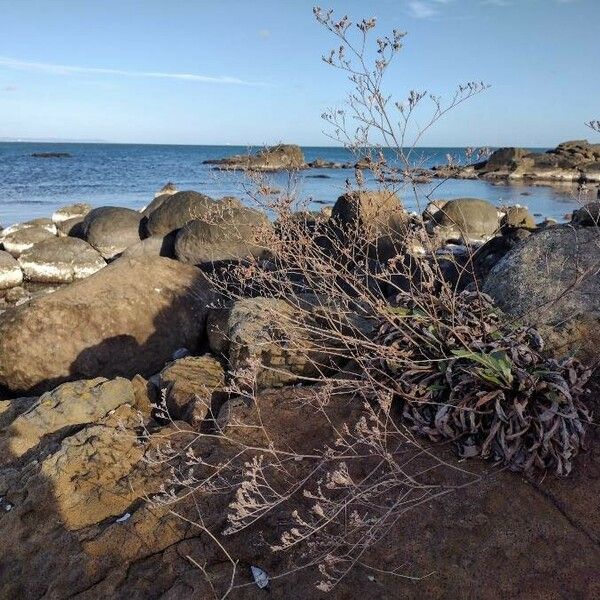
Plant Overview
Often called the Siberian Statice or Sea Lavender, Limonium gmelinii is a resilient perennial that transforms harsh, salty landscapes into a misty haze of lilac. Originating from the salt marshes and steppes of Eastern Europe and Siberia, this plant is a master of survival, thriving where other flowers would wither from salt or drought. It is a favorite among florists for its "everlasting" quality, as its blossoms retain their vivid color long after they have dried.
🔍 How to Identify
- 🌿 Basal Foliage: Unlike many garden flowers, its leaves don't climb the stem. Instead, they form a large, flat rosette at the ground level, featuring leathery, oval-shaped leaves that feel surprisingly sturdy.
- 🪻 Cloud-like Blooms: In late summer, the plant sends up wiry, multi-branched stems topped with hundreds of tiny, funnel-shaped lilac or bluish-purple flowers.
- 📜 Papery Texture: The individual flowers have a distinct, dry, papery feel even while the plant is still growing, which is why it is so popular for dried arrangements.
🏡 In Your Garden
- 🏜️ The Salt Specialist: This plant is a "halophyte," meaning it actually enjoys salty soil. If you live near the coast or have soil with high mineral content where nothing else grows, the Siberian Statice will feel right at home.
- 💧 The "No-Touch" Root: It develops a very deep, thick taproot to find water. Because of this, it is incredibly drought-tolerant but hates being moved. Choose its forever-home carefully, as transplanting an established plant often results in failure.
- ☀️ Sun Seeker: To get that signature "purple mist" effect, it requires full, unabashed sunlight. Shady spots will lead to floppy stems and very few flowers.
⚠️ Safety & Toxicity
- ✅ Status: Generally considered non-toxic.
- 🐾 Details: There are no known records of Limonium gmelinii being poisonous to dogs, cats, or horses. However, because of its high salt-processing capabilities, it’s best kept away from curious nibblers to avoid minor stomach upset.
✨ Fun Fact
The Siberian Statice is a "salt-excreting" plant. If you look closely at the leaves under a magnifying glass, you can sometimes see tiny white crystals of salt that the plant has pulled from the soil and pushed out through special glands to keep its internal systems balanced!

Detailed Care Instructions

Place in a bright room that is sun drenched almost all day. Or directly in a south-facing window.

Some plants require more regular watering than others, which should be done every few days. It's critical to maintain the soil moist all of the time. The water requirements of the same plant placed in pots with varying sizes will differ. Because the water in the smaller pot evaporates faster than the water in the larger pot, it will require more watering. Regardless of pot size, the surface should constantly be maintained moist.








